 Oldsmar Siding
 Why Color Choice Matters More Here Than Most Places
Picking a siding color in Oldsmar isn't just a matter of curb appeal. This stretch of Pinellas County sits between Tampa Bay and Old Tampa Bay, which means every south- and west-facing wall on your house takes a beating from intense, nearly year-round UV exposure, salt-laden air drifting off the water, and wind-driven rain that finds its way into every seam and joint during the summer storm season. A color that looks great on a sample chip can chalk, fade unevenly, or show lap-line staining within a few years if it isn't engineered for this climate. That's the whole reason James Hardie built its ColorPlus finish system the way they did, and it's why color selection deserves real thought instead of a five-minute decision at the end of a project.
What ColorPlus Technology Actually Is
ColorPlus is not paint applied on site. It's a factory-baked, multi-coat finish cured onto the fiber cement board before it ever leaves the plant, under controlled temperature and humidity that a job site in Oldsmar in July simply can't replicate. That matters for three practical reasons:
- The finish bonds to the substrate more uniformly than field-applied paint, which reduces early peeling and cracking.
- Coverage is consistent panel to panel, so you don't get the color drift you can see when a painter mixes several batches on site.
- It comes backed by a separate finish warranty from Hardie, in addition to the product warranty on the board itself — something field-painted siding can't offer.
None of this means ColorPlus siding never needs attention. UV and salt air still act on any exterior finish over time. It means the finish starts from a stronger, more consistent baseline than most alternatives, which is a big part of why we standardized on it.
HZ5 and Why the Substrate Matters as Much as the Color
James Hardie engineers its boards in different formulations for different climate zones, and Oldsmar falls in the HZ5 zone — the one built around moisture and humidity resistance. The color coat sits on top of that engineered substrate, so you're not just choosing a shade, you're getting a board formulated for the humidity swings and wind-driven rain that define a Pinellas County summer. That combination is what actually determines how the color performs over the next 15 to 20 years, not the pigment alone.
Reading the ColorPlus Palette
James Hardie's standard palette runs about 20 colors, organized roughly into a few families. Understanding the families helps more than staring at individual chips:
- Warm neutrals — sandstone beige, khaki brown, navajo beige. These hide dust, pollen, and light salt film better than any other family, which matters if your home is a few blocks from the water.
- Cool neutrals and grays — gray slate, pearl gray, cobble stone. Popular on newer construction, they read clean and modern but show water spotting and mineral deposits more visibly than warm tones.
- Deep statement colors — iron gray, deep ocean, boothbay blue. These give a home real presence from the street, but dark pigments absorb more heat and historically show more UV fade over a long service life than lighter shades — Hardie's factory-cured process narrows that gap considerably compared to field-painted dark colors, but it doesn't erase it.
- Classic whites and off-whites — arctic white, cobblestone, timber bark trim pairings. Lowest heat absorption, easiest long-term touch-up matching, but they show mildew streaking fastest in a humid coastal climate if gutters and overhangs aren't maintained.
Matching Color to Sun Exposure
A color that performs beautifully on the shaded north wall of a house can behave differently on the west elevation catching full afternoon sun. A few practical points worth weighing before you commit to one color across the whole house:
South and West Walls
These take the harshest, longest UV exposure in Oldsmar. Mid-tone and lighter colors generally show less visible fade differential over time than very dark tones on these elevations, simply because there's less pigment breakdown to notice.
Covered Porches and Soffit Areas
Shaded areas age more slowly from UV but can be more prone to mildew growth in humid, low-airflow pockets — an argument for choosing a color and sheen that hides mildew streaking reasonably well if your home has deep eaves or a shaded lanai.
Proximity to the Water
Homes closer to Tampa Bay or Old Tampa Bay deal with more salt deposition on the siding surface. This doesn't damage ColorPlus finish the way it can degrade raw wood or some vinyl, but salt film shows more on very dark, glossy-leaning colors than on matte mid-tones — one more reason we walk clients through elevation-by-elevation exposure, not just a chip in their hand.
Coordinating Siding, Trim, and Roof
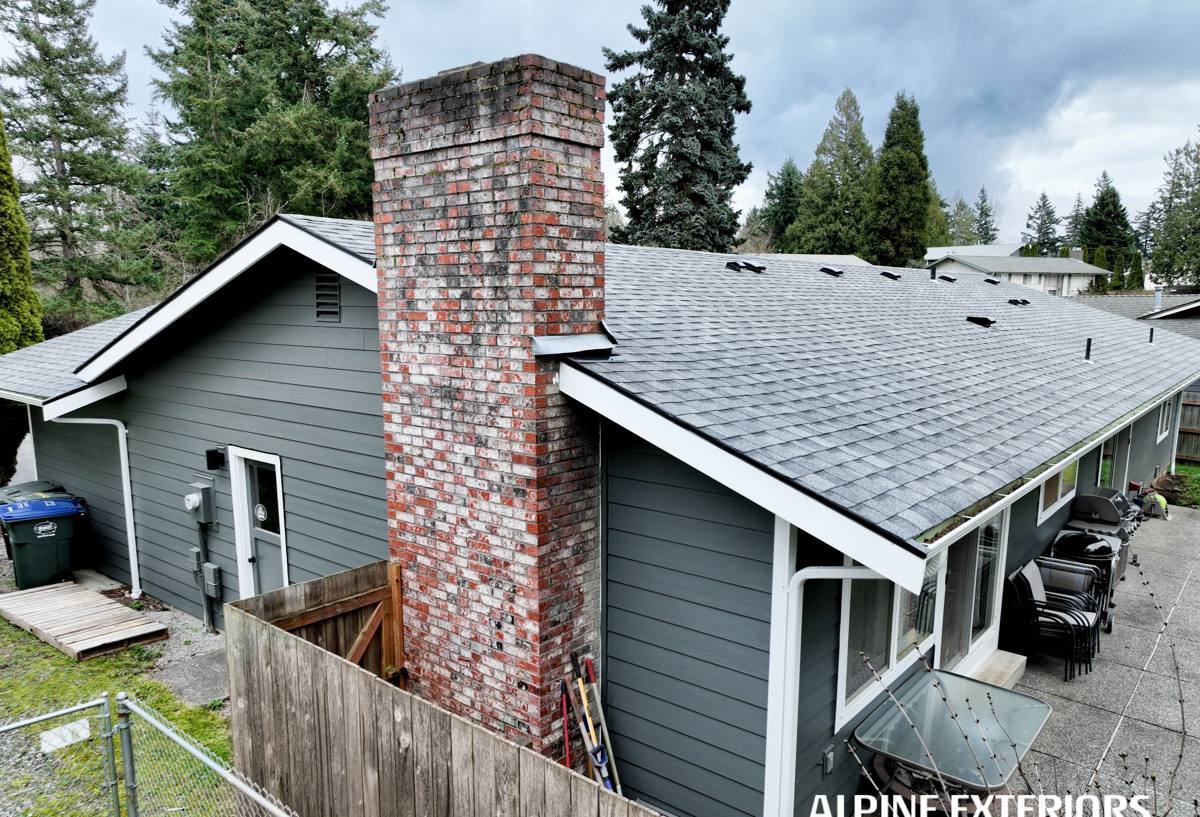
Color decisions don't happen in isolation. The most common mistake we see is a homeowner falling in love with a siding color in a showroom and then finding it clashes with an existing tile or shingle roof, or with trim and shutter colors already on the house.
| Element | What to Check First | Why It Matters in Oldsmar |
|---|---|---|
| Roof | Undertone (warm terracotta vs. cool gray tile) | Most Pinellas County roofs run warm-toned tile or shingle; cool-gray siding can visually fight it |
| Trim & Fascia | Contrast level against field color | High humidity makes crisp trim lines read cleaner from the street than subtle, low-contrast pairings |
| Shutters & Doors | Accent color saturation | Bold accent colors fade faster than body colors since they're often a smaller custom run |
| HOA Guidelines | Approved color list, if applicable | Several Oldsmar and greater Pinellas communities maintain exterior color restrictions |
HOA and Deed Restriction Considerations
A number of neighborhoods in and around Oldsmar operate under HOA or deed-restricted color guidelines, particularly in planned communities near East Lake Road and around Tampa Road. Before finalizing a color, it's worth pulling your HOA's approved exterior palette or submitting for architectural review if required. James Hardie's standard ColorPlus lineup covers most approved ranges, but if your community requires a very specific shade outside the standard 20, that's a conversation to have early — not after boards are ordered.
What Happens When You Need a Repair or Addition Later
This is where factory-finished color earns its keep. Because ColorPlus colors are a standardized, repeatable formula, a board damaged years down the road — by storm debris, a lawn mower mishap, whatever — can be replaced with new material in the same color line and expect a much closer match than trying to remix a custom field-applied paint years after the original job. It's not a guarantee of a perfectly invisible seam on every color, since even factory finishes shift very slightly with age and sun exposure, but it's a materially better position than most alternative siding products leave you in.
Primed Boards and Field Painting: What You Give Up
Hardie also sells primed (unfinished) board that gets painted after installation, and some contractors still offer that route. We don't recommend it for this climate, and it's part of why we standardized on factory ColorPlus finish rather than offering field-painted options. Field-applied paint on fiber cement in a humid, high-UV coastal environment tends to show earlier peeling at the coating level, doesn't carry Hardie's separate finish warranty, and puts the long-term color performance in the hands of whatever paint and application conditions existed on installation day — not a controlled factory process. The upfront cost difference is usually modest; the long-term durability difference is not.
Cost Factors Tied to Color Choice
| Factor | Impact on Cost |
|---|---|
| Standard ColorPlus palette (20 colors) | Included in standard material pricing, no upcharge |
| Custom or out-of-palette color match | Typically a premium upcharge and longer lead time |
| Mixed colors (body vs. trim vs. accent panels) | Minor added cost for order complexity, not material cost |
| Future touch-up or board replacement | Lower long-term cost due to repeatable factory formula |
A Practical Checklist Before You Choose
- Check your HOA or deed restrictions for an approved exterior color list before falling in love with a shade.
- Look at large color samples outdoors, in direct Florida sun, not just under indoor lighting or on a small chip.
- View the color on the specific elevations that get the harshest afternoon sun, not just the front-facing wall.
- Pull your roof and trim colors into the comparison, not just the siding sample alone.
- Ask whether the color you want is part of the standard ColorPlus lineup or a custom match with different lead times and cost.
- Factor in how a shaded lanai or deep eave on your home might affect mildew visibility for darker or glossier colors.
Our Approach to Color Consultations
When we walk a property in Oldsmar, we're looking at more than which color you like best. We're factoring in which walls face the harshest sun, what your roof and existing trim look like, whether your HOA has restrictions, and how the house sits relative to salt exposure near the bay. That's a conversation worth having in person, with real samples, against your actual house — not a decision made from a screen.
If you're weighing a siding replacement and want to see how different James Hardie ColorPlus colors would actually look against your roof, trim, and sun exposure, we're happy to walk the property with you and put samples up against your home. Reach out for a free, no-pressure estimate — there's no obligation, just an honest look at what would work best on your house.