 Oldsmar Siding
 Why "How Much Does Siding Cost" Doesn't Have a Simple Answer
Every homeowner researching a siding replacement in Oldsmar eventually asks the same question, and every honest contractor gives the same frustrating first answer: it depends. That's not a dodge. Siding pricing is the sum of several independent variables — home size, wall condition, material, detail work, and local code requirements — and any one of them can move the number by thousands of dollars. This page breaks down what actually drives siding replacement costs in Pinellas County so you can look at a quote and understand what you're paying for, rather than just comparing bottom-line numbers between contractors who may be pricing very different scopes of work.
The goal here isn't to hand you a fake price chart. It's to explain the mechanics behind the number, so when you do get quotes, you can tell the difference between a contractor who priced your actual house and one who's guessing.
Home Size, Shape, and Story Count
Square footage of siding is the obvious starting point, but it's rarely the whole story. Two homes with identical square footage can have very different costs because of how that footage is arranged.
What adds cost beyond raw square footage
- Multiple stories — second-floor work requires scaffolding or lift equipment, and it slows the crew down
- Complex rooflines with lots of gables, dormers, or cut-ins, each requiring custom trim work
- Homes with a lot of corners, bump-outs, or architectural detail versus a simple rectangular footprint
- Window and door count — every opening needs trim, flashing, and careful cutting around it
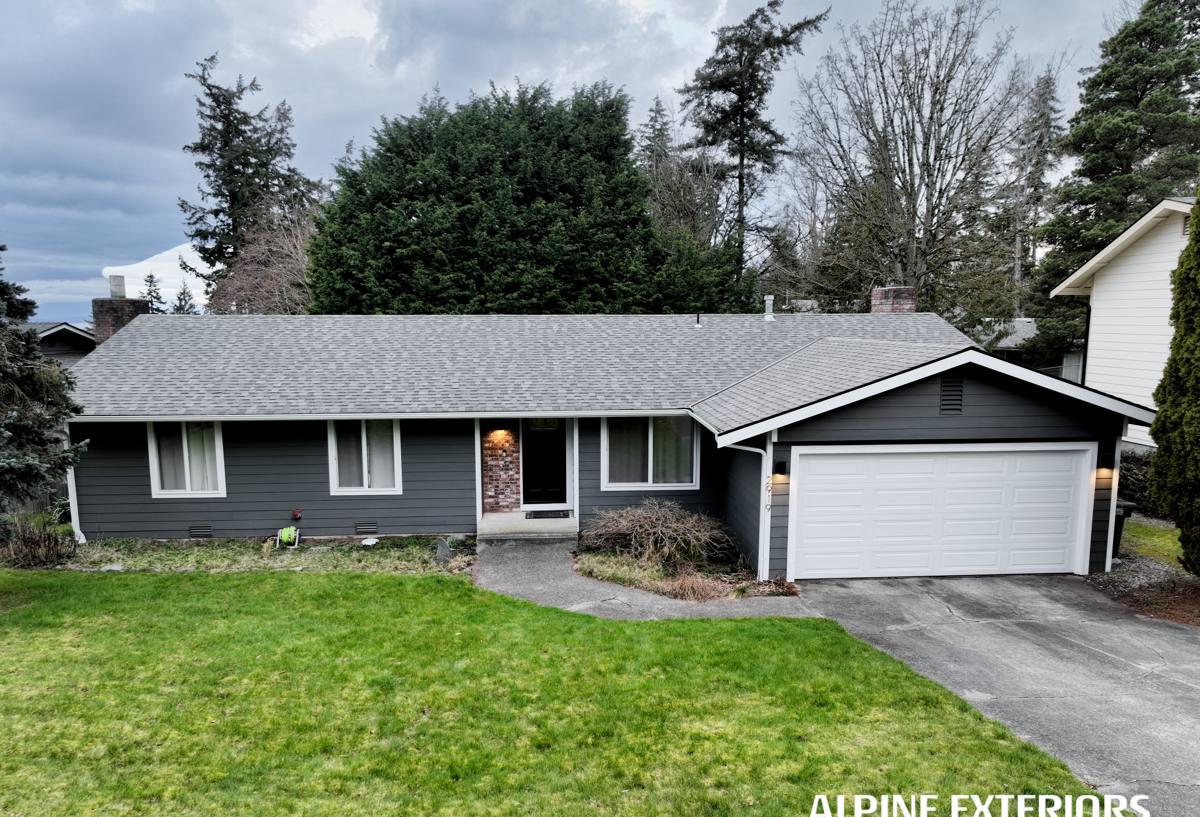
A simple single-story ranch and a two-story home with dormers and a wraparound porch can have similar square footage and very different labor hours.
What's Under the Old Siding Matters More Than the Siding Itself
This is the cost driver most homeowners don't anticipate, and it's the one that turns a clean quote into a change order. Once the old siding comes off, the crew is looking at bare sheathing, and in older Oldsmar homes — especially anything built before more recent wind-load codes — that sheathing sometimes tells a different story than the exterior suggested.
Wind-driven rain is a fact of life on the Gulf coast, and over decades it finds its way behind poorly flashed windows, undersized trim, and aging caulk joints. When that happens, the plywood or OSB sheathing underneath can be compromised long before it shows on the surface. A contractor who does this work honestly will build in an allowance for sheathing repair or replacement, and will show you the damage before covering it back up — not just verbally claim it existed.
What tear-off commonly reveals
- Soft or delaminated sheathing around window and door openings
- Rot at the base of walls where moisture collects near grade or under gutters that have overflowed for years
- Missing or degraded house wrap that never should have been installed that way
- Old fastener patterns that don't meet current wind-load requirements and need correcting, not just covering
You can't know the true condition of your walls until the old siding is off. Any quote that claims total price certainty before that point is really quoting the best-case scenario.
Material Choice Swings the Number More Than Anything Else
Of every variable in a siding project, material selection has the biggest impact on both the upfront number and what you'll spend over the life of the siding. It's also the variable homeowners have the most control over, which is why it deserves the most attention.
| Factor | Vinyl | Engineered Wood (LP-type) | James Hardie Fiber Cement |
|---|---|---|---|
| Upfront material cost | Lowest | Mid-range | Higher |
| Wind resistance | Can crack or blow off in high wind | Good when installed and sealed correctly | Engineered for high-wind regions (HZ10 line rated for this climate) |
| Moisture behavior | Doesn't rot, but traps moisture behind it if installed poorly | Wood-based; edges and cuts must stay sealed or it swells | Non-combustible cement composite; engineered to resist moisture-driven damage |
| UV / fading resistance | Fades and chalks over 8-12 years in strong Florida sun | Factory finish holds up reasonably well | ColorPlus factory finish backed by its own finish warranty |
| Typical lifespan before major work | 15-25 years | 20-30 years with diligent maintenance | 30-50 years when installed to spec |
| Ongoing maintenance | Low, but limited repair options once faded or cracked | Requires caulking, painting, and moisture vigilance | Low; factory finish reduces repainting cycles |
We install James Hardie fiber cement exclusively, and this table is why. Oldsmar sits in a hurricane-exposed, high-UV, salt-air environment, and that combination is hard on lower-cost materials over time. Vinyl softens and can crack or pull loose in sustained wind events. Engineered wood products perform well but ask for consistent maintenance discipline — sealed cuts, prompt caulk touch-ups, and no ignored moisture intrusion — to hit their full lifespan. Fiber cement costs more to install today, but it's engineered specifically for coastal wind and moisture exposure, carries a strong transferable warranty, and it's the product we're willing to put our name behind after installation.
Labor and Installation Detail
Material is only half the cost equation. Fiber cement in particular is unforgiving of shortcuts — it requires correct fastener spacing, proper clearance from grade and roof lines, factory-mitered or properly caulked joints, and flashing details that match the manufacturer's installation requirements. Skipping these steps doesn't just void the warranty; it's exactly how moisture problems start regardless of which product is on the wall.
This is where quotes can look similar on paper but differ enormously in practice. A crew pricing the job to move fast and a crew pricing it to install correctly will land on different numbers, and the difference usually isn't visible until years later when one house is still performing well and the other has soft trim and paint failure.
Oldsmar's Climate and What It Adds to the Math
Regional conditions aren't a footnote here — they're a real cost factor. Homes in Oldsmar and across Pinellas County deal with a specific combination of stresses that inland markets simply don't face:
- Hurricane-force wind — siding and its fastening pattern need to hold up under sustained high wind, not just look good on a calm day
- Wind-driven rain — water gets pushed sideways into seams, laps, and trim joints that would stay dry in a normal rainstorm
- Intense, near year-round UV — accelerates fading, chalking, and finish breakdown on lower-grade materials
- Salt air — even homes several miles inland from the coast see accelerated corrosion on fasteners and trim components over time
None of this means siding is doomed to fail here — it means the product and installation approach need to be matched to the environment. A install detail that's optional in a mild climate can be the difference between a wall assembly that lasts three decades and one that needs attention in ten years.
Permits, Code, and Wind Mitigation in Pinellas County
Siding replacement in Oldsmar typically requires a permit, and inspectors are checking for compliance with current wind-load requirements, not whatever was standard when the home was originally built. That can mean upgraded house wrap, specific fastener schedules, or flashing details that weren't required decades ago. A contractor pulling proper permits builds this into the price; a contractor skipping permits may look cheaper upfront but leaves you exposed on insurance claims and resale disclosures later. It's also worth asking your insurance agent whether an updated wind mitigation report after a siding replacement could affect your premium — it varies by carrier, but it's a conversation worth having.
Hidden Cost Drivers Homeowners Often Miss
Beyond the big categories above, several smaller factors regularly show up in final numbers and catch homeowners off guard if they weren't discussed upfront:
- Disposal and dumpster fees for tearing off the old siding, which vary with material type and volume
- Repainting or color-matching trim, soffits, or fascia that isn't part of the main siding scope
- Relocating exterior fixtures — light fixtures, hose bibs, dryer vents, and address numbers
- Access difficulty — fencing, tight side yards, or landscaping that limits equipment staging
- Window and door trim replacement if the old trim doesn't meet code or match the new siding profile
- HOA design review requirements, which some Oldsmar neighborhoods enforce for color and material approval
A thorough estimate walks through each of these before work starts, not after the dumpster is already on site.
What a Trustworthy Quote Should Include
When comparing estimates, look past the total and check whether the quote actually addresses these items:
- A clear material specification — brand, product line, and profile, not just "siding"
- Whether tear-off and disposal are included, and how sheathing repair would be priced if discovered
- A written fastening and flashing approach, especially around windows, doors, and roof lines
- Permit responsibility — who pulls it, and confirmation it will actually be pulled
- Warranty terms — both the manufacturer's material warranty and the contractor's labor warranty
- A realistic timeline that accounts for weather delays, which are common on the Gulf coast
If a quote is silent on most of these, it's not necessarily dishonest — but it's incomplete, and incomplete quotes are where surprise costs come from later.
If you'd like a straight answer for your specific home, we're happy to walk your property, look at what's actually going on behind the old siding where visible, and put together a detailed, no-pressure estimate — no guesswork, no invented numbers, just what your house actually needs.