 Oldsmar Siding
 Siding failure rarely happens overnight. It creeps in — a hairline crack here, a soft spot behind a downspout there — until one day a homeowner notices a stain on the interior drywall and realizes the problem has been building for a year or more. In Oldsmar, where homes face a steady rotation of intense UV, wind-driven rain, salt-laden air off Tampa Bay, and the occasional brush with hurricane-force wind, that timeline moves faster than it does in drier, milder climates. Catching the early signs is the difference between a patch job and a full tear-off.
This guide walks through what to look for, why it happens, and how to tell the difference between something cosmetic and something structural. None of this requires special tools — just a walk around your house a couple of times a year and a willingness to look closely at the parts most people ignore.
Why Early Detection Matters More in Pinellas County
Siding is your home's first line of defense against water. Once that barrier is compromised, moisture doesn't stay put — it travels behind the panels, into sheathing, framing, and insulation, often invisibly. In a climate like ours, where humidity rarely drops and afternoon storms roll in through much of the year, a small breach can turn into rot, mold, or pest intrusion within a season or two, not years.
Salt air is the other factor homeowners underestimate. Even a few miles inland from the water, airborne salt accelerates corrosion of fasteners, trim, and any metal flashing tied into the siding system. Combined with UV exposure that's stronger and more constant here than in most of the country, siding materials age faster in Oldsmar than the same product would in a northern climate. That's not a reason to panic — it's a reason to look a little more often.
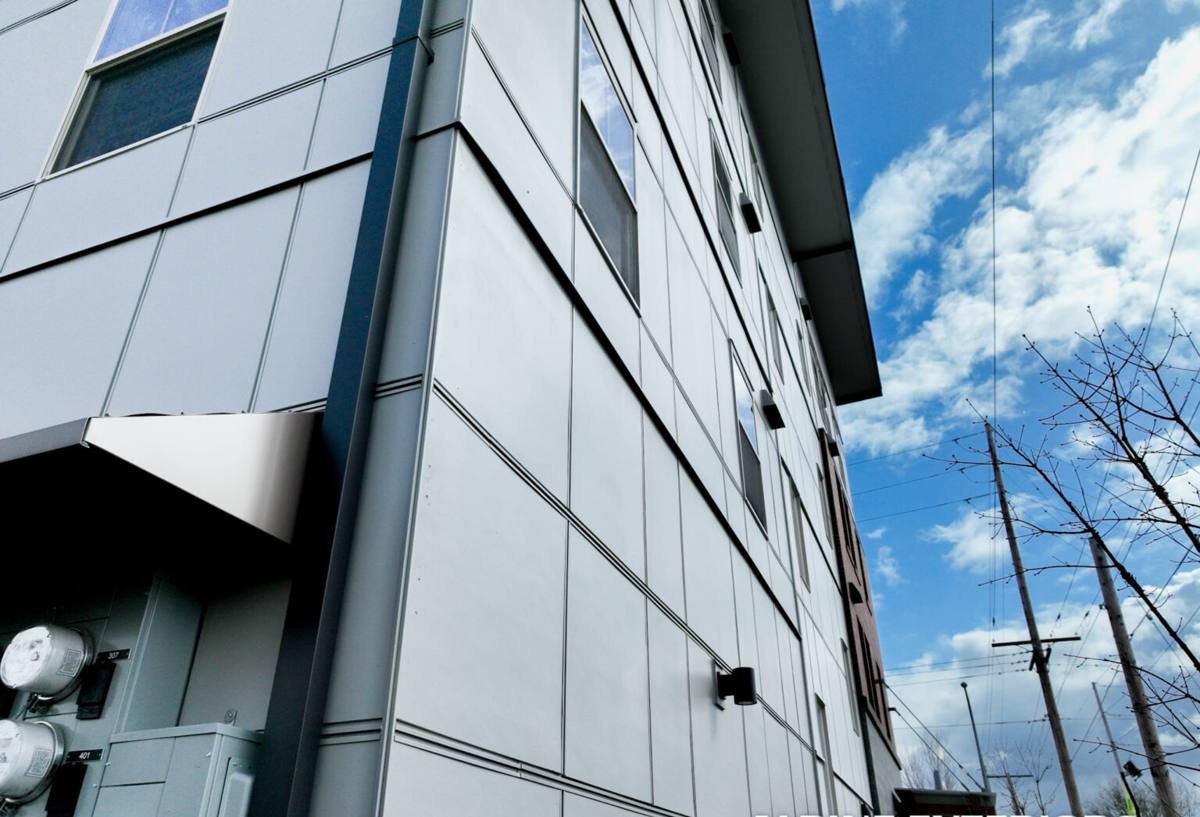
Warning Sign 1: Cracking, Splitting, or Buckling
Cracks are the most visible warning sign and also the most misread. A hairline crack in a panel seam is often just caulking failure — cheap to fix if caught early. But cracks that run through the body of a panel, especially near corners or butt joints, usually mean the material itself is failing, either from moisture absorption, impact, or age.
Buckling or waviness across a wall section is a different problem — it usually points to moisture trapped behind the siding, causing the substrate or the panel itself to swell and lose its flat profile. Wood-based products are especially prone to this because they expand and contract with humidity. Once a panel has visibly buckled, it typically needs to be replaced, not repaired.
What to check
- Run a hand along seams and corners — do they feel flush, or is there a ridge or gap?
- Look at wall sections in raking light (early morning or late afternoon) — waviness shows up far more clearly than at midday.
- Pay extra attention to south and west-facing walls, which take the harshest UV and afternoon storm exposure in our area.
Warning Sign 2: Soft or Spongy Spots
This is the one that scares homeowners most, and rightly so. Press gently on the siding near the bottom of walls, around window and door trim, and below any roof-to-wall transitions. If it gives under light pressure or feels spongy rather than solid, moisture has gotten behind the material and is breaking down whatever it's made of.
Wood, wood composite, and some engineered wood sidings are the most vulnerable to this kind of decay because the material is organic and moisture-absorbent by nature — that's a structural property of the wood fiber itself, not a manufacturing flaw. Once rot sets in, it spreads along the grain and behind adjacent panels, often well past what's visible from the outside. A soft spot the size of a dinner plate can mean two or three times that area is already compromised underneath.
Warning Sign 3: Paint Failure — Peeling, Bubbling, or Chalking
Paint is a maintenance item, but how it fails tells you something important. Peeling or bubbling paint, especially in patches rather than evenly across a wall, usually means moisture is pushing out from behind the siding, not just weathering from the front. That's worth investigating further, not just repainting.
Chalking — a powdery residue that comes off on your hand when you rub the surface — is more often just UV breakdown of the paint film, which is expected over time in a high-sun climate like ours. It's a sign a repaint is due, not necessarily that the siding is failing. The distinction matters: repainting over active moisture intrusion just hides the problem for another season.
Warning Sign 4: Gaps, Warping, or Loose Panels
Wind is a constant stress test on siding in this part of Florida, even outside named storms. Sustained coastal breeze and gusty afternoon squalls work on fasteners and panel edges over years, not just during hurricanes. Gaps opening up between panels, panels that flex or rattle when pressed, or trim pulling away from the wall are all signs that fastening has loosened or the material has warped out of its original shape.
This matters beyond appearance — an open seam is a direct path for wind-driven rain to get behind the siding, and Pinellas County storms rarely come in gently. Loose panels are also the first thing to fail in a wind event, which can turn a minor repair into storm damage covered — or not covered — by insurance depending on timing and documentation.
Warning Sign 5: Rising Energy Bills or Drafts
Not every warning sign is visible from the driveway. If summer cooling costs have crept up without an obvious cause, or you notice temperature differences near exterior walls, it can mean the siding's weather barrier has been compromised long enough that outside air and moisture are getting into the wall cavity. This is a slower, quieter version of the same problem as a visible gap — it just shows up on your utility bill instead of on the wall.
Warning Sign 6: Mold, Mildew, or Dark Streaking
Some surface mildew on siding is normal in Florida's humidity and doesn't necessarily mean failure — it's largely a cleaning issue. But mold or dark streaking that keeps returning shortly after cleaning, or that's concentrated in one specific area rather than spread evenly across shaded walls, often indicates that water is being held against or behind the siding in that spot longer than it should. That's usually tied to a drainage or flashing issue rather than the siding material itself, but it's worth having someone look at the whole assembly, not just wipe the wall down again.
Warning Sign Reference Table
| Sign | Likely Cause | Urgency |
|---|---|---|
| Hairline seam cracks | Caulk failure, normal aging | Low — schedule a check |
| Cracks through panel body | Material fatigue, impact, moisture | Moderate — inspect soon |
| Buckling or waviness | Trapped moisture, substrate swelling | High — investigate promptly |
| Soft or spongy panels | Active rot/decay behind or within siding | High — act quickly |
| Patchy peeling or bubbling paint | Moisture pushing from behind | Moderate to high |
| Even chalking | UV weathering of paint film | Low — cosmetic, plan repaint |
| Gaps or loose panels | Fastener or panel failure, wind stress | High — wind/rain entry risk |
| Rising energy bills | Compromised weather barrier | Moderate — worth a full inspection |
| Recurring localized mold/streaking | Drainage or flashing defect | Moderate to high |
A Simple Seasonal Inspection Checklist
You don't need a professional to catch most of these early — a homeowner walk-around twice a year, ideally before and after the height of summer storm season, will catch the majority of developing problems. Bring a flashlight and use it to look up under eaves and around trim, not just at eye level.
- Walk the full perimeter and press gently on siding near the bottom of walls and around penetrations (spigots, vents, fixtures)
- Check all corners, window and door trim, and butt joints for gaps or separation
- Look at south and west walls in raking light for waviness or buckling
- Note any paint peeling or bubbling that's isolated rather than spread evenly
- Check for streaking or mold that returns quickly after cleaning
- Inspect after any significant wind event, not just after hurricanes — even a strong afternoon storm can loosen panels
- Keep an eye on interior walls and ceilings near exterior corners for staining, which often shows up before exterior symptoms are obvious
Repair, Recoat, or Replace?
Not every warning sign means a full siding replacement, and a straight-shooting contractor should tell you that plainly. Isolated caulk failure, a single damaged panel, or normal UV chalking are maintenance items. But once you're seeing soft spots, buckling, or recurring moisture issues across multiple areas of the house, patch repairs tend to be short-term fixes on a system that's failing more broadly — especially with materials that are inherently moisture-sensitive by design.
This is also where the choice of siding material matters for how often you'll be having this conversation at all. It's a big part of why we standardized on James Hardie fiber cement for every full siding replacement we do: it's not moisture-absorbent the way wood and wood-composite products are, it carries a factory-applied ColorPlus finish that resists the fading and chalking UV causes here, and Hardie's HZ5 product line is engineered specifically for high-humidity, storm-exposed climates like ours. It won't make maintenance disappear entirely — nothing on a Florida exterior is maintenance-free — but it removes the rot and moisture-swelling failure modes that account for most of the warning signs above.
When to Call a Professional
If you're seeing more than one or two of the warning signs above, or you're not confident interpreting what you're looking at, it's worth having someone experienced take a look before deciding on repair versus replacement. A proper inspection includes checking behind trim and at penetrations, not just a visual pass from the yard — a lot of moisture damage hides in exactly the spots that are easiest to overlook.
If your Oldsmar home is starting to show any of these signs, we're happy to take a look and give you a straight answer about what you're dealing with — no pressure, no upsell, just an honest assessment. Reach out for a free estimate using the form below.