 Oldsmar Siding
 Why We're Writing This Page
Homeowners in Oldsmar ask us about LP SmartSide often enough that we think it deserves a straight answer instead of a sales pitch. It's a legitimate, widely installed product with real advantages, and plenty of licensed contractors do good work with it. We simply don't install it, and we think you deserve to know exactly why before you make a decision that will sit on your house for the next 20-plus years.
This isn't a takedown. It's the same reasoning we'd walk through with a neighbor: what the product is, what it does well, where it runs into trouble in a Gulf Coast climate like ours, and why our crews only put James Hardie fiber cement on Pinellas County homes.
What LP SmartSide Actually Is
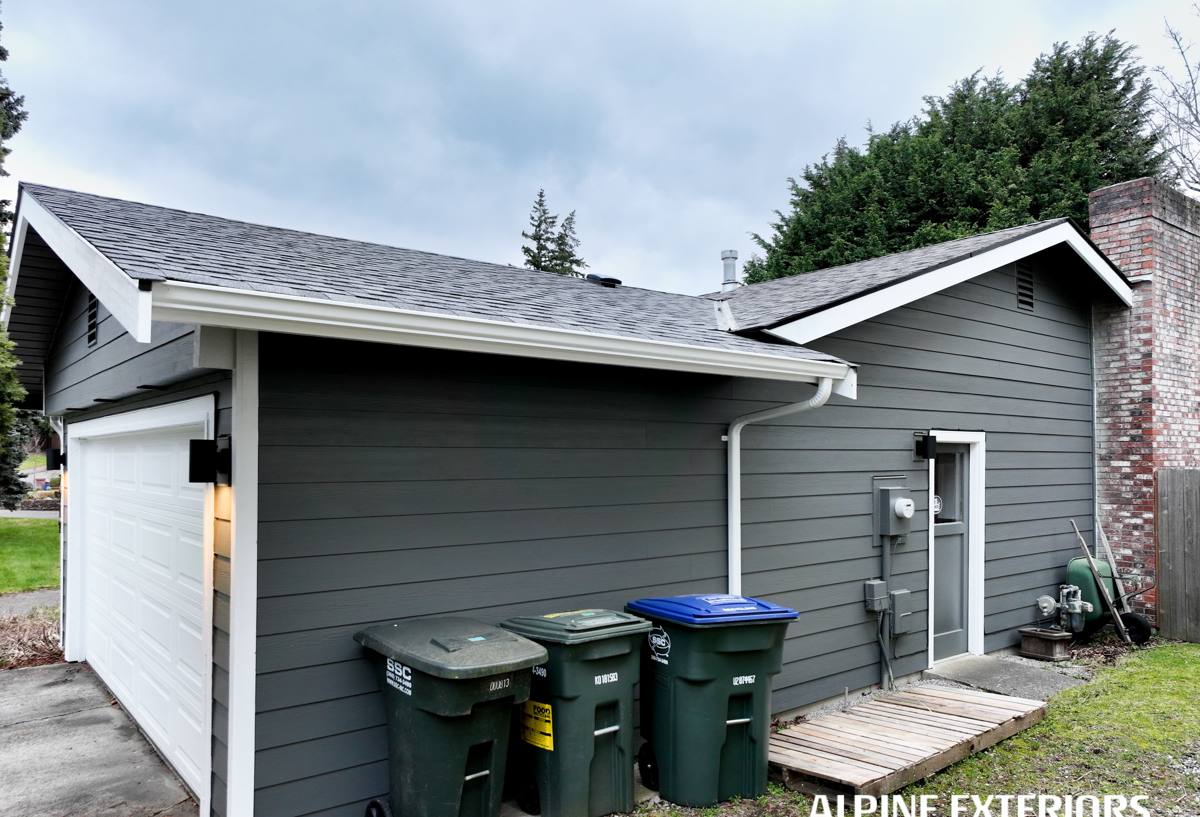
LP SmartSide is an engineered wood siding. Wood strands are bonded with resins under heat and pressure into panels or lap boards, then coated with a proprietary treatment (LP calls it SmartGuard) designed to resist moisture absorption, fungal decay, and termites. It's manufactured to look like traditional wood lap or panel siding, and it's sold pre-primed, ready for a site-applied paint finish.
At its core, though, it's still a wood-based product. That single fact — wood strands as the structural base, not cement — is the root of almost every trade-off we're going to walk through below.
Where It's Commonly Used
LP SmartSide shows up a lot in new-construction tract housing and in regions with milder, drier climates, where it performs reasonably well and keeps material costs down. It's a fine product in the right setting. Oldsmar's setting — hurricane-force wind exposure, near-constant humidity, and salt-laden air off Tampa Bay — is not that setting, in our professional opinion.
What LP SmartSide Gets Right
We're not going to pretend there's nothing to like about it:
- Lower material cost than fiber cement in most markets, which matters on tight renovation budgets.
- Lighter weight than fiber cement, which can mean faster installation and less structural load consideration.
- Easier to cut and work with using standard woodworking tools, without the silica dust fiber cement cutting produces.
- Good impact resistance for an engineered wood product — it holds up to accidental bumps reasonably well.
- Authentic wood-grain texture that some homeowners prefer over the look of fiber cement.
If we operated in a climate with lower humidity, less hurricane exposure, and no salt air, we'd have a harder time justifying why we don't offer it. We don't operate in that climate. We operate in Oldsmar.
Why We Don't Install It Here
A Wood Core in a Wet, Salty Climate
Every engineered wood product lives or dies by the integrity of its protective coating and, just as importantly, by how well every cut edge, joint, and penetration gets sealed during installation. Cut a board on site, and that raw edge is exposed wood strand unless it's field-treated and sealed correctly — every single time, on every single cut. In Pinellas County, where afternoon humidity regularly sits above 70% for months at a stretch, any lapse in that sealing discipline gives moisture a way in, and once a wood-based product starts absorbing water, swelling and softening follow.
Wind-Driven Rain and Hurricane Exposure
Oldsmar isn't directly on the Gulf, but it's close enough that wind-driven rain during tropical systems pushes water sideways into siding laps and seams with real force — the kind of exposure standard weather-facing tests don't fully replicate. Fiber cement doesn't care about that kind of saturation because it isn't wood. An engineered wood product is being asked to resist exactly the failure mode its base material is most vulnerable to, over and over, for decades.
Salt Air and Coastal Humidity
Salt-laden air corrodes fasteners, breaks down coatings faster, and accelerates the wear on any painted or coated surface. It's a factor every siding product on the west coast of Florida has to deal with, but it hits a wood-based product harder because the consequence of a compromised coating isn't just cosmetic — it's structural softening of the substrate underneath.
Caulking and Maintenance Sensitivity
LP SmartSide's long-term performance depends heavily on caulking at every joint, panel seam, and trim intersection being installed correctly and then re-inspected and refreshed on a regular schedule. That's true of most siding products to some degree, but it's a harder requirement here — miss a cracked caulk line for a season or two in our climate, and you're not looking at a cosmetic touch-up, you're looking at moisture intrusion into the substrate. We don't like putting homeowners in a position where a maintenance lapse can turn into a structural repair.
Installation Sensitivity Is the Real Issue
Almost every documented failure with engineered wood siding traces back to installation, not the product itself: improper clearance from grade or roof lines, missed flashing details, unsealed cut ends, or fasteners driven wrong. That's true of fiber cement too, to be fair — bad installation ruins any siding product. But the margin for error is narrower with a wood-based product in a wet climate, and the consequences of a small mistake compound faster.
We install one product, to one specification, on every job. That consistency is a big part of why we standardized on fiber cement — it lets our crews build deep expertise in a single system's installation requirements rather than spreading that discipline across several products with different failure points.
Warranty Realities
Engineered wood siding warranties are typically structured around proper installation and ongoing maintenance being documented and followed — caulk inspections, repainting intervals, and prompt repair of any damage. That's not unusual in the industry, but it does mean the manufacturer warranty and the real-world protection a homeowner has can drift apart if maintenance slips, which is easy to have happen over a 15- or 20-year ownership period.
James Hardie's ColorPlus factory finish and fiber cement substrate reduce how much of that long-term protection depends on the homeowner's maintenance follow-through. That's a meaningful difference in what a warranty actually protects you against in practice, not just what it says on paper.
Cost Factors, Honestly Compared
| Factor | LP SmartSide | James Hardie Fiber Cement |
|---|---|---|
| Material cost | Lower upfront | Moderate to higher upfront |
| Core material | Engineered wood strand | Cement, sand, cellulose fiber |
| Moisture behavior | Vulnerable if coating/sealing fails | Non-combustible, dimensionally stable |
| Maintenance need | Regular caulk/paint inspection critical | Lower ongoing maintenance burden |
| Finish | Field-painted, primed at factory | ColorPlus factory-baked finish available |
| Climate fit for Pinellas County | Requires diligent upkeep | Engineered HZ lines built for humid, coastal exposure |
The lower sticker price on engineered wood siding is real, but it has to be weighed against the maintenance time and cost most homeowners underestimate when they're comparing quotes side by side.
Why We Standardized on James Hardie Instead
We made a deliberate choice to install one product family, exclusively, across every job: James Hardie fiber cement. A few reasons that decision holds up for us:
- Non-combustible core — cement-based siding doesn't feed a fire the way wood-based products can.
- Climate-engineered HZ product lines built specifically to handle humid, storm-prone regions like the Gulf Coast.
- ColorPlus factory finish that's baked on under controlled conditions, reducing dependence on field painting and repainting cycles.
- Dimensional stability — fiber cement doesn't swell and contract with humidity the way wood-based products can.
- A strong transferable warranty that holds up well when the product is installed to spec, which our crews do on every job because it's the only system we install.
Standardizing on one product also means our installation crews aren't switching between flashing details, fastening patterns, and clearance requirements from job to job. That consistency shows up in the quality of the finished work.
A Practical Checklist If You're Comparing Siding Options
- Ask any contractor why they carry the products they carry — a straight answer tells you a lot.
- Ask what the manufacturer warranty actually requires of you as the homeowner to stay valid.
- Ask how caulking, flashing, and clearance details are handled at seams, corners, and penetrations.
- Ask whether the product line you're considering was engineered for a humid, hurricane-exposed climate or a general national market.
- Get the maintenance schedule in writing, not just the sales pitch — then decide if it's realistic for how you actually maintain your home.
- Compare total cost of ownership over 15-20 years, not just the installed price on day one.
The Bottom Line for Oldsmar Homeowners
LP SmartSide isn't a bad product — it's a wood-based product being asked to perform in a climate that's tough on wood-based products. Between the humidity, the wind-driven rain that comes with our storm season, and the salt air moving in off Tampa Bay, we'd rather put our name behind a siding system engineered specifically for this exposure than one that depends heavily on flawless installation and disciplined maintenance to hold up.
If you'd like to talk through your options with no pressure and no obligation, we're happy to take a look at your home and give you a straight, honest estimate — including exactly why we'd recommend what we recommend for your specific project.