 Oldsmar Siding
 Why This Comparison Actually Matters Here
If you're re-siding a home in Oldsmar, you're going to run into two materials at almost every price point: vinyl and fiber cement. Both get installed all over Pinellas County, both show up in big-box estimates, and both have manufacturers who will tell you their product is the obvious choice. It isn't that simple, and homeowners deserve a straight answer instead of a sales pitch.
We install James Hardie fiber cement exclusively. That's not a secret, and it means we're not a neutral party. But we got here by installing both materials for years and watching how each one actually performs once it's been through a few Gulf Coast summers, a couple of named storms, and the salt air that rolls in off Tampa Bay. This page lays out what each product does well, where it struggles, and why our answer for local homes is fiber cement.
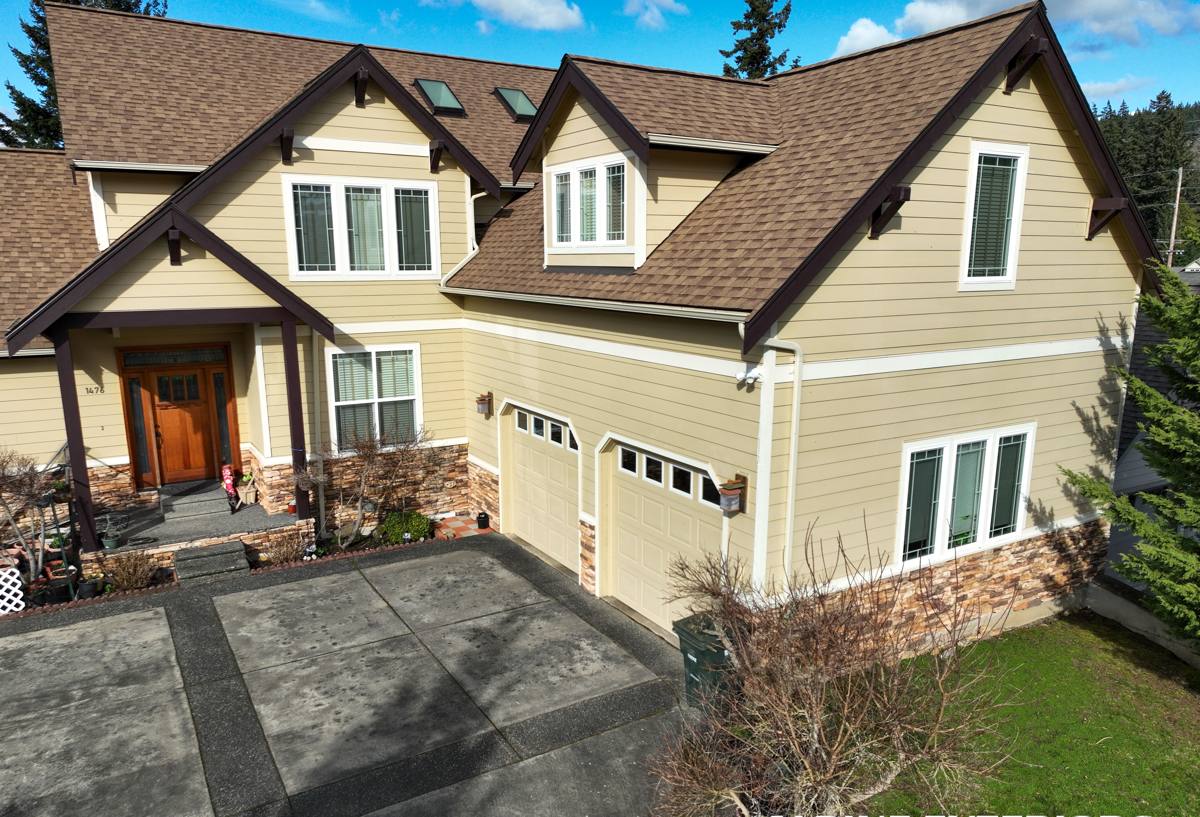
What Vinyl Siding Gets Right
Vinyl earned its market share honestly. It's worth being fair about what it does well before getting into where it falls short.
- Lower upfront material and labor cost than fiber cement, often by a meaningful margin
- Lightweight, which speeds up installation on straightforward wall runs
- No painting required — color is mixed into the panel
- Wide availability of colors, profiles, and accessory trim
- Reasonable performance in milder, drier climates with less UV intensity
For a homeowner on a tight budget, or a house that will likely be sold or renovated again within a decade, vinyl isn't an irrational choice in the abstract. The problem is that "in the abstract" isn't the environment vinyl actually has to survive on the west coast of Florida.
Where Vinyl Struggles on the Gulf Coast
Heat and UV
Vinyl is a petroleum-based product, and it softens and expands with heat. Oldsmar gets long stretches of intense, direct sun for most of the year, and dark or saturated vinyl colors absorb enough heat to warp, buckle, or pull away from the wall — sometimes permanently, well before the material physically fails otherwise. That's also why vinyl color selection skews toward lighter, less saturated shades: darker colors are more prone to heat distortion, which limits your options if you want a deeper or richer exterior color.
UV exposure also fades vinyl's color over time. Unlike a factory-baked finish, vinyl's color runs through the panel, but constant sun still chalks and dulls it, and touch-up paint doesn't always match cleanly since vinyl isn't designed to be repainted.
Wind and Storm Exposure
Pinellas County sits in a hurricane-prone coastal wind zone, and Oldsmar isn't sheltered from that. Vinyl siding is rated for wind resistance, but it's a thin, flexible panel held on with nailing flanges — under sustained hurricane-force gusts, panels can flex, crack at the locking edges, or blow off entirely, especially at corners and around openings where wind pressure concentrates. Once a section fails, wind-driven rain has a direct path behind the wall.
Moisture Behind the Panel
Vinyl isn't a waterproof envelope by itself — it relies on the water-resistive barrier behind it to do the real work, and it's designed to let some moisture drain and vent. That's fine in principle, but it means the house wrap and flashing details behind vinyl matter enormously, and any shortcuts in that hidden layer won't show up until moisture damage is already underway inside the wall.
Impact Resistance
Wind-driven debris during storm season — branches, loose yard items, roofing grit — can crack or puncture vinyl panels. A cracked panel is a cosmetic problem until it also becomes a water intrusion point.
What Fiber Cement Gets Right
James Hardie fiber cement is cement, sand, and cellulose fiber pressed and cured into a rigid plank. It doesn't soften in heat, it doesn't expand and contract the way vinyl does, and it's non-combustible — a genuinely different category of material, not just a nicer-looking version of the same idea.
- Holds its shape in high heat and direct, sustained sun exposure
- ColorPlus factory-baked finish resists fading far better than field-applied paint
- HZ5 product lines are engineered specifically for high-wind, moisture-heavy climates like ours
- Non-combustible, which matters for wildfire-adjacent code requirements and insurance conversations in some cases
- Rigid panels that hold up better against wind-driven debris than flexible vinyl
- Long, transferable manufacturer warranty when installed to spec
None of this means fiber cement is maintenance-free or installation-proof — it isn't, and we'll get into that. But the underlying material is simply built for a harsher climate than vinyl was ever designed around.
Cost Comparison: Upfront vs. Long-Term
Sticker price is where most homeowners start, but it's an incomplete picture. Here's the honest breakdown.
| Factor | Vinyl Siding | Fiber Cement (James Hardie) |
|---|---|---|
| Upfront material + labor cost | Lower | Higher |
| Typical lifespan in this climate | 15–25 years, shorter with heat/storm damage | 30–50+ years with proper install and care |
| Repainting needed | Not designed to be repainted; replace to change color | Rarely, thanks to factory ColorPlus finish |
| Storm/wind damage risk | Higher — panels can crack, warp, or detach | Lower — rigid, engineered for high-wind zones |
| Fire rating | Combustible | Non-combustible |
| Resale/appraisal perception | Neutral to below-average | Generally favorable |
Run the math over the full life of the siding rather than the invoice at installation, and the gap narrows or reverses — fiber cement typically costs less per year of service once you account for how much longer it lasts and how rarely it needs to be touched.
Installation Sensitivity: The Part Nobody Advertises
Both materials can fail early if they're installed wrong, but the failure modes are different, and this is where a lot of homeowner disappointment actually originates — not the material itself, but the install.
Vinyl is forgiving to install badly and still look fine for a while. Panels that are nailed too tight (not left to float and expand) will buckle in the heat, sometimes within the first year or two. It's an easy mistake for a crew moving fast, and the damage doesn't show up until the next hot stretch.
Fiber cement is less forgiving of shortcuts but the failure modes are more preventable with correct technique — proper fastening pattern, correct gaps at butt joints, factory-primed cut edges sealed in the field, and flashing details done to Hardie's published specs. Skip those steps and even the best material on the market will underperform. This is a big part of why we only install one product: doing it well, consistently, on every job matters more than switching materials to chase a lower quote.
Maintenance Over the Life of the Siding
Vinyl's low-maintenance reputation is mostly true for the first several years. After that, in this climate, expect fading, occasional panel replacement after storms, and pressure-washing that has to be done carefully since aging vinyl can crack under too much water pressure.
Fiber cement needs periodic caulk inspection at joints and trim, and an occasional gentle wash, but the ColorPlus finish is engineered to go far longer between any kind of touch-up than field-painted or vinyl surfaces. It's not zero-maintenance — nothing on the exterior of a Florida house is — but it asks less of you over time.
A Practical Checklist Before You Decide
- Ask what wind rating the specific product and installation method actually carries — not just a general marketing claim
- Ask how the color is applied: factory-baked finish vs. mixed-in vinyl pigment vs. field paint, and what that means for long-term fade
- Ask what's behind the siding — house wrap, flashing details, and how butt joints and corners will be sealed
- Ask what the manufacturer warranty actually covers, and whether it's transferable if you sell the home
- Ask how the contractor handles panel expansion, fastening spacing, and cut-edge sealing — the details that separate a 10-year job from a 40-year job
- Get a second opinion if a bid seems unusually low — on siding, the installation labor and prep is often where corners get cut first
Why We Standardized on James Hardie
We used to install multiple siding products. We narrowed it down to James Hardie fiber cement because it's the material we saw consistently hold up against Gulf Coast heat, sun, wind, and salt air without the recurring warping, fading, and storm-damage calls we kept fielding on vinyl jobs. It costs more to install, and we tell homeowners that up front. But for a Pinellas County home that's going to sit through decades of intense UV and hurricane seasons, it's the product we're willing to put our name behind and back with a proper installation.
If you're weighing vinyl against fiber cement for a home in Oldsmar or anywhere nearby, we're happy to walk the exterior with you, talk through what your specific house and exposure actually call for, and give you a straight, no-pressure estimate — use the form below to get started.