 Oldsmar Siding
 What Land O' Lakes Homes Are Actually Up Against
Homes in the Land O' Lakes area sit in one of the more demanding exterior environments in the country, even by Florida standards. It's not one problem — it's four working together year-round: hurricane-force wind gusts during storm season, wind-driven rain that gets pushed sideways into seams and joints most siding was never designed to handle, near-constant UV exposure that fades and breaks down lesser materials faster than homeowners expect, and salt-laden air drifting in off the Gulf that accelerates corrosion and moisture damage on anything not built to resist it.
Individually, any one of these would be manageable. Together, over years of Pinellas County summers and storm seasons, they expose the difference between exterior products that are marketed as "durable" and products that are actually engineered for this specific climate. That distinction is the whole reason we've standardized on one siding system rather than offering several.
Why We Only Install James Hardie Fiber Cement Siding
We get asked fairly often why we don't offer vinyl, LP SmartSide, or other fiber cement brands like Allura or Cemplank. It's a fair question, and the honest answer is that we made a professional decision to stop installing products we'd seen underperform in this specific climate, even when they perform reasonably well elsewhere.
The problem with vinyl here
Vinyl siding is inexpensive and easy to install, and in milder climates it can do fine for years. In a coastal Florida wind zone, vinyl's weak point shows up during named storms: it's a thin plastic panel fastened with a hanging-rail system that isn't built to resist sustained hurricane-force gusts or the debris that comes with them. UV exposure also chalks and fades vinyl faster in Florida sun than in northern climates, and once panels crack or blow off, exact color matches for repairs get harder to find as products age out of production.
The problem with LP SmartSide and other wood-based panels
Engineered wood siding relies on a factory-applied treatment and careful field sealing to keep moisture out of its wood-strand core. In an environment with frequent wind-driven rain, every seam, cut edge, and fastener penetration is a spot where water can find its way in if installation isn't perfect and maintained that way for the life of the product. Once moisture gets past the surface treatment, the core material doesn't recover well. We're not saying it always fails — we're saying the margin for error is thinner than we're willing to install on a home in this climate.
Why Hardie earns the spot
James Hardie fiber cement is cement, sand, and cellulose fiber — a non-combustible material that doesn't rely on a surface coating to keep its structure intact. It doesn't feed a fire, it doesn't warp in heat, and it holds up to repeated wet-dry cycling far better than wood-based products. Hardie's ColorPlus factory finish is baked on under controlled conditions and backed by its own finish warranty, which matters in a market where field-painted siding gets hammered by UV year-round. For coastal and wind-prone regions, Hardie also produces HZ5 climate-engineered product lines specifically formulated for higher humidity and moisture exposure — which describes Land O' Lakes and the broader Tampa Bay area well.
Siding Comparison: What the Trade-offs Actually Look Like
| Factor | Vinyl | LP SmartSide / Engineered Wood | James Hardie Fiber Cement |
|---|---|---|---|
| Wind resistance | Lower — thin panel, hanging-rail attachment | Moderate — depends on fastening and sealing | High when installed per manufacturer spec |
| Moisture behavior | Doesn't absorb water but seams can fail | Vulnerable if surface treatment is breached | Cement-based, resists moisture-driven decay |
| UV / sun fade | Chalks and fades over time | Coating fades, needs repainting eventually | Factory finish warrantied against fading/chipping |
| Fire resistance | Melts, contributes fuel | Combustible wood core | Non-combustible |
| Typical lifespan installed to spec | 15-25 years | 15-30 years with maintenance | 30+ years, often longer |
None of this means the other products are worthless — plenty of homes around the country wear them fine. It means that for the specific combination of wind, rain, sun, and salt air this area sees, we decided the trade-offs didn't line up with what we're willing to put our name on.
Beyond Siding: Roofing, Windows, and Decks in This Climate
Siding doesn't work in isolation. The same wind and moisture pressure that drives our siding standard shapes how we approach the rest of a home's exterior envelope.
Roofing
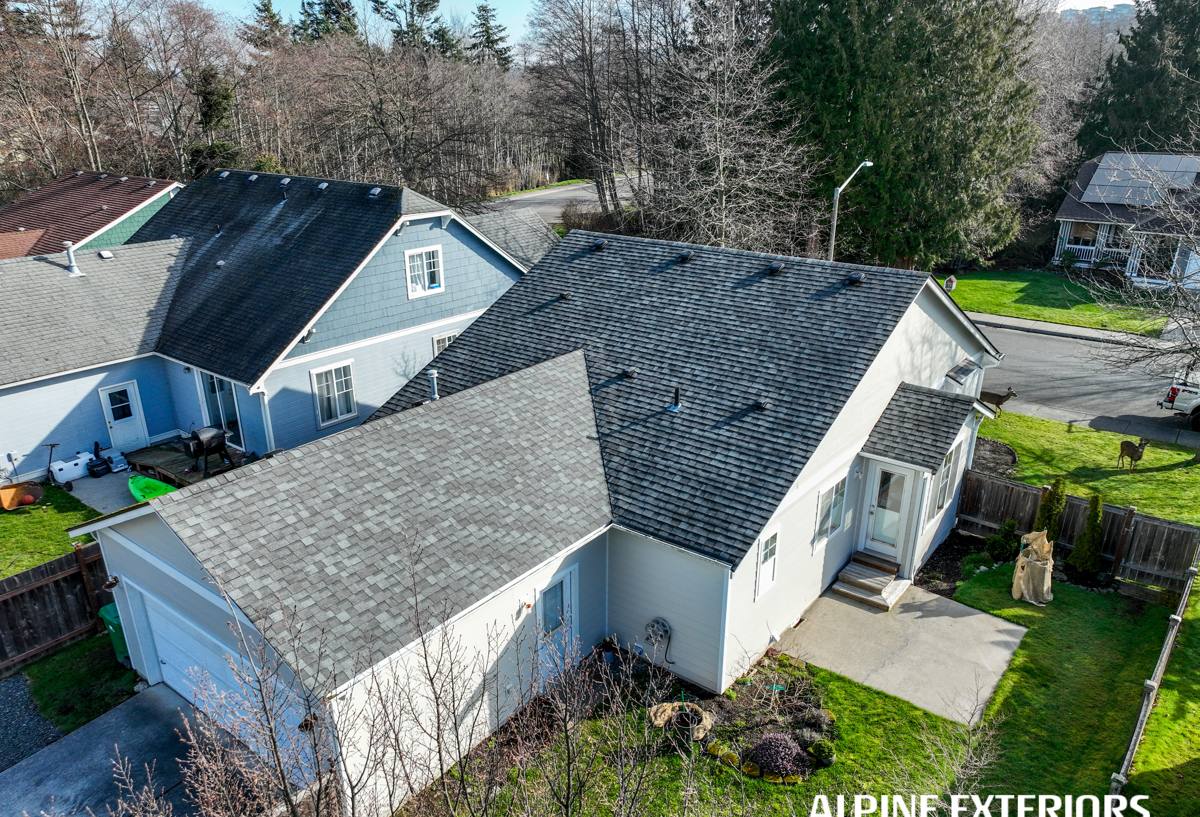
A roof system in this area needs to handle uplift from high winds and shed wind-driven rain rather than let it work backward under shingles or flashing. Proper underlayment, fastening patterns, and flashing detail at penetrations and edges matter more here than in calmer climates — it's usually the details, not the shingle brand, that determine how a roof performs in a real storm.
Windows
Window performance in coastal Pinellas County comes down to the frame and glazing's ability to resist pressure changes and wind-borne debris, plus proper flashing and sealing at the rough opening so wind-driven rain doesn't find its way behind the frame. That installation detail is often more consequential than the window brand itself.
Decks
Outdoor structures take the full brunt of sun and moisture cycling with no roof overhead to shield them. Fastener choice, board spacing for drainage and movement, and ledger attachment all need to account for humidity swings and salt air, which accelerates corrosion in lower-grade hardware faster than most homeowners expect.
We treat these as one connected system rather than four separate trades, because water and wind don't respect the boundaries between them — a gap at a window flashing or a roof edge can undermine siding that was installed perfectly.
What Correct Installation Actually Involves
Fiber cement siding is only as good as its installation. Hardie's own specifications call for specific clearances, fastener patterns, and flashing details that are easy to skip and hard to spot once the siding is up and painted. A few of the details that matter most in this climate:
- Proper starter strip and flashing at the base of walls to keep wind-driven rain from wicking upward
- Correct fastener spacing and depth — over-driven or under-driven nails compromise the panel's wind rating
- Sealed and caulked joints at trim, corners, and penetrations, using materials rated for exterior movement and moisture
- Proper clearance between siding and roof lines, decks, and grade to avoid trapped moisture
- Following manufacturer-specified overlap and gapping so panels can expand and contract without buckling
These aren't optional extras — they're the difference between a Hardie installation that performs for 30-plus years and one that looks fine on day one but fails at the seams during the first serious storm season.
Choosing a Contractor for This Area
Because so much of long-term performance comes down to installation quality rather than the product label, vetting the crew matters as much as picking the material. A few things worth checking before hiring anyone for siding, roofing, window, or deck work in the Land O' Lakes area:
- Active Florida contractor licensing and proof of insurance, verified directly rather than taken on faith
- Manufacturer training or certification specific to the siding system being installed
- A written scope that names flashing, fastening, and sealing details — not just "siding installation"
- Familiarity with local wind-load and building code requirements for Pinellas County
- A workmanship warranty that's separate from, and clearly stated alongside, the manufacturer's product warranty
Why a Local Crew Matters Here
A crew that works this specific stretch of the Gulf Coast regularly sees how homes in this climate actually age — which details hold up and which ones don't, how salt air affects hardware choices, and how local wind and building requirements apply in practice, not just on paper. That's different from general contracting experience picked up in a milder climate. It shows up in the small decisions: fastener grade, flashing sequencing, where extra sealant is worth the time even when it's not strictly required.
Warranty and Long-Term Value
James Hardie backs its ColorPlus finish and product with a strong transferable warranty, which matters both for homeowners planning to stay long-term and for resale value — a transferable warranty is something a buyer's inspector will ask about. Combined with correct installation, that warranty structure is a meaningful part of why we consider Hardie the more defensible long-term investment for this climate, even when the upfront cost sits above vinyl.
If you're weighing siding, roofing, window, or deck work for a home in the Land O' Lakes area, we're happy to take a look and talk through what your specific home needs — no pressure, no obligation. Use the form below to request a free estimate.