 Oldsmar Siding
 Roofing in the Countryside Area Faces a Specific Set of Problems
Countryside is an established residential area in the Oldsmar/Pinellas County corridor, with a mix of roof ages and roof types — some homes still carry their original shingles from the 1990s and early 2000s, others have been re-roofed in the last decade, and a fair number have tile or flat/low-slope sections over additions, lanais, or garages. What almost every one of those roofs has in common is exposure to the same coastal Gulf climate: hurricane-force wind events, intense sun nearly year-round, wind-driven rain that finds any weak point in a roof system, and a steady dose of salt air moving in off the water. That combination ages roofing materials faster here than it would in a drier, cooler climate, and it means repairs that look fine from the ground can still be hiding real problems underneath.
We're not describing hypothetical wear — this is the normal life cycle for a roof in this part of Pinellas County. A repair job done right has to account for all four stressors at once, not just patch whatever is leaking today.
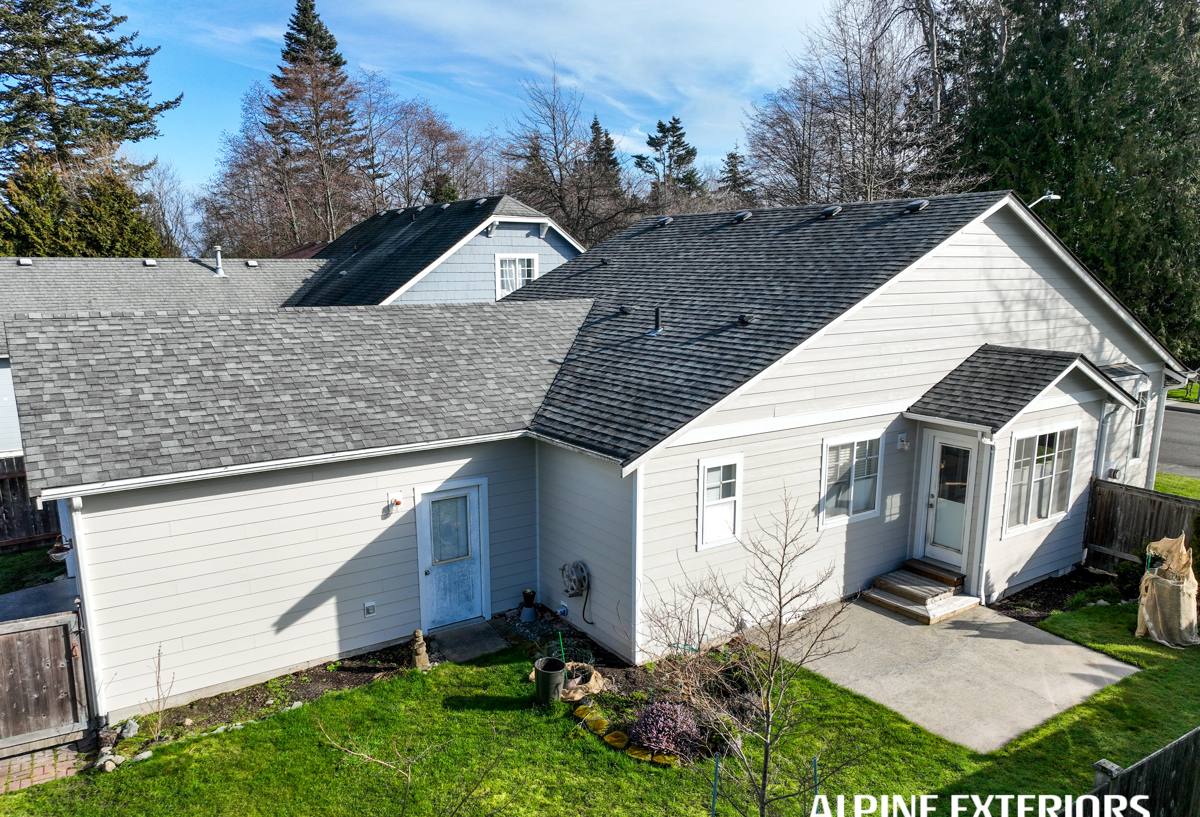
How the Local Climate Actually Damages a Roof
Wind
Even storms that don't reach hurricane strength can generate gusts strong enough to lift shingle tabs, crack tile, or work fasteners loose over repeated cycles. Once a shingle edge or tile lifts even slightly, wind gets underneath it, and the damage accelerates fast — what starts as one loose tab can become a section of exposed underlayment within a season or two.
UV exposure
Central Florida sun bakes asphalt shingles, dries out sealant strips, and breaks down the granules that protect shingles from water. On tile roofs, UV is less of a direct threat to the tile itself but accelerates the breakdown of the underlayment beneath it — which is usually the actual source of a "tile roof leak," not the tile.
Wind-driven rain
Rain that comes in sideways during a storm doesn't behave like rain falling straight down. It gets pushed up under shingle edges, into valleys, and around flashing and penetrations that would be fine in a normal rainstorm. Most of the leaks we get called out for in this area trace back to a flashing or valley detail that couldn't handle wind-driven rain, not a failure of the roofing material itself.
Salt air
Even well inland from the immediate coastline, salt-laden air corrodes exposed metal — nail heads, flashing, vent boots, gutter fasteners — faster than it would further from the Gulf. Corroded fasteners lose their grip, and corroded flashing develops pinholes that let water in long before it looks obviously rusted through.
Common Repair Issues We See on Countryside Roofs
- Lifted or missing shingle tabs after wind events, often on roof edges and ridge lines first
- Cracked or slipped tiles, usually from foot traffic, debris impact, or age-related brittleness
- Failed or deteriorated flashing around chimneys, skylights, and wall-to-roof transitions
- Soft spots or ponding on flat/low-slope sections over additions and lanais
- Nail pops and exposed fastener heads that have corroded or backed out
- Deteriorated pipe boots and vent seals — a very common, often overlooked leak source
- Granule loss and UV-brittled shingles that no longer seal properly at the tabs
Individually, most of these are inexpensive to fix. Left alone, any one of them can lead to sheathing damage, interior water staining, or mold — which turns a repair into a much bigger project.
What a Correct Roof Repair Actually Involves
A repair that holds up here isn't just about sealing the spot where water is currently getting in. It has to address why that spot failed in the first place, or the same leak comes back after the next storm.
Diagnosis before patching
Interior water stains almost never show up directly below the actual leak — water travels along rafters, decking, and insulation before it drips. A correct repair starts on the roof itself, tracing the path back to the real entry point, whether that's a cracked tile, a failed flashing seam, or a deteriorated boot.
Matching materials, not just covering the hole
Repairs on shingle roofs should use shingles that match the existing course as closely as possible in type and, where feasible, color, so the patch doesn't stand out and so the repaired section weathers at a similar rate to the rest of the roof. Tile repairs require matching profile and, ideally, color batch — mismatched tile is one of the most common complaints homeowners have about lower-quality repair work.
Flashing and underlayment, not just the visible layer
If the underlayment or flashing under a damaged area has already been compromised by sun and moisture cycling, replacing just the top layer without addressing what's underneath is a short-term fix. Proper repairs replace underlayment in the affected area and re-flash penetrations and transitions rather than caulking over old, failing flashing.
Fastening for wind resistance
Given how often wind is the root cause of damage here, repairs should re-secure the surrounding area to current wind-resistance standards, not just the single damaged shingle or tile — otherwise the same wind event that caused the original damage will just create a new failure point right next to the repair.
Our Repair Process
- Inspection and diagnosis — We assess the damaged area and the surrounding roof, check the attic side for water staining or deck damage, and identify the actual entry point rather than assuming it's directly above a ceiling stain.
- Written scope and estimate — You get a clear explanation of what failed, what needs to be repaired, and what it costs, before any work starts. No surprise add-ons mid-job.
- Repair — We remove and replace damaged materials, re-flash or reseal as needed, and match materials to your existing roof as closely as possible.
- Verification — We check the repair holds and that surrounding materials — fasteners, adjacent shingles or tiles, nearby flashing — are sound, not just the immediate damage.
- Documentation — You get a record of what was done, useful for insurance, warranty, and future maintenance or resale.
Repair vs. Replacement: How We Help You Decide
Not every damaged roof needs to be replaced, and not every leak can be permanently solved with a patch. Here's how we think through that decision with homeowners:
| Factor | Favors Repair | Favors Replacement |
|---|---|---|
| Roof age relative to expected lifespan | Roof is well within its expected service life | Roof is at or past the age where materials are broadly failing |
| Extent of damage | Localized — one section, one cause | Widespread — multiple sections, multiple failure points |
| Underlayment condition | Sound outside the repair area | Deteriorated across large portions of the roof |
| Storm/wind history | Isolated damage from a specific event | Repeated damage from cumulative wind exposure |
| Cost over time | Repair cost is a small fraction of replacement cost | Repeated repairs are adding up to a meaningful share of replacement cost |
We'll tell you honestly which side of that table your roof falls on. If a repair is the right call, that's what we recommend — we don't push replacement on a roof that doesn't need it.
Materials and Roof Types We Work With
Countryside has a mix of roof types, and repair technique differs by material:
Asphalt shingle
The most common roof type in the area. Repairs involve replacing damaged shingles and underlayment in the affected area and re-sealing tabs, matched to the existing roof's shingle style and color as closely as possible.
Tile
Tile itself is durable, but the underlayment beneath it is the real wear item and is what usually needs attention in a tile roof repair. We handle cracked and broken tile carefully — tile is brittle and easy to damage further with the wrong foot traffic or technique — and match replacement tile to the existing profile and color as closely as possible.
Flat and low-slope sections
Common over additions, garages, and lanais. These need attention to drainage and ponding, not just surface patching, since standing water is what turns a small membrane flaw into a real leak.
Why a Crew That Already Works in Countryside Matters
A roof repair company that regularly works this specific area understands the roof ages and construction common to its neighborhoods, knows what wind and storm exposure the area typically sees, and isn't guessing at how Pinellas County's coastal climate affects a given material. That translates into faster, more accurate diagnosis — less time spent figuring out what's actually wrong, and a repair that's built for the conditions your roof will keep facing, not a generic patch job.
It also means being reachable and responsive after a storm, when roof damage in this area tends to cluster — wind and rain events don't damage just one house.
Homeowner Checklist: Signs You Need a Roof Repair
- Missing, curling, or lifted shingle tabs, especially near edges and ridges
- Cracked, slipped, or missing roof tiles
- Water stains on interior ceilings or upper walls, particularly after wind-driven rain
- Visible daylight through the attic roof deck
- Granules collecting in gutters or at downspout outlets
- Soft or spongy spots on a flat or low-slope roof section
- Rusted or corroded flashing, vent boots, or exposed fasteners
- A roof that's due for its next scheduled inspection after a storm
If any of these apply, it's worth having the roof looked at before the next wind or rain event makes the problem worse.
Maintenance That Extends the Life of a Repair
A good repair lasts longer with basic upkeep: keeping gutters clear so water doesn't back up under roof edges, trimming back overhanging branches that drop debris and hold moisture against the roof, and having the roof looked at after any major wind event rather than waiting for a leak to show up inside the house. In this climate, a once- or twice-a-year visual check — plus a post-storm look after anything significant — catches small issues while they're still cheap to fix.
If you're seeing signs of roof damage or just want a straight answer on what shape your roof is in, we're happy to take a look. Request a free, no-pressure estimate using the form below.