 Oldsmar Siding
 Decks Take a Different Kind of Beating Out Here
A deck in Land O' Lakes doesn't fail the way a deck in a drier, cooler climate fails. Out here, the damage is almost always driven by moisture cycling combined with heat and UV exposure, and if you're close enough to the coast to get salt-laden air moving through on a sea breeze, that adds a corrosive element to the mix as well. Boards that look fine on the surface can be soft, cupped, or rotting underneath, and hardware that looked solid five years ago can be rusted to the point of failure. We repair decks in this area regularly, and the pattern is consistent enough that we can usually tell what we're going to find before we even pull the first board.
The Tampa Bay region's combination of intense year-round UV, sudden wind-driven rain, and long humid stretches means a deck is never really "dry" for long. Wood fiber swells and contracts with every wet-dry cycle, fasteners loosen, and finishes break down faster than manufacturers' literature usually accounts for. None of this means a deck is a bad investment — it just means repair and maintenance have to be treated as an ongoing part of ownership, not a one-time fix.
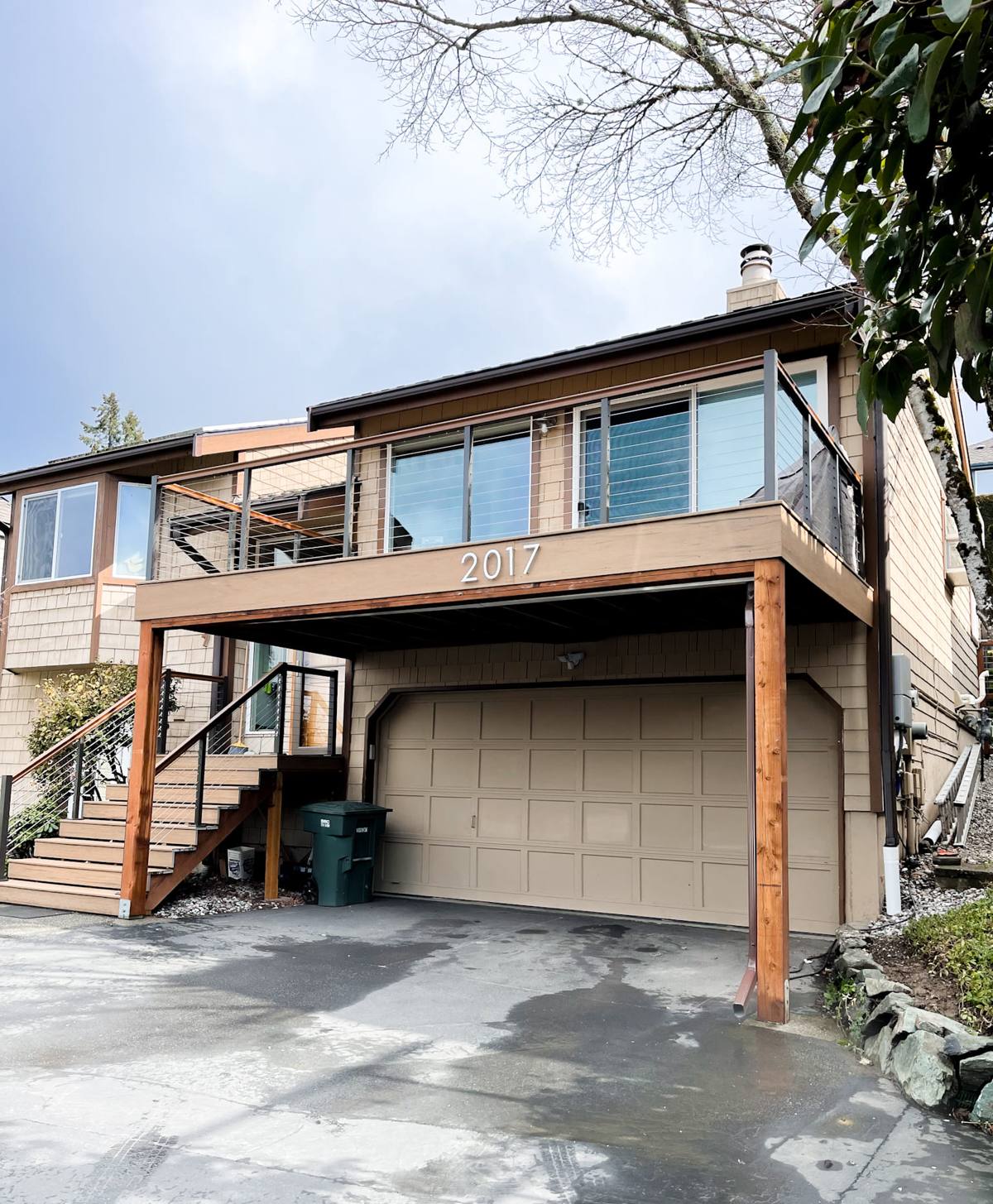
Signs a Deck Needs Repair, Not Just a Cleaning
A lot of Land O' Lakes homeowners call us after noticing something minor — a bouncy board, a slightly loose rail — and are surprised to learn how much more is going on underneath. Here's what we tell people to actually check for, beyond the obvious:
- Boards that feel spongy, springy, or noticeably softer in one spot than the rest of the deck
- Rust streaking below screw heads or around joist hangers
- Gaps opening up between boards that weren't there a year or two ago
- Railings or stair stringers that flex or wiggle when you put weight on them
- Ledger board areas (where the deck attaches to the house) showing any staining or gap at the house siding
- A musty smell coming from underneath the deck, especially after rain
- Fasteners backing out or showing black corrosion stains around the heads
Any one of these on its own might be a small fix. Several together usually means the framing or ledger connection needs a closer look, not just the visible decking.
What a Correct Deck Repair Actually Involves
Structural Framing First
Before we touch a single deck board, we check what's underneath: joists, beams, posts, and the ledger connection to the house. This is the part homeowners can't see and the part most likely to be skipped by a crew trying to move fast. A deck that looks brand new on top but sits on compromised framing is not a repaired deck — it's a cosmetic patch over a real problem, and it will fail again.
Decking Surface
Individual boards get evaluated one at a time. Some can be saved with cleaning and refastening; others need to come out entirely. We don't mix rotten and sound boards side by side just to save a trip — every board that's compromised gets replaced, and every board that stays gets checked for proper spacing so water has somewhere to go.
Fasteners and Hardware
This is where a lot of shortcuts happen and a lot of failures start. In this climate, the wrong fastener or hanger will corrode well before the wood around it does, and once that hardware lets go, the failure can be sudden rather than gradual. We use fasteners and structural hardware rated for the treated lumber and outdoor exposure involved, not whatever happens to be on the shelf.
Railings and Stairs
Railings and stairs take direct impact and repeated stress in a way flat decking doesn't. We check post attachment, baluster spacing, and stair stringer condition as part of any repair, because a deck that's structurally sound on the surface but has a failing rail is still not a safe deck.
Repair or Replace? An Honest Comparison
Not every deck problem calls for a full replacement, and not every deck is worth repairing indefinitely. Here's how we walk homeowners through that decision:
| Condition Found | Usually Means | Typical Approach |
|---|---|---|
| A few soft or damaged boards, framing solid | Localized moisture damage or physical wear | Board replacement, refastening |
| Loose railings or stairs, deck surface otherwise fine | Hardware fatigue or original build shortcuts | Rail/stair rebuild, hardware upgrade |
| Soft or spongy framing, especially near the ledger | Long-term moisture intrusion at the structure | Partial or full framing repair |
| Widespread rot across boards and framing, deck older than its expected service life | The deck has reached the end of its practical lifespan | Full replacement |
As a general rule: if the framing is sound, repair almost always makes sense. If the framing itself is compromised in multiple areas, sinking more money into surface repairs is usually a poor trade-off compared to rebuilding it right.
How Our Deck Repair Process Works
- On-site inspection. We look at the deck from underneath as well as on top, check the ledger connection, and test framing by hand, not just by eye.
- Written scope and honest recommendation. You get a clear explanation of what's failing, what's causing it, and what your realistic options are — including if repair isn't the right call.
- Board and hardware selection. We match materials to what's already there when that makes sense, or recommend an upgrade path when the original materials or fasteners were part of the problem.
- Removal and repair. Compromised boards, framing, and hardware come out; sound structure stays. We don't replace what doesn't need it and don't patch what does.
- Fastening and finish. Proper board spacing, corrosion-resistant fasteners, and — where wood decking is involved — a sealant or stain schedule appropriate for our sun and rain exposure.
- Final walkthrough. We show you what was done and what to watch for going forward.
Decking Materials: What Holds Up Best Here
Material choice matters as much as workmanship when it comes to how long a repair lasts in this climate. Here's how the common options compare for Tampa Bay-area exposure:
| Material | Sun/Heat Behavior | Moisture Behavior | Maintenance Needs |
|---|---|---|---|
| Pressure-treated pine | Prone to graying and checking without sealing | Absorbs moisture readily; needs good ventilation underneath | Sealing/staining every 1-2 years |
| Cedar or other naturally resistant wood | Fades without UV-protective finish | Better natural resistance, still needs sealing | Sealing every 1-2 years |
| Composite decking | Can run hot underfoot in direct sun; quality varies by brand | Doesn't rot, but installation sensitivity matters (proper gapping, ventilation) | Occasional cleaning, no sealing |
We don't push one material over another as a blanket rule — the right call depends on your budget, how much maintenance you want to do, and what's already in place. What we will tell you honestly is that whatever material you choose, correct installation and fastening matter more than the marketing on the packaging.
Why It Matters That We Already Work in Land O' Lakes
A crew that only sees a handful of decks a year in this specific area doesn't have a feel for how fast rot moves through untreated end cuts here, or which fastener types are quietly failing early in this humidity. We work Oldsmar, Land O' Lakes, and the surrounding Tampa Bay area regularly enough to recognize patterns — the ledger boards that fail first, the board types that don't hold up, the details that get skipped in a rushed original build. That familiarity means fewer surprises during the repair and a more accurate estimate up front, because we're not guessing at how the local climate will treat the materials.
It also means we're a known, reachable presence if something comes up after the repair — not a crew that did one job in the area and moved on.
Simple Maintenance That Extends a Repair's Life
A good repair lasts a lot longer with a little routine attention. After any deck repair, we recommend:
- Sweeping debris off the deck surface regularly so moisture doesn't sit trapped against boards
- Checking the underside a couple times a year for new staining, softness, or pest activity
- Keeping gutters and downspouts near the deck clear so runoff isn't dumping directly onto or under it
- Re-sealing or re-staining wood decking on the schedule appropriate to the product used
- Tightening or replacing any fastener showing early rust before it becomes a bigger repair
- Trimming back vegetation that keeps the deck surface shaded and damp longer than it should be
If your deck has soft spots, loose railings, or you're just not sure whether what you're seeing is normal wear or something that needs attention, we're happy to take a look. Reach out using the form below for a free, no-pressure estimate — we'll give you a straight answer about what's going on and what it would take to fix it right.