 Oldsmar Siding
 Why Dunedin Decks Take More Punishment Than Most
Dunedin sits close enough to the water that every outdoor structure on a property deals with a harder version of Florida weather. A deck here isn't just baking in sun for a few summer months — it's exposed to intense UV essentially year-round, regular wind-driven rain off the Gulf, salt-laden air that speeds up corrosion on anything metal, and, during storm season, gusts that can rack a poorly fastened structure loose from the house. None of that is unique to Dunedin specifically, but it's more constant here than in inland parts of the county, and it's exactly why a deck built with shortcuts tends to show problems faster near the coast than it would forty miles inland.
Traditional wood decking struggles hardest with this combination. Sun bleaches and dries the surface, humidity swings the boards, and the two together open up cracking and splintering that eventually lets water into the wood itself. Composite decking was developed specifically to resist that cycle, which is why it's become the practical choice for homeowners in this part of Pinellas County who want a deck that still looks decent in five years without a repaint or refinish every season.
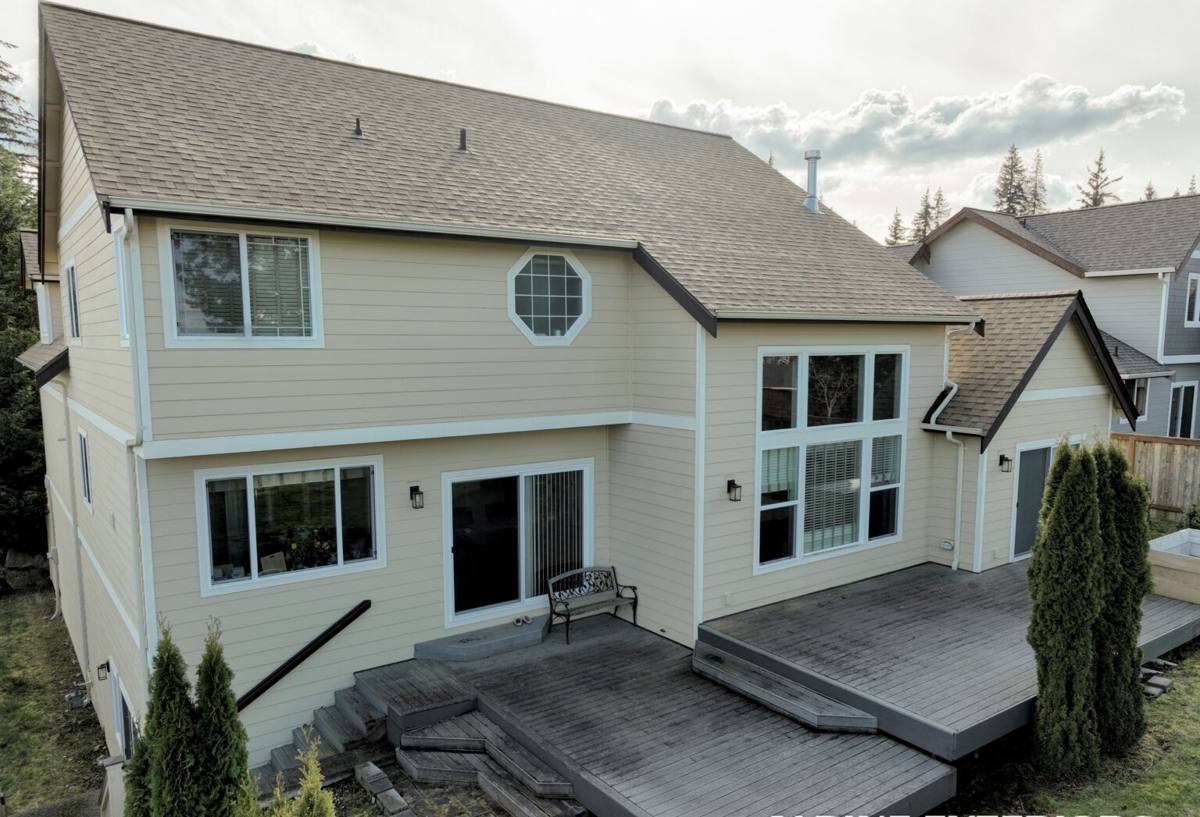
What Composite Decking Actually Is
"Composite" covers a range of products, and the differences matter more here than they would in a drier, cooler climate. Understanding what you're buying helps you avoid a deck that looks fine on install day and starts failing within a couple of years.
Capped Composite vs. Uncapped Wood-Plastic Composite
Most composite decking is made from a blend of wood fiber and plastic, compressed into a board. The key difference is whether that board has a polymer "cap" fully wrapping it. Capped composite boards resist moisture absorption, fading, and mold growth far better because the wood fiber inside is sealed off from the elements. Uncapped or partially capped boards are less expensive up front but absorb more moisture at the cut ends and exposed surfaces — a real liability in a climate with this much humidity and rain. For a Dunedin install, we treat full capping as the baseline, not an upgrade.
Composite vs. PVC Decking
PVC decking is a different animal — it's 100% synthetic, with no wood fiber at all, so it doesn't absorb moisture the way any composite can. It typically costs more and can flex more under heat, which matters on a west-facing deck getting full afternoon sun. Composite generally gives a more wood-like feel and better heat performance underfoot at a lower price point. Neither is "wrong" — the right call depends on your deck's orientation, budget, and how it'll be used, which is something worth walking through in person rather than deciding from a brochure.
What a Correct Composite Deck Build Involves
The decking boards get most of the attention, but the parts you don't see are what determine whether the deck survives a decade of coastal weather. Composite boards are only as good as what's underneath and how they're attached to your house.
- Ledger board flashing: Where the deck attaches to the house needs proper flashing so wind-driven rain can't work its way behind the ledger and into the wall framing — one of the most common sources of hidden rot on older decks in this area.
- Joist spacing and grade of substructure: Composite boards often require tighter joist spacing than wood decking, especially at angles or stair treads. Following the manufacturer's spacing specs isn't optional if you want the warranty to hold.
- Fastener material: Salt air corrodes standard fasteners faster near the coast. Stainless steel or coated, corrosion-rated hardware at every connection point isn't a luxury add-on here — it's what keeps the frame from failing quietly under the decking.
- Hidden fastening systems: Most composite lines use hidden clips rather than face screws, which keeps water from pooling in screw heads and gives a cleaner look, but the clips have to be installed to spec or boards can loosen under wind uplift.
- Expansion gaps: Composite expands and contracts with heat more than wood. Gaps between boards and around fixed objects (posts, house walls) need to be sized correctly so the deck doesn't buckle during the hottest stretch of summer.
- Ventilation and drainage under the deck: Standing moisture under a low deck is a mold and pest problem waiting to happen in this humidity. Proper grading and airflow underneath matters as much as anything visible on top.
Permitting and Local Code Considerations
Decks in Pinellas County generally require a building permit, and inspections typically check footing depth, ledger attachment, and railing height and spacing — all things that get scrutinized more closely in coastal jurisdictions because of wind load requirements. If your property is close to a waterway or in a flood zone, there may be additional elevation or setback considerations that affect where and how a deck can be built. We handle the permit process as part of the job rather than leaving it to the homeowner, because getting it wrong means delays, and getting it skipped entirely can create real problems if you ever sell the house or file an insurance claim after storm damage.
Our Process, Start to Finish
- On-site assessment: We look at your existing structure (if replacing a deck), sun exposure, drainage, and how the space is actually used before recommending a material or layout.
- Design and material selection: We walk through composite options, board colors, and railing choices with actual samples, not just a catalog page, and give you a straightforward written quote.
- Permitting: We prepare and submit the permit package and schedule the required inspections so you're not chasing paperwork.
- Demo and substructure: If there's an existing deck, we remove it and inspect the ledger and framing underneath — this is often where hidden rot or old flashing problems turn up.
- Framing and structural work: We build or repair the substructure to spec, using corrosion-rated fasteners throughout.
- Composite installation: Boards, hidden fasteners, and railing go in per the manufacturer's specifications, with correct expansion gaps and fastening patterns.
- Final walkthrough: We go over the finished deck with you, cover basic care, and make sure everything passes final inspection.
Comparing Your Decking Options
| Material | Upfront Cost | Heat/UV Resistance | Moisture Resistance | Maintenance |
|---|---|---|---|---|
| Pressure-treated wood | Lowest | Fades, splinters over time | Poor without regular sealing | Annual staining/sealing |
| Uncapped composite | Moderate | Good, some fading | Fair — can absorb moisture at cuts | Occasional cleaning |
| Capped composite | Moderate-High | Very good | Very good | Periodic washing |
| PVC | Highest | Excellent, though can flex in extreme heat | Excellent — no wood fiber | Minimal |
These are general characteristics, not guarantees — actual performance varies by brand, board thickness, and how well the deck is installed. A budget composite board installed correctly will usually outlast a premium board installed with the wrong fasteners or spacing.
Living With Composite Decking in a Gulf Coast Climate
Composite decking is genuinely lower-maintenance than wood, but "low-maintenance" doesn't mean "no maintenance" — especially with the humidity and rainfall this area sees. Mildew and algae can develop on any outdoor surface here, composite included, particularly in shaded or low-airflow spots. A periodic wash with mild soap and water (or a garden hose and soft brush) handles most of it; pressure washing on the wrong setting can actually damage the board surface, so that's worth doing carefully or having done for you. Lighter-colored boards run cooler underfoot in direct sun than darker ones, which is worth factoring into your color choice if the deck gets afternoon exposure. Because capped composite doesn't absorb water the way wood does, it holds up well through the wet season, but debris in the gaps between boards should still be cleared out so water keeps draining the way it's designed to.
What Drives the Cost
Composite decking costs more upfront than pressure-treated wood but less over the life of the deck once you account for staining, sealing, and board replacement that wood typically needs. Exact pricing depends on your specific project, but the main factors are:
- Total square footage and deck shape (angles, curves, and multiple levels add labor)
- Board tier — uncapped composite vs. fully capped vs. PVC
- Substructure condition — whether existing framing can be reused or needs to be rebuilt
- Railing style and material (composite, aluminum, or cable railing all price differently)
- Stairs, built-in seating, or lighting add-ons
- Site access and demo/haul-away of an existing deck
We give a firm, itemized quote after seeing the site in person — not a phone estimate — because framing condition and access change the number more than most homeowners expect.
Why It Matters to Hire a Crew That Already Works Dunedin
A crew that regularly works in Dunedin and the surrounding Oldsmar area already knows the local permitting process, has a working relationship with the inspectors, and has seen firsthand how decks in this specific climate age — which fastener grades hold up, which board types handle the humidity best, and where flashing tends to fail if it's done wrong the first time. That's different from a contractor who mostly builds decks somewhere inland and treats coastal conditions as an afterthought. It's also worth being direct about this: not every crew that advertises "composite decking" installs it to the spacing and fastening specs the manufacturers actually require, and a deck that looks fine at handoff can loosen or buckle within a year or two if those details were skipped. Before you hire anyone, it's reasonable to ask a few direct questions.
- Are you licensed and insured to do decking work in Pinellas County?
- Will you pull the permit, or is that left to me?
- What fastener grade do you use, and is it rated for coastal/salt-air exposure?
- What's the manufacturer's warranty, and does your installation method keep it valid?
- Can I see the actual board sample and color in person before we commit?
If a contractor can't answer those clearly, that's worth noting before you sign anything.
If you're weighing a new deck or a rebuild of an aging one in Dunedin or Oldsmar, we're happy to take a look and give you a straightforward, no-pressure estimate — just fill out the form below and we'll go from there.