 Oldsmar Siding
 Why Lutz-Area Homes Need Siding Built for This Climate
Homes in and around Lutz sit in the same demanding Tampa Bay climate zone that Oldsmar and the rest of Pinellas County contend with year-round. That means siding on these homes isn't just a cosmetic layer — it's a working part of the building envelope that has to survive hurricane-force wind events, near-constant UV exposure, wind-driven rain that gets pushed sideways into wall assemblies, and a steady dose of salt-laden air moving in off the Gulf. Any siding product installed here is being tested every single season, not just during storm events.
That's the lens we use when we talk to Lutz homeowners about siding. It's not about which product looks best in a showroom sample — it's about which product, installed correctly, will still be doing its job in fifteen or twenty years without becoming a maintenance project of its own.
Wind
Sustained tropical-storm and hurricane-force winds put real uplift and lateral load on exterior cladding. Siding that isn't rated, fastened, and lapped correctly for these wind speeds can loosen, crack at fastener points, or peel away entirely during a bad storm season.
UV
Central Florida gets intense, near year-round sun exposure. Cheaper siding materials and factory finishes that aren't engineered for this level of UV load fade, chalk, or become brittle well ahead of schedule.
Wind-Driven Rain
It's not just how much rain falls — it's how it hits the wall. Storms here regularly drive rain horizontally into siding laps, trim, and penetrations. Siding and flashing details that would be fine in a drier, calmer climate can let moisture behind the cladding here.
Salt Air
Even well inland from the coast, Tampa Bay's salt-laden air accelerates corrosion of fasteners and metal trim, and it's part of why we're selective about the hardware and flashing we pair with siding in this region.
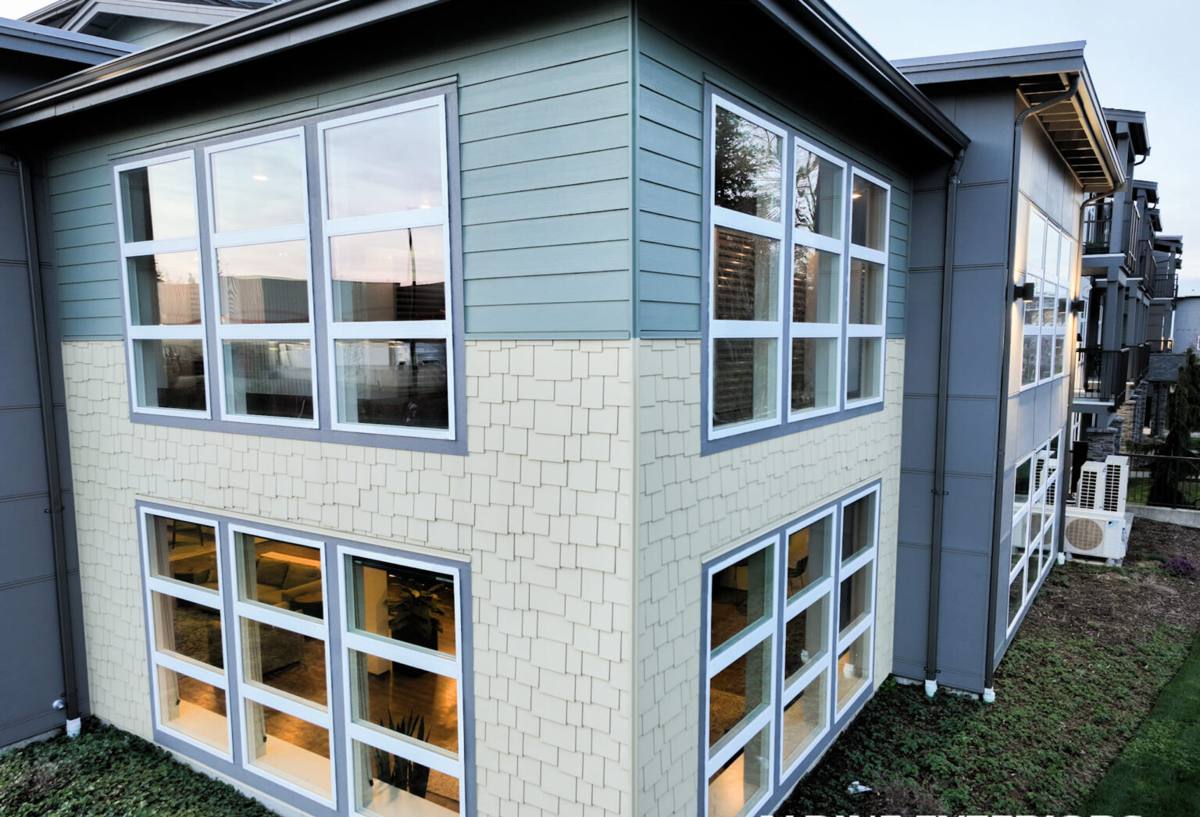
Why We Only Install James Hardie Fiber Cement
We've made a deliberate decision as a company to install James Hardie fiber cement siding exclusively — not vinyl, not LP SmartSide, not Cemplank or Allura, not primed spruce or cedar. That's not a marketing angle; it's a standard we hold because of what this climate does to exterior materials over time.
Fiber cement is non-combustible and dimensionally stable, meaning it doesn't expand, contract, warp, or absorb moisture the way wood-based or engineered-wood products can. James Hardie's HZ5 product line is specifically engineered for high-humidity, high-moisture climate zones like ours, and their ColorPlus factory finish is baked on and warranted against fading in a way that field-applied paint jobs on other siding types generally aren't. For a Lutz-area home facing sun, salt, and storm exposure every year, that combination matters more than it does in a milder climate.
We go into more detail on our other pages about why we've stepped away from vinyl, LP SmartSide, and other fiber cement brands — but the short version is that Hardie's engineering, finish warranty, and track record when installed to spec are what we're willing to put our name behind.
What a Correct Fiber Cement Installation Actually Involves
James Hardie siding performs the way it's designed to only when it's installed to Hardie's published specifications. A lot of the failures homeowners eventually see with fiber cement siding — cracking, moisture intrusion, paint failure at the edges — trace back to shortcuts taken during installation, not a flaw in the product itself.
The details that actually matter
- Proper clearances: siding held the correct distance above roofing, decks, and grade so water can't wick up into the board
- Correct fastener pattern and type: corrosion-resistant fasteners driven per Hardie's schedule, not just "close enough"
- Sealed and primed cut edges: every field-cut end sealed before installation so raw fiber cement isn't left exposed to moisture
- Proper flashing at every penetration: windows, doors, vents, and utility penetrations flashed to shed water outward, not into the wall
- Correct lap and joint treatment: butt joints and laps done per spec, with the right gap and sealant approach rather than caulk used to mask a bad fit
- A weather-resistant barrier behind the cladding: the siding is one layer of a system, and the drainage plane behind it matters just as much
When any one of these steps is skipped or rushed, the siding is still vulnerable to exactly the wind-driven rain and moisture cycling that's common in this area — even though the board itself is a durable product.
Our Process for a Lutz-Area Siding Project
We run every project through the same sequence, whether it's a single wall repair or a full re-side.
- On-site assessment: we look at your existing siding, sheathing condition, moisture history, and any problem areas — trim, window returns, low-clearance spots — before we talk products or price.
- Written estimate and product plan: you get a clear scope covering which Hardie product line, profile, and color fit the home, plus what prep and repair work is included.
- Prep and any substrate repair: damaged sheathing or trim gets addressed before new siding goes up — covering it over doesn't fix it.
- Installation to Hardie spec: correct fastening, flashing, clearances, and joint treatment at every step, not just on the parts that show.
- Final walkthrough: we go over the finished job with you directly so you know what was done and what to expect going forward.
Fiber Cement vs. Other Siding Options for This Climate
| Factor | James Hardie Fiber Cement | Vinyl Siding | Engineered Wood (e.g. LP SmartSide) |
|---|---|---|---|
| Wind performance | Engineered and rated for high-wind installation when installed to spec | Can deform or blow off in sustained high winds | Generally wind-rated, but seams and edges are more vulnerable |
| UV / fade resistance | ColorPlus factory finish, warranted against fading | Prone to fading and chalking over time in intense sun | Depends on field-applied or factory coating; touch-up often needed sooner |
| Moisture behavior | Non-combustible, dimensionally stable, doesn't rot | Doesn't rot, but can trap moisture behind panels if not vented properly | Wood-based core is moisture-sensitive if the coating is compromised |
| Salt air / corrosion exposure | Fiber cement itself is unaffected; requires compatible corrosion-resistant hardware | Panel unaffected, but fastener and trim corrosion still a factor | Wood-based core more sensitive to sustained humidity and salt exposure |
| Long-term maintenance | Low, when installed correctly — mainly periodic inspection and caulk upkeep | Low material maintenance, but limited repairability once faded or cracked | Moderate — coating and seam maintenance needed to protect the core |
Every option on this table has legitimate uses in different climates and budgets. For the wind, UV, and moisture combination Lutz-area homes deal with, fiber cement engineered for this region is what we're comfortable standing behind.
Why a Crew That Already Works This Area Matters
Siding installation isn't uniform across Florida. A crew that installs primarily in drier, calmer climates may not think twice about clearance details, flashing sequencing, or fastener corrosion resistance — details that are optional in some regions and non-negotiable in a Gulf-adjacent, hurricane-exposed one. A crew that already works Pinellas and northern Hillsborough County homes has already run into the specific failure points local weather causes, and builds around them by default rather than by accident.
That also means we're realistic with homeowners about what's actually needed. Not every home needs a full re-side — sometimes it's targeted repair, trim replacement, or addressing a moisture entry point. We'll tell you which one applies to your home rather than defaulting to the biggest scope of work.
What to Expect From Your Siding Long-Term
Correctly installed James Hardie siding in this climate is a low-maintenance exterior, not a zero-maintenance one. Expect to do periodic visual inspections after major storms, keep an eye on caulking at trim and penetrations over the years, and address any impact damage promptly rather than letting it sit exposed. None of that is unique to fiber cement — every exterior material needs some upkeep in this climate — but the frequency and severity of the maintenance is meaningfully lower with a product engineered for humid, high-UV, storm-prone regions.
Signs it's time to have your siding looked at
- Visible cracking, bowing, or gaps at panel joints
- Soft spots or staining near the base of walls or below windows
- Paint or finish that's chalking, peeling, or fading unevenly
- Increased drafts, higher energy bills, or musty smells near exterior walls
- Visible fastener corrosion or rust streaking down the siding face
- Any siding damage following a major wind or storm event
Get an Honest Look at Your Home's Siding
If you're weighing a repair versus a full re-side, or you just want a straight answer on how your current siding is holding up against Tampa Bay's weather, we're happy to take a look. There's no pressure and no obligation — just a clear read on where your home stands and what, if anything, it needs. Use the form below to request your free estimate.