 Oldsmar Siding
 Why Land O' Lakes Siding Takes a Beating
Homes in the Land O' Lakes area sit in one of the harder climates in the country to keep exterior cladding intact. The combination that does the damage isn't any single factor — it's all of them working together, year after year. Hurricane-force wind events push horizontal rain into every seam, gap, and fastener hole a siding system has. Between storms, intense year-round UV bakes painted and coated surfaces, breaking down finishes faster than in most of the country. And because this part of west central Florida sits close enough to the Gulf that salt-laden air moves inland during onshore weather, metal fasteners, trim, and lower-grade siding materials corrode or degrade quicker than manufacturers' glossy brochures suggest.
None of that means siding is a lost cause here. It means siding has to be installed and repaired correctly for this specific climate, not for a generic national spec sheet. A repair that would hold up fine in a mild inland climate can fail within a season or two on a home taking direct exposure to Gulf-fed storms.
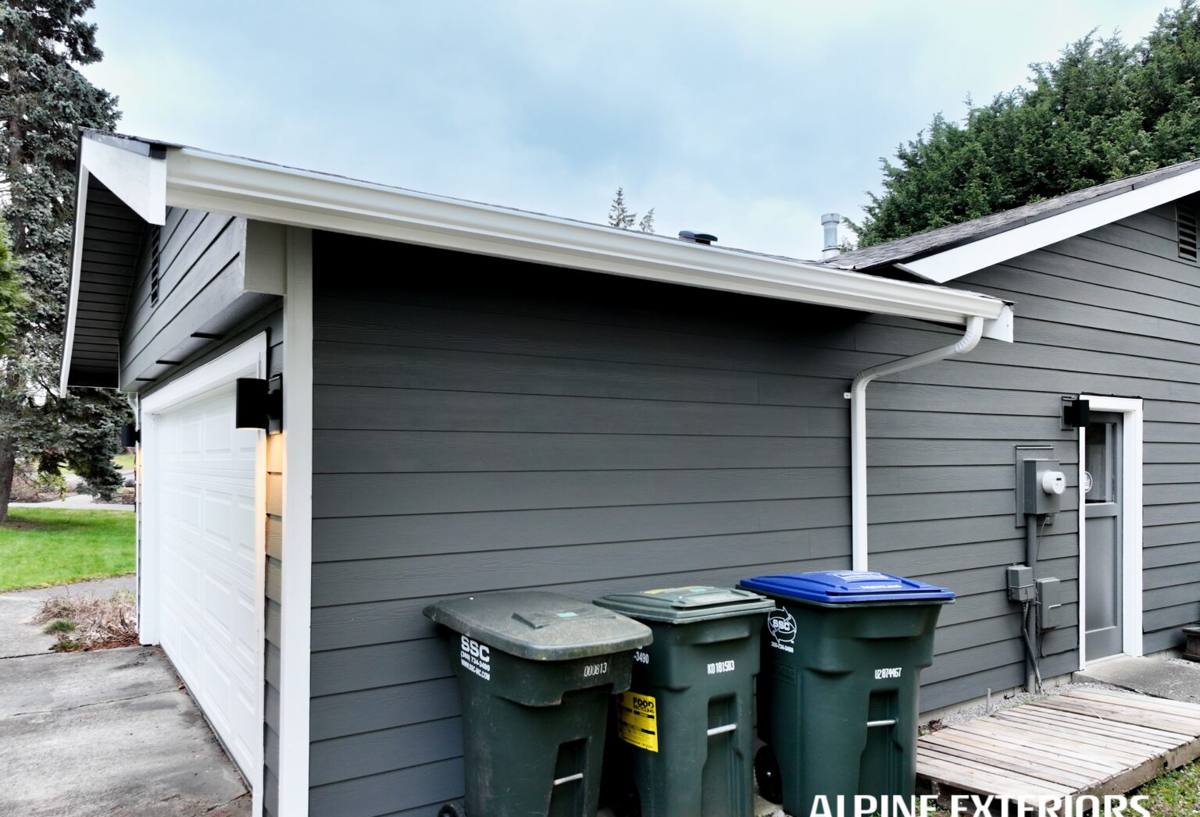
Signs Your Siding Needs Repair — Not Just a Repaint
Homeowners often call us after noticing something cosmetic, only to find the underlying problem is further along than it looks. Here's what we tell people to check for before deciding a repair can wait:
- Soft or spongy spots when you press on a panel, especially near the bottom courses and around window and door trim
- Visible cracking or splitting at panel edges, corners, or butt joints
- Bubbling, peeling, or chalky paint that keeps coming back after repainting
- Gaps that have opened up around trim, window casings, or where siding meets the roofline
- Streaking or dark staining below seams, which usually points to water getting behind the panel rather than just running down the surface
- Panels that have visibly warped, bowed, or pulled away from the wall
- Rust streaks around fasteners or corner trim, common where metal components have taken salt exposure
Any one of these can be a contained, inexpensive fix if it's caught early. Left alone through a few more storm seasons, most of them turn into a much larger job — because the damage almost always starts at the surface and moves inward.
What a Correct Siding Repair Actually Involves
It Starts Behind the Panel, Not On It
A repair that only addresses what's visible from the street is a temporary patch, not a fix. Before we touch a damaged section, we pull it back far enough to check the water-resistive barrier, the flashing at any penetrations, and the condition of the sheathing underneath. In this climate, wind-driven rain finds its way behind siding more often than homeowners expect, and a panel that looks fine on the surface can be sitting over damp or compromised sheathing.
Matching Material and Reveal
Siding repair only looks right — and performs right — when the replacement section matches the existing profile, reveal, and color. Mismatched patches are one of the most common complaints we hear from homeowners who had repairs done by someone unfamiliar with their specific siding line. This matters even more with fiber cement, where different product generations can have slightly different dimensions.
Flashing and Sealant Done to Spec
Most siding failures we get called out for aren't failures of the panel material itself — they're failures of the flashing, caulking, or fastening around it. A correct repair re-flashes any penetration that was disturbed, uses sealants rated for exterior UV exposure, and fastens according to the manufacturer's actual installation instructions, not just "close enough."
Common Repair Scenarios We See in This Area
A few patterns show up repeatedly on homes in and around Land O' Lakes:
- Impact damage from wind-blown debris during storm events — cracked or punctured panels, usually on the side of the home facing prevailing wind
- Moisture intrusion at butt joints and corners where original caulking has dried out and separated under UV exposure
- Trim and fascia rot adjacent to siding, often the real source of a problem that first shows up as staining on the siding itself
- Fastener corrosion on older installations that used fasteners not rated for coastal-influenced humidity and salt exposure
- Thermal cracking on lower-quality or improperly installed panels that expand and contract with Florida's wide temperature and humidity swings
Diagnosing which of these you're dealing with — and whether it's isolated or a sign of a broader problem — is the first thing we do on any repair call, before we talk about scope or cost.
Repair or Replace? How We Make That Call
Not every damaged section needs a full re-side, and we're not going to tell you it does. But there's a point where patch repairs stop making financial sense. Here's how we walk homeowners through that decision:
| Factor | Leans Toward Repair | Leans Toward Replacement |
|---|---|---|
| Extent of damage | Isolated to one or two sections/elevations | Spread across multiple walls or the whole exterior |
| Underlying sheathing | Dry, sound sheathing found on inspection | Soft, water-damaged sheathing in multiple areas |
| Age of existing siding | Newer installation, still within useful life | Original siding is decades old or already failing broadly |
| Material match | Matching material/profile is available | Discontinued profile that can't be matched cleanly |
| Root cause | One-time impact or isolated flashing failure | Systemic issue (poor original install, wrong fasteners, chronic moisture path) |
We'll always recommend the smaller, less expensive option when it genuinely solves the problem. If a repair would just be a stopgap on top of a bigger issue, we'll tell you that directly, along with why.
Our Process for a Land O' Lakes Repair Call
- On-site inspection. We look at the damaged area and the surrounding sections, not just the spot you called about, since related problems often sit nearby.
- Behind-the-panel check. Where damage suggests possible moisture intrusion, we open up the area enough to inspect the barrier and sheathing before quoting anything.
- Written scope and estimate. You get a clear explanation of what's being repaired, why, and what it involves — no vague line items.
- Repair using matched material. We source or fabricate matching panels and trim so the repaired section blends with the rest of the home.
- Correct flashing, fastening, and sealing. Every repair is re-flashed and sealed to the manufacturer's specification for this climate, not a generic shortcut.
- Final walkthrough. We review the completed repair with you before considering the job done.
Why It Matters That We Already Work in This Area
Siding repair isn't one-size-fits-all, and neither is Florida weather exposure. A crew that mainly works inland, milder climates may not think twice about caulking choices, fastener grade, or flashing details that matter a great deal on a home exposed to Gulf-driven storms and salt air. A crew that regularly works homes across the greater Oldsmar and Tampa Bay area already knows which repair shortcuts fail here within a year or two, and builds every repair — even a small one — to hold up against the next hurricane season, not just look fine until then.
That local familiarity also means faster, more accurate diagnosis. We've seen the recurring failure points on this region's homes enough times to know where to look first, which shortens the inspection and keeps the estimate honest.
Why We Repair — and Replace — With James Hardie Only
When a repair calls for new material, or when a homeowner decides a larger section is worth upgrading rather than patching, we use James Hardie fiber cement exclusively. We don't install vinyl, LP SmartSide, or other fiber cement alternatives, and that's a deliberate standard, not a sales pitch. Hardie's fiber cement is non-combustible, holds up to Florida's humidity and UV exposure without the warping or moisture problems we see in wood-based and vinyl alternatives, and its factory-applied ColorPlus finish resists the fading that plagues field-painted siding in this much sun. Hardie also engineers specific product lines for high-humidity, storm-prone climates like ours, backed by a strong transferable warranty when installed to spec. When we make a repair, we want it to hold up as long as the rest of your siding — and we've found that's most reliably true with this system, installed correctly.
If you're noticing cracking, staining, gaps, or storm damage on your Land O' Lakes home's siding, we're happy to take a look. Reach out for a free, no-pressure estimate — we'll tell you honestly whether you're looking at a simple repair or something bigger, and what it would take to fix it right.