 Oldsmar Siding
 Deck Repair Built for the Lutz Climate
Lutz sits close enough to the Gulf and Tampa Bay that decks here take on the same abuse as anything closer to the water: long stretches of intense UV, sudden downpours, humidity that never really lets wood dry out completely, and the occasional hurricane-force wind event that finds every weak connection on a structure. A deck that would hold up fine in a drier, cooler climate can start failing in five to eight years here if it wasn't built or maintained with this environment in mind.
Homeowners in the Lutz and Oldsmar area often call us after noticing one specific problem — a soft board, a wobbly rail — only to find during inspection that the issue is connected to something larger underneath. That's not unusual for this part of Pinellas and Hillsborough County. The visible symptom is rarely the whole story, and a repair that only addresses what you can see often needs to be redone within a year or two.
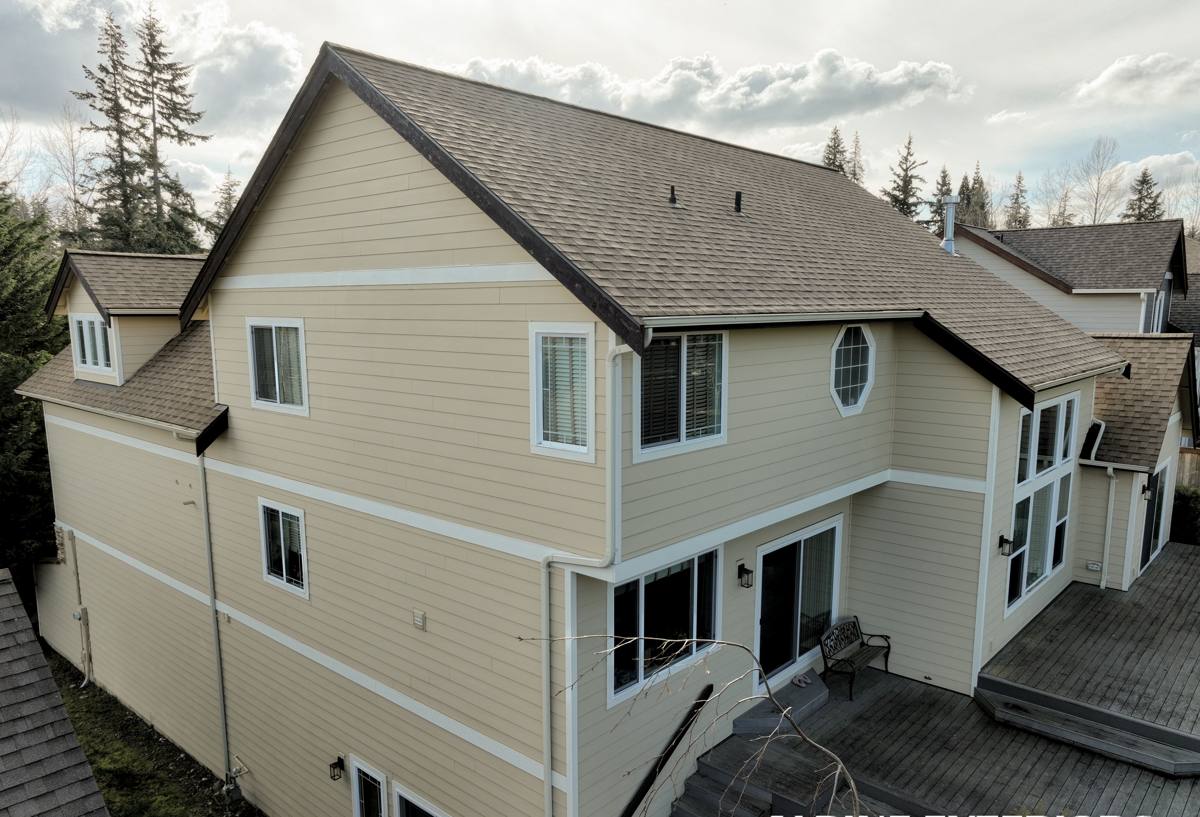
Why Decks in This Area Fail Faster Than the Manufacturer's Numbers Suggest
UV Exposure
Florida sun is direct and nearly constant for most of the year. On wood decking, UV breaks down surface fibers and dries out natural oils, leading to graying, splintering, and checking (those small surface cracks that run with the grain). On composite decking, UV exposure over years can fade color and, on older or lower-grade products, cause the surface cap to become brittle.
Wind-Driven Rain
It's not just rainfall totals that matter — it's how the rain arrives. Wind-driven rain gets pushed sideways into gaps, under flashing, and into end-grain cuts that weren't sealed properly during the original build. Water that gets into end grain or a fastener hole and can't escape quickly is the single biggest cause of hidden rot we find.
Humidity and Poor Drying Conditions
Between rain events, high humidity slows drying time. A board that gets wet in the morning may still be damp at dusk. Wood that stays damp longer than it stays dry is on a fast track to decay, especially at joints, under furniture or planters, and anywhere airflow underneath the deck is restricted.
Salt Air and Corrosion
Even well inland from the immediate coastline, salt-laden air moves through this part of the county and accelerates corrosion on fasteners, joist hangers, and railing hardware. Corroded fasteners lose holding strength long before they look obviously rusted through, which is why hardware condition is one of the first things we check, not the last.
Wind Load
Railings, stair stringers, and ledger connections are engineered to resist a certain amount of lateral force. Corrosion, loosened fasteners, or rot at connection points reduces that capacity well before storm season arrives, so the deck may look fine right up until it's tested by a high-wind event.
The Deck Problems We See Most Often in Lutz
- Soft or spongy decking boards — usually rot from trapped moisture, often worse near the house or in shaded, poorly ventilated areas
- Loose or wobbly railings — corroded fasteners, or posts that were never properly through-bolted to the frame
- Ledger board separation — the board that attaches the deck to the house pulling away, sometimes from flashing that was missing or installed incorrectly
- Corroded joist hangers and fasteners — hardware that's lost holding strength even if the wood around it looks intact
- Stair stringer cracking or rot — high-stress members that take a beating from foot traffic plus moisture
- Surface graying, splintering, and checking — cosmetic on the surface, but often a sign the protective finish failed years ago
- Fastener pop and board cupping — boards that have absorbed and released moisture repeatedly until they warp
Repair Considerations by Decking Material
What a correct repair looks like depends heavily on what the deck is built from. We work on all of the common types found in this area, and each has its own failure pattern and repair logic.
| Material | Where it typically fails first | Repair approach | Notes for this climate |
|---|---|---|---|
| Pressure-treated wood | End grain, fastener holes, ground contact, shaded/damp spots | Replace affected boards or framing, reseal cut ends, re-fasten with corrosion-rated hardware | Needs re-sealing every 1-3 years here to keep up with UV and moisture |
| Cedar or other natural wood | Surface UV damage, splintering, occasional insect activity | Sand and refinish where sound, replace where soft or structurally compromised | Higher maintenance commitment in constant Florida sun |
| Composite decking | Fastener points, board ends at edges, older/lower-grade capstock fading or flaking | Board-by-board replacement matched to existing color/profile where possible | Lower maintenance, but exact color matches get harder as boards age and fade unevenly |
| PVC decking | Thermal expansion gaps done wrong, hardware corrosion, occasional surface scratching | Correct fastening and gap spacing, hardware upgrades | Handles moisture well; most failures we see trace back to installation, not the material |
Whatever the deck is built from, the substructure — framing, joists, hangers, ledger, posts — matters more than the decking surface itself. We've replaced plenty of decking boards over the years on top of framing that needed attention first, and it's not a shortcut we're willing to take.
What a Correct Deck Repair Actually Involves
A repair that's done right starts below the surface, not at it. Here's the order we work in:
- Full structural check — ledger connection, posts, footings, joists, and hangers, checked for rot, corrosion, and movement, not just visual inspection from the top
- Moisture assessment — identifying where water is getting in and, just as important, where it's not getting a chance to dry out
- Isolating the real scope — determining how far damage extends past the visible problem, since rot and corrosion both spread along the path water traveled
- Repair or replacement of framing first — a new deck board over compromised framing is a repair that will need to be redone
- Fastener and hardware upgrade where needed — matching hardware to the environment, not just to what was there before
- Surface repair or replacement — boards, railings, and stairs brought back to a safe, solid, presentable condition
- Sealing and finishing where applicable — end grain, fastener holes, and exposed cuts sealed against the next round of Florida rain
Our Process When You Call Us for a Lutz Deck Repair
We keep this straightforward because homeowners deserve a clear answer, not a sales pitch:
- Free on-site inspection — we walk the deck, check framing accessible from below when possible, and probe suspect areas rather than guessing from the surface
- Honest scope discussion — we'll tell you plainly if it's a targeted repair, a larger structural fix, or if replacement makes more sense than continued repair
- Written estimate — broken down so you understand what you're paying for and why, with no pressure to decide on the spot
- Scheduled work — timed around weather where we can, since Florida's rain patterns don't always cooperate with a calendar
- Final walkthrough — we go over what was done and what to watch for going forward
Repair vs. Replace: How to Think About the Decision
Not every deck problem calls for a full rebuild, and not every deck is worth chasing repair after repair. A few honest factors that tip the decision:
| Factor | Leans toward repair | Leans toward replacement |
|---|---|---|
| Framing condition | Solid, dry, no widespread rot | Rot or corrosion found at multiple structural points |
| Age of the deck | Under 10-12 years, built to a reasonable standard | Original construction is old or was never properly permitted/engineered |
| Extent of damage | Isolated to a few boards, one rail section, or a stair run | Damage spread across the deck surface and substructure |
| Ledger/attachment condition | Ledger and flashing intact and properly attached | Ledger separation, missing flashing, or signs of long-term water intrusion at the house connection |
We'll always tell you honestly which side of that line your deck falls on. A repair that patches over a structural problem isn't a favor to you — it just delays a bigger cost.
Signs You Should Get a Deck Inspection Soon
- Boards that feel soft, spongy, or flex more than they used to underfoot
- Railings that wobble, or posts that move when pushed
- Visible gaps or movement where the deck attaches to the house
- Rust staining around fasteners or hardware
- Stairs that feel less solid than the rest of the deck
- Standing water that doesn't drain within a reasonable time after rain
- Any deck that hasn't been inspected since before the last major storm season
Why It Matters to Hire a Crew That Already Works in Lutz
Deck repair isn't just carpentry — it's carpentry that has to hold up against a specific set of conditions. A crew that regularly works decks in Lutz and the surrounding Oldsmar area already knows which failure points show up again and again in this climate, what hardware actually holds up to the salt air and humidity here, and how local wind exposure factors into railing and post connections. That's not something you get from a crew that mostly works a different climate and treats Florida jobs as a side trip.
We also know that a deck repair here isn't a one-and-done cosmetic fix — it has to survive UV, wind-driven rain, and the next storm season, not just look good on the day we finish.
Get an Honest Look at Your Deck
If your deck in Lutz or the greater Oldsmar area has a soft spot, a wobbly rail, or you just haven't had it looked at in a few years, it's worth getting a straight answer before the next storm season tests it for you. We offer free, no-pressure estimates — use the form below to schedule a time for us to come take a look.