 Oldsmar Siding
 Roof Repair Built for What Palm Harbor Actually Throws at a House
Palm Harbor sits close enough to the water that every roof here is doing double duty. It has to shed the wind-driven rain that comes off tropical systems, survive gusts strong enough to lift shingles that would stay put anywhere else, and hold up under sun exposure that never really lets up, even in the cooler months. Add the salt content in the coastal air moving through Pinellas County, and you have a roof environment that ages materials faster than the manufacturer's brochure suggests. A repair that looks fine on a calmer, drier roof somewhere inland can fail here within a season or two if it wasn't done with these conditions in mind.
That's the difference between a roof repair that holds and one that becomes a repeat service call. We treat every repair on a Palm Harbor home as if it has to survive the next named storm, not just look acceptable until then.
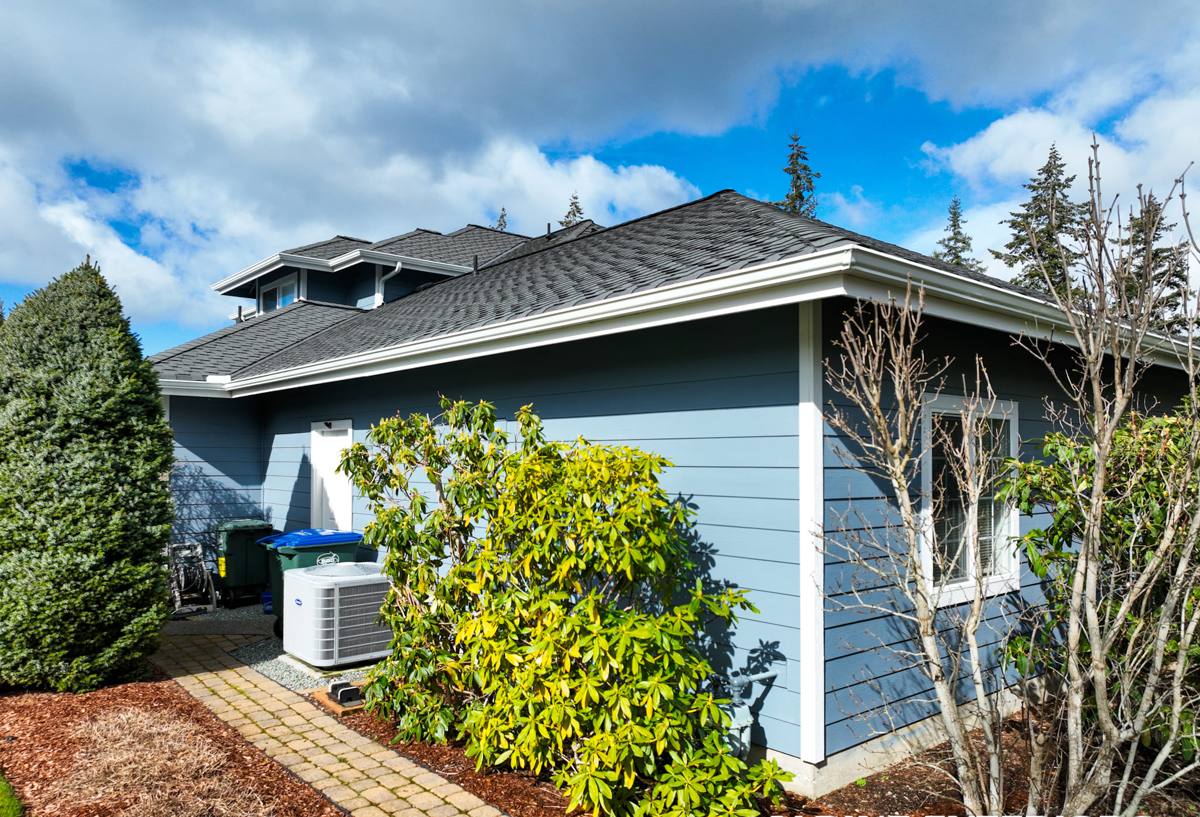
The Repair Problems We See Most Often in This Area
Every roof develops its own pattern of wear, but in Palm Harbor and the surrounding Oldsmar area, a few issues show up again and again:
- Lifted or missing shingles along ridges, hips, and roof edges — the areas that take the brunt of wind uplift during storms.
- Flashing failures around chimneys, skylights, and wall-to-roof transitions, where sealant breaks down under UV exposure and lets water in long before there's a visible ceiling stain.
- Valley leaks where two roof planes meet and water volume concentrates during heavy, wind-driven rain.
- Nail pops and cracked sealant strips from thermal cycling — roof surfaces here heat up and cool down repeatedly, which works fasteners loose over time.
- Soffit and fascia rot where trapped moisture and salt-laden humidity have quietly deteriorated the wood behind the roofline.
- Granule loss on aging shingles, which shows up as bald patches and thinning color, usually a sign UV exposure has been breaking the shingle down for years.
Most of these start small. The reason they turn into bigger repairs is that they're hidden — under a shingle tab, behind flashing, inside a soffit cavity — until a storm forces water through the weak point.
What an Actual, Correct Roof Repair Involves
Diagnosis before anything gets touched
A repair is only as good as the diagnosis behind it. Water rarely enters where it shows up. A stain on a ceiling might trace back to a flashing gap ten feet away, following the roof deck before it drips down. We inspect the full roof plane around any reported issue, not just the spot that's leaking, because patching the visible symptom while missing the actual entry point means the same call comes back after the next storm.
Matching materials, not improvising
Shingle color, profile, and granule blend change between manufacturing runs, so a patch using the wrong shingle stands out and can also create a slightly different water-shedding profile at the seam. Where an exact match isn't available, we're upfront about it rather than pretending it won't be noticeable.
Flashing and underlayment done right, not just resealed
A lot of "repairs" amount to a bead of caulk over failed flashing. Caulk is a short-term fix, not a repair — UV breaks it down within a year or two in this climate. A proper flashing repair means removing the failed material, addressing whatever underlayment or decking is beneath it, and reinstalling flashing that's properly integrated with the shingle courses above and below it, so water sheds over it rather than behind it.
Fastening for wind, not just for looks
Shingles that were nailed high, under-nailed, or nailed with the wrong pattern will lift again in the next round of gusts even if the repair looks clean the day it's finished. We re-nail to the pattern the shingle manufacturer specifies for high-wind areas, not the minimum that happens to hold on a calm day.
Repair or Replace? How We Help You Decide
Not every roof problem calls for a full replacement, and not every leak can be permanently solved with a patch. The right call depends on a few honest factors:
| Factor | Repair Often Makes Sense | Replacement Often Makes Sense |
|---|---|---|
| Roof age | Under roughly 12-15 years, with the rest of the roof in good shape | Nearing or past its expected service life |
| Extent of damage | Isolated to one section, flashing point, or valley | Spread across multiple roof planes |
| Granule loss / shingle condition | Localized, surrounding shingles still flexible and intact | Widespread brittleness or bald spots across the field |
| Decking condition | Solid, no soft spots found during inspection | Soft, delaminated, or water-stained decking discovered |
| Storm history | One-time event, isolated impact | Repeated storm damage claims on the same roof |
We'll tell you plainly which side of that table your roof falls on. If a repair will genuinely hold, we're not going to sell you a replacement. If a repair would just be a temporary patch on a roof that's fundamentally at the end of its life, we'll say that too, along with why.
Our Roof Repair Process
- Inspection. We walk the roof and the attic where accessible, tracing the source of any leak rather than just patching the visible symptom.
- Written estimate. You get a clear explanation of what failed, what the repair involves, and what it costs before any work starts — no vague verbal quotes.
- Material matching. We source shingles, flashing, and sealant components that match your existing roof system as closely as possible.
- The repair itself. Failed materials are removed, not just covered over, and the area is rebuilt to shed water and wind the way the original system was designed to.
- Cleanup and walk-through. Job site debris and old material are cleared, and we walk you through what was done and what to watch for going forward.
Roofing Materials We Work With
Most Palm Harbor homes are on asphalt shingle roofs, and that's where the majority of our repair work happens — architectural (dimensional) shingles are the most common, with better wind resistance ratings than older three-tab styles. We also handle repairs on tile and metal roofing where that's what the home has.
On underlayment, we favor synthetic underlayment over traditional felt paper for repair work. Synthetic sheds water more reliably if it's exposed to weather during the repair window, resists tearing during installation, and holds up better to the humidity that builds up under a Florida roof deck. Felt still has its place and isn't unsafe, but for the climate here, synthetic gives a wider margin of error, which matters on a repair where only part of the roof is being opened up.
We don't push a particular brand as the only option. What matters more than the label is whether the specific shingle line has a wind rating and installation spec that fits a coastal Pinellas County exposure, and whether it can be matched to what's already on your roof.
Why It Matters That We Already Work in Palm Harbor
A roof repair crew that only occasionally works this stretch of coastline can miss things a crew based here won't. Local wind exposure requirements, the way salt air accelerates fastener and flashing corrosion, and which failure points show up first on homes of a given age in this area — that's knowledge built from being on these roofs repeatedly, not from a general repair checklist. It also means we're not learning the local permitting requirements on your job; permits for roofing work in Pinellas County are handled correctly the first time, without delays that leave a tarp on your roof longer than it needs to be.
Being local also means accountability. If something about a repair doesn't hold up the way it should, we're not a company that did one job in the area and moved on — we're here, and we stand behind the work.
Roof Repair Checklist for Palm Harbor Homeowners
Between storms, a few minutes of looking can catch a small problem before it becomes a ceiling repair too:
- Missing, curled, or lifted shingles, especially along ridges and edges
- Granules collecting in gutters or at downspout outlets
- Dark streaks or stains on interior ceilings, especially near chimneys or skylights
- Visible daylight or gaps in the attic where the roof meets the walls
- Cracked or peeling sealant around flashing, vents, and roof penetrations
- Soft or discolored soffit and fascia boards
- Any shingles that shifted or blew off after a storm, even if no leak has shown up yet
If you notice any of these, it's worth having it looked at before the next round of weather rather than after.
Get a Straight Answer on Your Roof
If you're dealing with a leak, storm damage, or just an aging roof you want checked before it becomes a problem, we're happy to take a look. The estimate is free, there's no pressure, and you'll get an honest read on whether your roof needs a repair, a replacement, or nothing at all right now. Use the form below to get started.