 Oldsmar Siding
 Siding Installation for Lutz Homes
Lutz sits inland from Oldsmar, on the Hillsborough County side of the Tampa Bay area, in a community known for its wooded lots and small lakes rather than a waterfront skyline. It's outside city limits, and it's also outside the immediate coastal exposure that shapes a lot of siding advice written for Pinellas beach towns. That doesn't mean Lutz gets an easy pass on climate. It sits in the same hurricane-prone, high-UV, humid subtropical belt as the rest of the Tampa Bay region, and homes here take real punishment from wind, sun, and heavy seasonal rain over a normal service life. We install siding for homeowners throughout this part of our service area, and this page covers what a correct siding installation actually looks like for a Lutz property specifically — not a generic coastal Florida page repurposed with a new city name swapped in.
We install James Hardie fiber cement siding exclusively. We don't offer vinyl, LP SmartSide, Cemplank, Allura, primed spruce, or cedar as alternatives, and we'll explain why in the sections below rather than just asserting it.
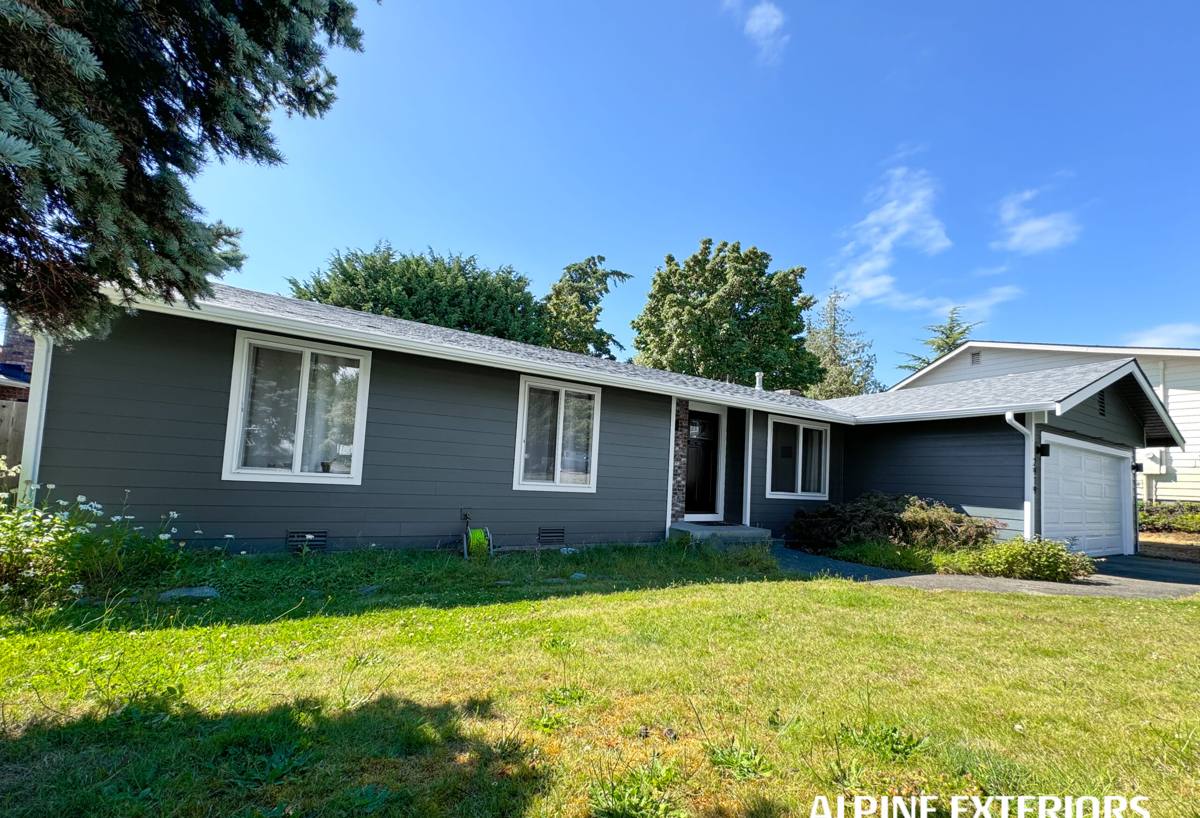
What the Climate Around Lutz Actually Does to Siding
Lutz doesn't take direct salt spray the way a bayfront or beachfront property does, but it isn't shielded from the storm systems, sun exposure, and humidity that define exterior wear across the whole Tampa Bay area. A handful of specific conditions do most of the damage over time.
Hurricane-Force Wind Loads
Hillsborough County, like Pinellas, sits inside hurricane wind zones that dictate real engineering requirements for exterior materials and fastening, not just marketing language. Wind doesn't need to make direct landfall nearby to matter here — tropical systems and strong seasonal thunderstorm lines routinely bring sustained gusts that test how well siding is fastened, lapped, and sealed at every edge. Siding that's under-fastened or installed to a lighter spec than the wind zone actually requires is one of the more common failure points we see on older Lutz homes.
Intense, Year-Round UV
Florida's sun angle and number of clear-sky days put a heavier UV load on exterior surfaces than most of the country sees, and that exposure doesn't ease up seasonally the way it does further north. UV breaks down pigments and surface coatings over years, which is why field-applied paint on wood or engineered wood siding tends to chalk, fade, and need repainting on a schedule that Florida homeowners end up managing more often than they'd like.
Wind-Driven Rain
Summer storm season in this part of Florida brings intense, short-duration downpours, often pushed sideways by gusty outflow winds ahead of and behind the rain itself. That's a harder test for lap joints, trim seams, and window flashing than a straight-down rain event, and it's exactly the kind of exposure that exposes weak flashing details years before a homeowner would otherwise notice a problem.
Inland Heat and Humidity
Because Lutz sits away from the immediate bay and Gulf breeze, afternoons here can run hotter and more humid than a coastal Pinellas lot just a few miles away. Sustained heat and humidity against a wall assembly is a slower, quieter stress than wind or rain, but it's a real one — it's the kind of condition that punishes any siding material with a core that can absorb moisture or that depends on a perfect, unbroken coating to keep humidity out.
Why We Install Only James Hardie Fiber Cement
We used to offer a wider range of siding products. Watching how different materials actually aged on Tampa Bay area homes — not just how they performed on a spec sheet — is what led us to standardize on one system.
- Non-combustible core: Fiber cement doesn't feed a fire, which matters for household safety and can factor into insurance conversations, unlike organic, wood-based siding materials.
- Factory-applied ColorPlus finish: The finish is baked on in a controlled factory setting rather than brushed on in the field, so it holds up to Florida's UV load and humidity far longer than a site-applied paint job.
- Climate-engineered HZ5 formulation: Hardie builds region-specific formulations, and the HZ5 line is engineered for hot, humid climates with high moisture exposure — a real match for the Tampa Bay area, Lutz included.
- Dimensional stability: Fiber cement doesn't swell, cup, or warp the way an engineered wood product can after repeated humid-season moisture cycling.
- Strong transferable warranty: Hardie's warranty structure, when the installation follows spec, gives a homeowner real protection rather than a marketing claim buried in fine print.
Vinyl softens and can warp under sustained direct heat, and its lapped, non-sealed joints aren't built to shed wind-driven rain the way this region delivers it. Engineered wood products depend on a treated wood-fiber core staying fully sealed at every field cut and fastener penetration for decades, which is a lot to ask in a climate this humid. Cedar and primed spruce are combustible, organic, and need a repainting schedule kept up consistently against UV this strong. Cemplank and Allura are other fiber cement manufacturers, and fiber cement as a category is the right direction — we standardized on James Hardie specifically for its HZ5 formulation, its ColorPlus finish, and the strength of its warranty and installer network in this region.
What a Correct Siding Installation Involves
James Hardie's own reputation depends heavily on installation quality, and we're upfront that the material alone doesn't do all the work. The installation details below are where a hurricane-zone job either holds up or doesn't.
| Installation Detail | Why It Matters in Lutz |
|---|---|
| Fastening pattern matched to the property's wind zone | Under-fastened siding is one of the most common failure points once sustained gusts hit a wall |
| Correct clearance from grade, roofline, and decks | Keeps splash-back and standing moisture off the board edge during heavy summer downpours |
| Flashing at every window, door, and penetration | Directs wind-driven rain away from seams instead of letting it track behind the wall |
| Factory-cut edges used wherever possible; field cuts sealed to spec | Preserves the ColorPlus finish's UV and moisture protection at every cut edge |
| Drainage plane or rain screen behind the siding | Lets any moisture that gets past the surface dry out instead of sitting against the wall in Florida humidity |
This is why we send trained installers to every job rather than treating fiber cement as an interchangeable swap for whatever material a crew is used to hanging. The product resists moisture and fire in its core, but the details around it — fastening, flashing, and clearance — determine whether that resistance actually gets used.
Our Installation Process for Lutz Homes
Every property is a little different, but the sequence we follow stays consistent because it's built around getting the substrate right before anything new goes on the wall.
- Inspection and estimate: We walk the exterior, look at the current siding and trim condition, check for signs of trapped moisture, and give a straight answer about what the home actually needs.
- Tear-off: Old siding comes off so we can see the sheathing and framing underneath, rather than installing new material over a wall we haven't actually inspected.
- Substrate repair: Any rotted sheathing, damaged framing, or compromised house wrap gets addressed before new siding goes on — skipping this step is how a siding job ends up covering a problem instead of fixing it.
- Weather barrier and flashing: A proper drainage plane and flashing system goes in at every window, door, and penetration before the first course of siding is hung.
- Siding installation: James Hardie boards and panels go up to manufacturer spec, with fastening matched to the property's wind zone requirements.
- Trim, caulking, and finish work: Corners, casing, and seams get finished to the same standard as the field siding, since these details are where problems tend to show up first if rushed.
- Final walkthrough: We go over the finished job with the homeowner before calling it complete.
Choosing the Right Hardie Product for a Lutz Home
| Product Line | Best Use | Why It Fits This Area |
|---|---|---|
| HardiePlank lap siding | Most single-family homes | Traditional lap profile sheds wind-driven rain when installed with correct overlap and flashing |
| HardiePanel vertical siding | Accent walls, gables, modern designs | Clean vertical lines that work well on contemporary and farmhouse-style homes common in the area |
| HardieShingle siding | Craftsman-style homes and accent sections | A shingle look without the moisture absorption and repainting cycle of real wood shingle |
| HardieTrim boards | Corners, window and door casing, fascia | Factory-finished trim resists the same UV and humidity load as the field siding |
Color and profile come down to the individual home, but the product family and the HZ5 formulation stay consistent — we spec for the property's actual exposure rather than defaulting to whatever's easiest to install.
Cost Factors for Siding Installation in Lutz
| Factor | What It Affects | Why It Matters Here |
|---|---|---|
| Tear-off vs. overlay | Labor scope and substrate access | Tear-off reveals hidden moisture and rot damage that overlay installation hides instead of fixes |
| Substrate condition | Repair cost before new siding goes on | Humidity and past wind-driven rain intrusion can rot sheathing and framing that isn't visible until tear-off |
| Wind zone fastening requirements | Material quantity and labor time | Hurricane wind zone specs can call for tighter fastening patterns than a lighter-duty install elsewhere |
| Home size and roofline complexity | Overall material and labor | More corners, gables, and penetrations mean more flashing and trim detail work |
| Site access | Labor time and equipment needs | Wooded and lake-adjacent lots common in Lutz can have tighter or longer access than an open in-town lot |
Exact numbers depend on the specific property, which is why we walk the home in person before giving a real figure instead of quoting off a generic price list.
Signs a Lutz Home Needs New Siding
- Soft spots or visible gaps at seams, corners, or trim joints
- Peeling, chalking, or fading paint that doesn't hold color the way it used to
- Warping, buckling, or cupping boards, especially on sun-exposed walls
- Rising energy bills that suggest the wall assembly isn't sealing the way it should
- Visible staining or discoloration after summer storm season
- Cracking or separation in trim and flashing around windows and doors
Why a Crew That Already Works Lutz Matters
Lutz is unincorporated Hillsborough County, which means siding permits and inspections for a Lutz project run through Hillsborough County's building department rather than a city office — a different process than a job inside Oldsmar's own city limits in Pinellas County. A crew that already handles both knows which wind-zone documentation and inspection steps apply on each side of that county line instead of learning it mid-project. Beyond paperwork, a crew that's worked this specific inland part of the Tampa Bay area knows which wall orientations take the worst afternoon sun, where wooded and lake-adjacent lots need extra attention to drainage and access, and which fastening and flashing details are worth the added time so a homeowner isn't dealing with a callback after the next storm season. That's the kind of judgment that comes from doing the work here repeatedly, not from a generic statewide checklist.
What to Expect When You Call Us
A siding project on a Lutz home starts with an honest look at the property, not a sales pitch. We'll walk the exterior, tell you plainly whether you're looking at a repair, a partial re-side, or a full replacement, and explain why we'd recommend James Hardie for a home with this kind of sun, wind, and moisture exposure. If you're planning a siding project in Lutz or anywhere else in our service area, reach out using the form below to schedule a free, no-pressure estimate.