 Oldsmar Siding
 Safety Harbor Sits Right Where Tampa Bay Meets the Weather
Safety Harbor's location along the Tampa Bay shoreline in Pinellas County is part of what makes it a great place to live — and part of what makes siding installation there a different job than it is a few miles inland. Homes here take a steady combination of hurricane-force wind gusts during storm season, intense year-round Florida UV, wind-driven rain that gets pushed sideways against exterior walls, and salt-laden air drifting off the bay. None of these on their own is unusual for the Gulf Coast, but together, over years, they expose every weakness in a siding job — the flashing detail that got skipped, the fastener that was overdriven, the seam that wasn't sealed correctly.
That's the lens we bring to every Safety Harbor project: not "what siding looks good going up," but "what siding, installed which way, is still doing its job in fifteen years." This page is specifically about siding installation for Safety Harbor — what the climate demands, what a correct install actually involves, and why the crew doing the work matters as much as the material itself.
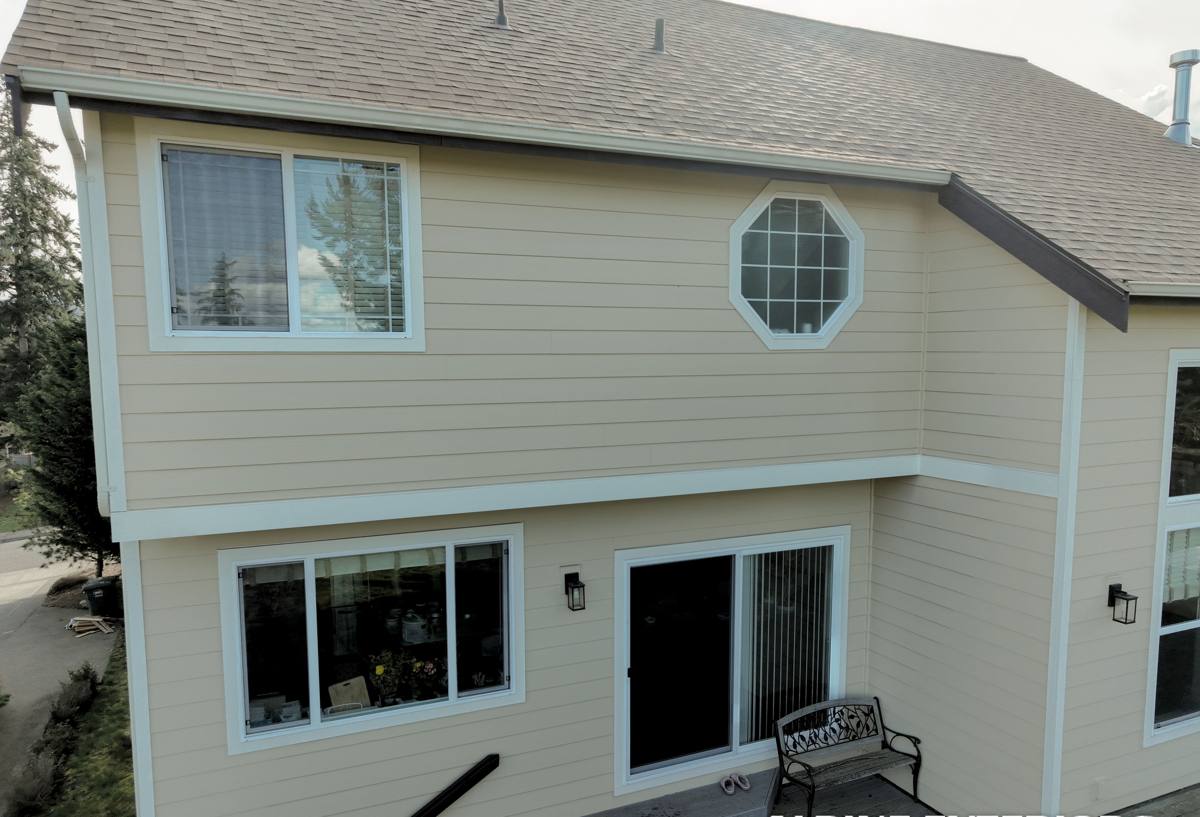
What Safety Harbor's Climate Actually Does to Siding
Wind and Wind-Driven Rain
Pinellas County sees tropical systems and strong seasonal storms that push rain horizontally into wall assemblies, not just straight down onto the roof. Siding that isn't lapped, fastened, and flashed correctly will let water track behind the cladding during these events — even if the surface material itself never gets damaged. The failure shows up later, as rot or mold in the sheathing, long after the storm has passed.
UV Exposure
Florida gets sun exposure most of the country doesn't, and it's relentless on painted or coated surfaces. Cheaper coatings chalk, fade unevenly, and require repainting well before a homeowner expects to touch the exterior again. The finish system matters as much as the substrate underneath it.
Salt Air
Homes close to Tampa Bay deal with airborne salt that accelerates corrosion on fasteners, trim, and any metal components in the wall assembly. Standard fasteners and flashing that would be fine forty miles inland can start failing years earlier here if they're not rated for a coastal-adjacent environment.
Individually, wind, UV, and salt are manageable. Combined, and repeated year after year, they're exactly the conditions siding installation has to be engineered around — not worked around after the fact.
What a Correct Siding Installation Actually Involves
Siding installation is often talked about like it's mostly a finish carpentry task — get the boards up straight and looking good. In a climate like this one, the parts nobody sees matter more than the parts everyone does.
Water Management Starts Before the First Board Goes Up
A correct install starts with a continuous weather-resistive barrier over the sheathing, properly lapped so water always sheds outward and down. Every window, door, and penetration gets flashed so water is directed away from the framing, not into it. This layer is invisible once the siding goes on — which is exactly why it's the layer most likely to get shortcut by a crew in a hurry.
Fastening and Clearance Standards We Won't Skip
Fiber cement siding has manufacturer-specified fastener types, spacing, and penetration depth for a reason — get it wrong and you either get squeaks and cracking from an overdriven nail, or a board that works loose in high wind. Proper ground clearance and clearance from roof lines, decks, and grade also matter here: siding installed too close to grade or a roof surface stays wet longer and invites the kind of moisture problems this climate is already primed to cause.
Seams, Caulking, and Trim Details
Butt joints, corners, and trim transitions are where water intrusion actually starts on most siding failures. These get treated as functional weatherproofing details, not just cosmetic finish work — sealed and flashed to manufacturer spec, not just caulked over and painted.
Why This Is a James Hardie-Only Job
We install James Hardie fiber cement siding exclusively — we don't offer vinyl, LP SmartSide, Cemplank, Allura, primed spruce, or cedar as alternatives. That's a deliberate standard, not a sales pitch, and it matters more in a place like Safety Harbor than it does somewhere with a milder climate.
Fiber cement is non-combustible, dimensionally stable in heat and humidity swings, and doesn't rot, delaminate, or attract termites the way wood-based products can. James Hardie's HZ product lines are specifically engineered for high-humidity, storm-exposed climates like ours, and the ColorPlus factory finish is baked on under controlled conditions — a more durable, UV-resistant finish than field-applied paint typically achieves, which matters directly given the sun exposure described above. It also carries a strong transferable warranty, which only holds real value when the installation itself was done to spec — another reason installation quality and material choice aren't separate conversations.
We're not going to pretend every other siding product is without merit — vinyl is inexpensive and low-maintenance in mild climates, and engineered wood has real fans. But we've made a professional call that the trade-offs (impact resistance, moisture behavior over time, performance in sustained coastal wind and salt exposure, finish longevity under Florida UV) don't hold up as well here, and we'd rather install one product correctly and stand behind it than offer several and hedge.
How Fiber Cement Compares for a Coastal Pinellas Home
| Factor | James Hardie Fiber Cement | Vinyl Siding | Untreated/Primed Wood |
|---|---|---|---|
| Wind resistance | Engineered HZ lines rated for high-wind regions | Can deform, crack, or blow off in sustained high wind | Structurally adequate but panel/board integrity depends heavily on install quality |
| UV/finish durability | Factory-baked ColorPlus finish resists fading | Can fade and become brittle under sustained sun | Paint requires more frequent recoating in intense UV |
| Moisture/rot risk | Non-combustible, doesn't rot; performance depends on correct install | Doesn't rot itself, but traps moisture behind it if installed poorly | Highest risk — prone to rot and pest damage if moisture reaches it |
| Salt air performance | Strong with coastal-rated fasteners/accessories | Generally stable but seams/hardware can degrade | Fasteners and finish both vulnerable to accelerated wear |
| Warranty structure | Strong transferable warranty when installed to spec | Varies widely by manufacturer/grade | Typically limited or product-only, not system-wide |
How Our Process Works for a Safety Harbor Project
- On-site assessment — we walk the exterior, check existing wall condition, and look for any signs of moisture or damage behind current siding before quoting anything.
- Scope and product selection — we go over the right Hardie product line, panel or lap profile, and color options for the home, along with a clear, honest cost range.
- Tear-off and inspection — old siding comes off and we inspect the sheathing underneath; any rot or damage gets addressed before new material goes up, not covered over.
- Weather barrier and flashing — the water-management layer goes in first, correctly lapped and flashed at every window, door, and penetration.
- Installation to manufacturer spec — fastening, clearances, and joint treatment follow James Hardie's published installation requirements, not shortcuts.
- Final walkthrough — we go over the finished work with the homeowner before calling the job done.
Why Hiring a Crew That Already Works Safety Harbor Matters
Siding installation quality depends on more than product knowledge — it depends on understanding the specific conditions a home in this area actually faces. A crew that regularly works Pinellas County homes near the bay already knows to plan around wind exposure, to use coastal-appropriate fasteners and accessories, and to expect the kind of storm-driven moisture challenges that inland installers may not build into their process by default. That familiarity shows up in the details: flashing choices, fastener spec, and how much attention goes into the water-management layer before the first piece of siding ever gets hung.
It also matters for permitting and inspection. Local wind-load and building code requirements in this part of Florida are specific, and a crew that's pulled permits and passed inspections on similar homes nearby isn't guessing at what's required — they know it going in.
What to Ask Before Hiring Anyone to Install Siding on Your Home
- Are you licensed and insured to do exterior work in Pinellas County, and can you provide proof?
- Will you inspect and address any damaged sheathing before installing new siding, or just cover what's there?
- What weather-resistive barrier and flashing method do you use, and is it manufacturer-specified for the product?
- What fastener type and spacing will you use, and are they appropriate for a coastal-exposure environment?
- Does the manufacturer's warranty stay valid with your installation, and what does that warranty actually cover?
- Can you walk me through your process from tear-off to final inspection before work starts?
What Homeowners Can Expect Afterward
Correctly installed James Hardie siding is genuinely low-maintenance — it doesn't need repainting on the same cycle wood does, and it holds up well against the wind, sun, and salt exposure that define this part of Florida. That said, no siding is maintenance-free forever: periodic rinsing to clear salt residue and debris, checking caulked joints and trim for wear, and prompt attention to any storm damage all extend the life of the installation. A well-installed system with reasonable upkeep is built to perform for decades, not just look good on move-in day.
If you're planning a siding project for a Safety Harbor home, or just want an honest opinion on the condition of what's on your walls now, we're glad to come take a look. The estimate is free, there's no pressure attached to it, and you'll get a straight answer about what your home actually needs.