 Oldsmar Siding
 Citrus Park sits close enough to Oldsmar and the rest of the Tampa Bay area that its homes deal with the same siding stresses we see on every job in this region: hurricane-force wind events, sun that doesn't let up for most of the year, rain that drives sideways instead of straight down, and salt-laden air moving in off the bay. Siding repair here isn't a cosmetic fix. Done right, it's about closing off the specific ways water and wind get behind a wall before that damage spreads into something a lot more expensive than a repair. This page covers what siding repair actually involves for Citrus Park homes, what we look for, and how our process works when you call us out.
Why Siding Repair in Citrus Park Isn't a One-Size Job
A lot of siding repair estimates get written off a quick look from the ground — patch the visible crack, caulk the gap, call it done. That approach works fine on a house in a mild climate. It doesn't hold up here. Citrus Park homes take on wind-driven rain during storms and even routine summer squalls, which means water gets pushed into seams and laps that would stay dry in a calmer climate. Add in the intense, near year-round UV this area gets, and materials that looked fine on the surface can already be brittle, faded, or losing their seal underneath. A repair that only addresses what's visible from the driveway often misses the actual point of failure.
That's the difference between a patch and a real repair: a patch covers the hole, a repair figures out why the hole is there and fixes that too.
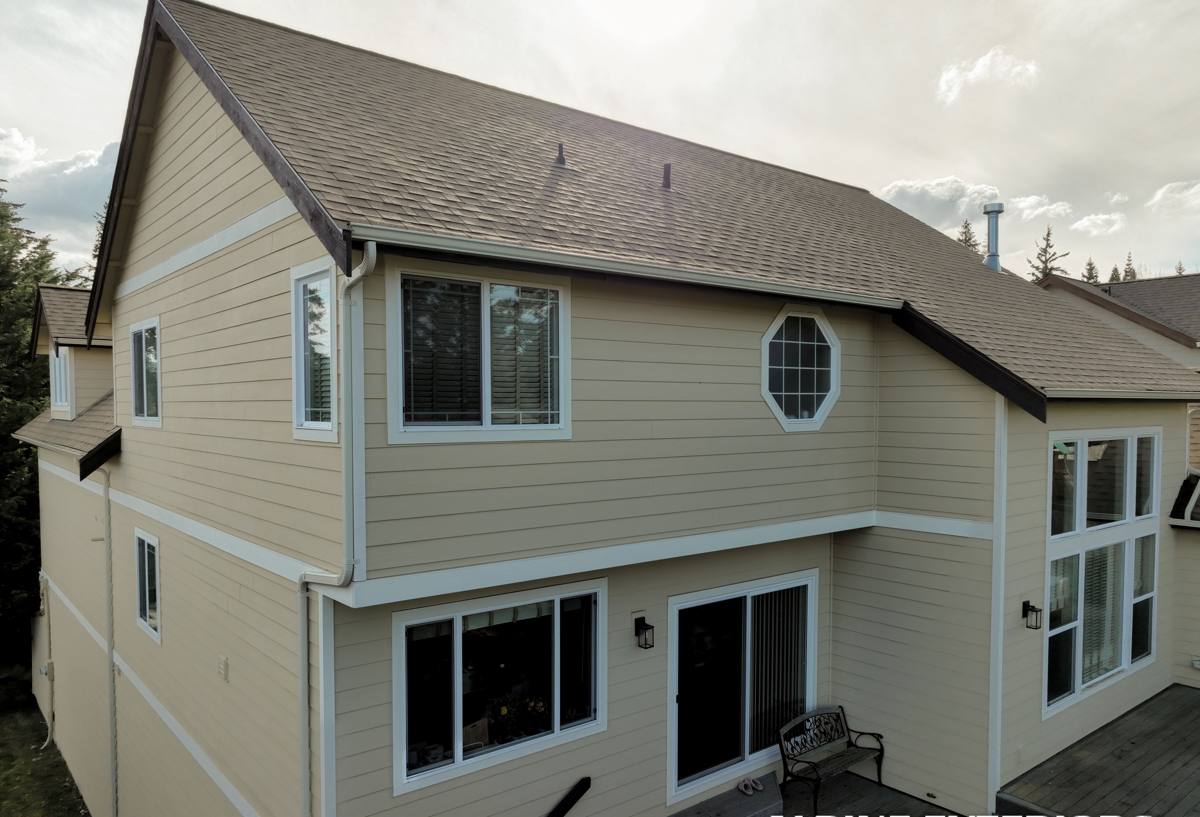
What Wind, UV, Rain, and Salt Air Actually Do to Siding
Hurricane-Force Wind
Wind doesn't just rattle loose boards — it works fasteners loose over repeated storm cycles, flexes panels at their edges, and can drive rain at angles that overwhelm laps and seams never designed to handle water moving sideways. A board that looks intact after a storm may have shifted just enough to open a gap that wasn't there before.
Year-Round UV Exposure
Constant sun breaks down caulking, sealants, and lower-grade siding materials faster than in almost any other part of the country. UV degradation shows up as chalking, fading, and brittleness — and brittle material cracks instead of flexing when the next storm hits, which is exactly when you don't want it to fail.
Wind-Driven Rain
Most siding systems are built to shed water that falls straight down. Wind-driven rain pushes water up and under laps, around trim, and into any gap that's opened up from age or storm stress. Once water gets behind the siding, the damage often isn't visible again until it's already reached the sheathing or framing underneath.
Salt Air
Citrus Park isn't right on the water, but this whole part of the Tampa Bay region still sees salt carried in on the air. Salt accelerates corrosion on fasteners, trim screws, and any exposed metal flashing — a slow process that weakens attachment points long before anyone notices a problem on the surface.
Common Repair Situations We See Near Oldsmar and Citrus Park
- Storm-loosened or blown-off boards — panels that shifted, cracked, or detached during high wind and need to come off, get inspected, and go back on correctly
- Cracked or split boards from UV embrittlement — material that's gone brittle from years of sun exposure and cracks under normal thermal movement or a minor impact
- Failed caulking and open seams — sealant that's dried out, shrunk, or pulled away, leaving a path for wind-driven rain to get behind the siding
- Water staining or soft spots near the bottom courses — signs that moisture has already been getting in for a while, often around window and door trim
- Corroded fasteners and trim hardware — nails, screws, and flashing that have weakened from salt exposure and no longer hold siding securely
- Impact damage — dents or punctures from storm debris, fallen branches, or lawn equipment
What a Correct Siding Repair Actually Involves
Real Inspection, Not a Surface Look
We start by checking what's happening behind the visible damage — pulling back adjacent boards where needed, checking for soft or water-stained sheathing, and looking at the surrounding fasteners and flashing rather than just the section that's obviously broken. A repair that skips this step often has to be redone within a year or two because the underlying cause never got addressed.
Matching Materials, Not Just Colors
Repairs should match the existing siding in profile and reveal, not just color. Mismatched board widths or exposures stand out and can create new water-entry points where old and new material meet. When we're replacing damaged sections, we use James Hardie fiber cement — it's the only siding product we install, and matching a Hardie ColorPlus finish to existing Hardie siding is straightforward because the factory finish is engineered to be consistent from batch to batch.
Sealing and Flashing Done to Handle This Climate
Every seam, lap, and trim joint we touch gets sealed and flashed to handle wind-driven rain specifically, not just a generic installation standard. That means proper lap sequencing so water sheds outward and downward even when rain is being pushed sideways by wind.
Fastening for Wind, Not Just Gravity
We fasten repaired sections to hold against hurricane-force wind loads, using corrosion-resistant fasteners appropriate for this area's salt exposure — not whatever was cheapest or fastest to install.
Repair or Replace? How We Make That Call
Not every siding problem needs a full replacement, and not every repair is worth doing instead of replacing a section outright. We look at a few factors before recommending either path.
| Factor | Leans Toward Repair | Leans Toward Replacement |
|---|---|---|
| Extent of damage | Isolated to a few boards or one wall section | Spread across multiple elevations or hidden behind visible damage |
| Underlying moisture | Sheathing and framing are dry and sound | Water has reached the sheathing or framing over time |
| Material condition | Surrounding siding is stable and not widely brittle or failing | Surrounding siding shows widespread UV degradation or age-related failure |
| Age of existing siding | Relatively recent installation with isolated storm or impact damage | Siding is near or past its practical service life |
| Match quality | New material can be matched cleanly to what's there | Discontinued profile or finish makes a clean match impractical |
We'll walk you through which side of that table your home falls on before we recommend a scope of work — not after we've already started.
Why We Only Install James Hardie, Even for Repairs
We don't install vinyl, LP SmartSide, Cemplank, Allura, primed spruce, or cedar. That's a standard we hold to on repairs the same as on full installations, and the reasoning is climate-specific. This part of Florida puts siding through hurricane wind loads, near-constant UV, wind-driven rain, and salt air all at once, and James Hardie's fiber cement holds up to that combination better than the alternatives we've chosen not to install. It's non-combustible, it's engineered for exactly this kind of climate exposure through Hardie's HZ5 product line, and the factory-applied ColorPlus finish is built to resist the fading and chalking that UV causes on lesser finishes over time. When we're patching a section of Hardie siding, we're matching into a product system we trust for the long run, backed by a real transferable warranty — not stitching in something that will age differently than the rest of the wall.
Why Hiring a Crew That Already Works Citrus Park Matters
Siding repair done by someone unfamiliar with this specific climate combination tends to treat every job the same way, regardless of region. A crew that regularly works Oldsmar, Citrus Park, and the surrounding Pinellas and Tampa Bay area already knows what wind-driven rain does to a poorly lapped seam, what a full Florida summer of UV does to cheap caulking, and how salt air chews through the wrong fastener over a few years. That local, repeated exposure to the same conditions means fewer surprises during the job and a repair that's built for what this specific area actually throws at a house — not a generic national standard.
Our Process, Start to Finish
- Initial call and scheduling — you describe what you're seeing, and we schedule a site visit.
- On-site inspection — we assess the visible damage and check behind it for moisture, fastener condition, and flashing issues.
- Honest scope and estimate — we tell you whether this is a repair or something that makes more sense to replace, and why.
- Material matching — for Hardie repairs, we match profile, reveal, and finish to your existing siding.
- The repair itself — proper removal of damaged sections, correction of any underlying cause, and installation sequenced to shed wind-driven rain.
- Final walkthrough — we go over the completed work with you before we consider the job done.
Signs It's Time to Call About a Repair
- Visible cracks, splits, or gaps in siding boards
- Caulking that's shrunk, cracked, or pulled away from seams and trim
- Soft spots or discoloration near the base of walls or under windows
- Boards that flex, rattle, or have shifted after a storm
- Rust staining running down from fasteners or metal trim
- A section of siding that looks or feels different from the rest of the wall
If you're seeing any of that on a Citrus Park or Oldsmar-area home, it's worth having someone look at it before the next storm season adds to the problem. We offer free, no-pressure estimates — fill out the form below and we'll take a look at what's actually going on with your siding.