 Oldsmar Siding
 Why Siding Repair Looks Different in Feather Sound
Feather Sound sits along Old Tampa Bay in Pinellas County, close enough to open water that homes here take on exposure a few miles inland doesn't see quite the same way. Salt-laden air moves off the bay steadily, not just during storms. The sun is intense and nearly constant across the year. Wind-driven rain comes off the water sideways instead of falling straight down, and when a tropical system tracks anywhere near the Tampa Bay area, hurricane-force gusts test every seam, corner, and fastener on a home's exterior at once. None of that is unique to Feather Sound in isolation, but the combination — bay-adjacent salt air, high UV, and real storm exposure — shows up on siding here faster than on a comparable home set back from the water.
That means siding repair in this neighborhood isn't just about patching whatever's visibly wrong. It's about figuring out whether what you're looking at is a cosmetic issue or the surface sign of something further along underneath, because those two situations call for very different fixes. This page covers what actually damages siding on Feather Sound homes, what a correct repair job involves, and why a crew that already works this area brings something a first-timer to the neighborhood can't.
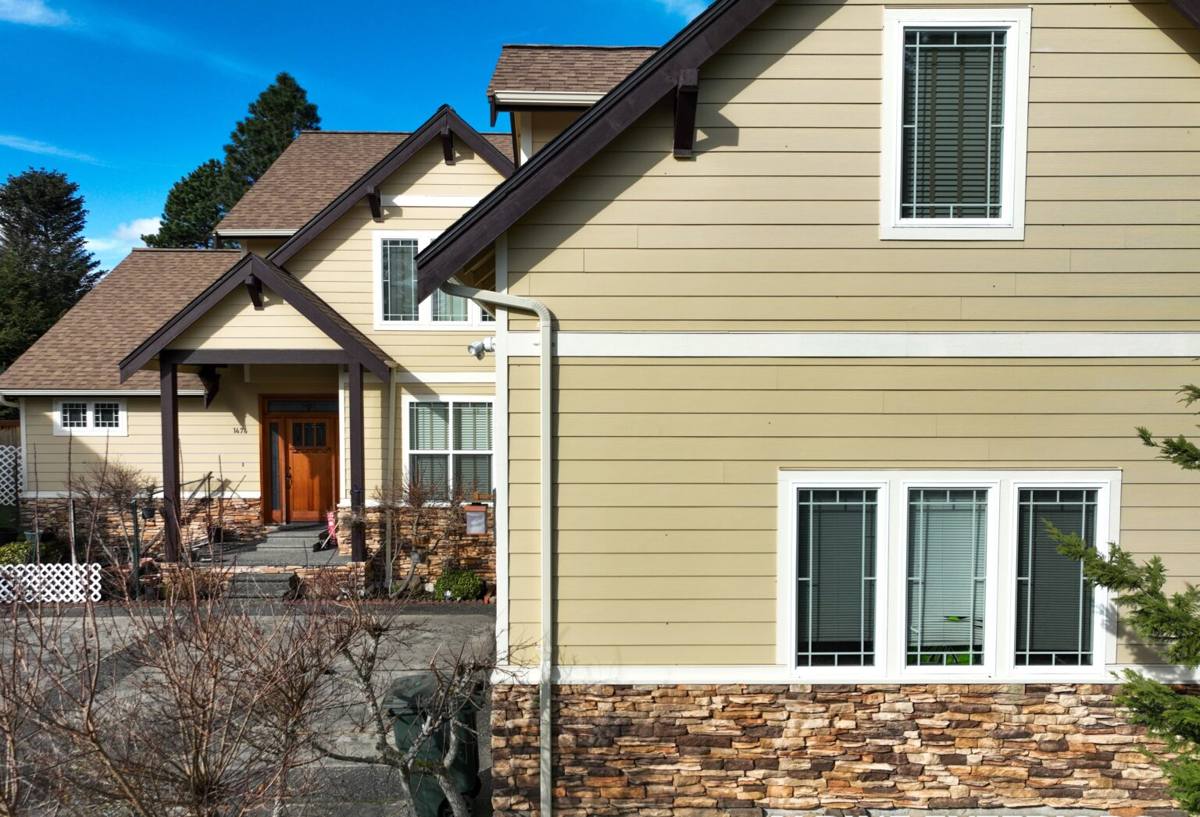
What Actually Damages Siding Here
Salt Air and Corroding Fasteners
Air carrying salt off the bay settles on siding, trim, and fasteners continuously, and it accelerates corrosion in ways that aren't visible from the ground until they've been developing for a while. A fastener that's lost holding strength to rust doesn't announce itself — it shows up later as a panel that's started to work loose, a seam that's opened slightly, or a section of trim pulling away. On homes closest to the water, this is one of the more common root causes behind siding problems that otherwise look cosmetic at first glance.
Year-Round UV Exposure
Florida's UV load is among the highest in the country, and Feather Sound homes take it directly for most of the year with little seasonal relief. On older or lower-grade siding, sustained UV exposure breaks down surface finishes, leading to fading, chalking, and eventually cracking as the material dries out and loses flexibility. Field-applied paint finishes are especially vulnerable, since they don't hold up to this level of sun exposure nearly as long as a factory-cured finish does.
Wind-Driven Rain
Rain that comes in sideways off the bay behaves differently than a straight-down shower. It gets pushed into laps, seams, and trim lines that were only designed to shed water moving downward, and it tests flashing around windows, doors, and any wall penetration far more aggressively than ordinary rainfall does. Where flashing is missing, undersized, or was never sequenced correctly with the water-resistive barrier behind the siding, wind-driven rain is where water finds its way in.
Hurricane-Force Wind Loads
When a storm system brings sustained wind or gusts through the Tampa Bay area, siding takes real structural load, not just water exposure. Fastening patterns that hold up fine under everyday conditions can still get tested hard during a wind event, and it's common after storm season to find panels that have loosened, trim that's separated slightly, or fastener lines that have started to fail even when nothing looks dramatically wrong from the curb.
Cosmetic Wear vs. a Real Repair Issue
Not every mark on a wall means the same thing, and telling the difference correctly is the actual job of a repair estimate — not just looking at the surface and guessing.
| Symptom | Usually Cosmetic | Often a Repair Issue |
|---|---|---|
| Faded or chalky finish | Yes — UV and weathering | Only if the surface is also cracking or peeling back |
| Hairline cracking at a seam | Sometimes — normal settling | Often — failed caulk joint letting water behind the panel |
| Panel that flexes or feels loose | Rarely | Usually — corroded or backed-out fasteners |
| Soft or spongy spot on the wall | No | Yes — moisture has reached the substrate underneath |
| Rust staining below a fastener | Cosmetic if isolated and dry underneath | Can indicate hardware failure starting beneath the surface |
| Gap or shift at trim or window casing | No | Yes — flashing detail needs attention before it worsens |
Cosmetic wear affects appearance and can generally be scheduled as routine maintenance. Anything involving softness, movement, or a gap at a flashing point shouldn't wait, because those are the signs that water is already getting past the siding rather than being shed by it.
How We Diagnose Before Recommending a Repair
A repair estimate that's actually useful starts with a real inspection, not an assumption from ten feet away. On a Feather Sound home, that typically includes:
- Checking fasteners and hardware closest to the bay-facing side of the home for early corrosion, since that side usually shows problems first
- Probing any soft-feeling section of siding or trim to confirm whether moisture has reached the substrate underneath
- Inspecting caulk joints and seams for cracking or separation, particularly around windows, doors, and any wall penetration
- Reviewing flashing at trim lines and penetrations for gaps or sequencing that was never correct to begin with
- Looking for storm-related damage that hasn't fully surfaced yet — loosened panels, popped fasteners, trim that's shifted since the last named system came through
- Checking grade clearance and drainage near the foundation, since siding sitting too close to wet ground wicks moisture regardless of material
We walk through what we actually find — what needs attention now, what can be monitored, and what's purely cosmetic — before recommending a scope of work.
Repair, Partial Re-Side, or Full Replacement?
Homeowners often assume any siding problem means tearing off the whole wall, or the opposite — that a patch will always be the cheaper and equally durable answer. Neither assumption holds up consistently. The honest factors that actually drive this decision:
- Extent of the damage. A section damaged by an isolated storm impact or a localized fastener failure is usually a straightforward repair candidate.
- What's actually behind the siding. If moisture has been tracking behind the wall for a while, patching the visible symptom without addressing the substrate underneath just delays a bigger job.
- Age and material of the existing siding. Siding nearing the end of its practical service life may only have a repair cycle or two left before replacement becomes the more sensible investment.
- Whether the original installation was detailed correctly. Some older installations weren't flashed or fastened to hold up against bay-adjacent wind and salt exposure the way current best practice calls for, and repairing those in place tends to just postpone the same failure.
We'll give you a straight answer on which category your home actually falls into, including when a repair is genuinely the right call rather than pushing toward the larger job.
What a Correct Siding Repair Involves
Matching Material and Finish
A repair should blend into the wall, not stand out as an obvious patch. That means matching profile, reveal, and — on James Hardie siding with a factory ColorPlus finish — getting as close a color match as the current product line allows. Where an exact match isn't available due to a discontinued color, we'll say so upfront rather than after the work is done.
Fixing the Cause, Not Just the Symptom
A soft or damaged panel is a symptom. A failed caulk joint, a missing flashing detail, or a corroded fastener line is usually the cause. Replacing the visible damage without correcting what let water in behind it tends to produce the same problem again, often faster the second time because the underlying issue was never addressed.
Flashing and Sealant Details
Because wind-driven rain off the bay tests seams and penetrations harder than ordinary weather does, repair work around windows, doors, and trim gets the same flashing and sequencing attention as new installation — not a lesser standard because it's a smaller job. Sealant finishes a correctly flashed detail; it doesn't substitute for one.
Upgraded Fastening Where Corrosion Caused the Problem
Where corroded fasteners are the root cause, we replace them with fastener types suited to coastal and bay-adjacent exposure rather than a like-for-like swap that will corrode again on a similar timeline. This is one of the details that determines whether a repair holds for years or needs redoing sooner than it should.
Why James Hardie Is What We Repair and Install
We install James Hardie fiber cement siding exclusively — we don't install LP SmartSide, vinyl, Cemplank, Allura, primed spruce, or cedar. For repair work, that standard matters in a specific way: if your home already has Hardie siding, we carry the product knowledge and access to match panels, trim, and ColorPlus finishes correctly. If your home has a different material failing in a way a patch won't meaningfully fix, we'll say so honestly and explain why we'd recommend transitioning to Hardie rather than chasing a product that doesn't hold up as well to bay-adjacent salt air, sustained Florida UV, and storm-driven wind and rain. Fiber cement is dimensionally stable, doesn't swell or wick the way wood-based products can, and Hardie's factory-applied finish resists fading and cracking far longer than a field-applied paint job — real advantages this close to this much sun and salt.
Repair Cost Factors for Feather Sound Homes
| Factor | What It Affects | Why It Matters Here |
|---|---|---|
| Extent of substrate damage | Whether repair stays cosmetic or requires opening the wall | Bay-adjacent moisture and salt exposure can advance hidden damage faster than it appears from outside |
| Color and profile match | Whether patched sections blend in | Older ColorPlus runs or discontinued profiles can require a wider color-matching effort |
| Fastener and hardware grade | Long-term durability of the repair | Standard-grade hardware corrodes faster this close to Old Tampa Bay |
| Storm timing | Scheduling and material availability | Demand for repair work rises quickly after a named storm passes through the area |
| Access and wall height | Labor time and equipment needs | Multi-story sections and tight side yards common in the neighborhood affect staging |
Exact costs depend on what an inspection actually finds, which is why we walk the property in person before giving a real number instead of quoting off a generic price sheet.
Why It Matters That We Already Work in Feather Sound
A crew that mostly repairs siding well inland can still do competent work here, but a bay-adjacent property in Pinellas County has variables that come up more often here than elsewhere in the Oldsmar area — corrosion patterns tied to salt exposure from open water, wind load considerations connected to storm tracks off the Gulf and bay, and finish matching on ColorPlus products that requires knowing what's actually available versus discontinued. Working this neighborhood regularly means we're not learning those variables on your project. We know what fastener grade holds up this close to the water, what a flashing detail needs to survive a real hurricane season, and how to give you an honest read on repair versus replacement, because we've done that work on homes like yours before.
If you're dealing with a specific issue — storm damage, a loose section, a soft spot you noticed after the last heavy rain — or just want a straight assessment of where your siding actually stands, we're glad to take a look and explain what we find plainly. Reach out below for a free, no-pressure estimate.