 Oldsmar Siding
 Siding Repair for Homes in Tampa Bay Golf and Country Club
Tampa Bay Golf and Country Club is one of Oldsmar's established golf course communities, with homes that span several decades of construction. That mix matters when something on the exterior needs fixing. A repair on a 1980s home with older lap siding is a different job than a repair on a home built or re-sided in the last ten years with fiber cement. Getting siding repair right here means correctly diagnosing what's actually failing, matching the existing material and reveal, and making sure the fix addresses the cause — not just the visible symptom.
We work on homes throughout Oldsmar and Pinellas County, and golf course communities like this one bring their own set of conditions: mature landscaping that shades and holds moisture against walls in spots, irrigation systems that can overspray siding daily, and HOA design standards that expect repairs to blend in, not stand out. A patch job that doesn't match color, texture, or reveal spacing is easy to spot from the street — and easy to get flagged on by an HOA architectural committee.
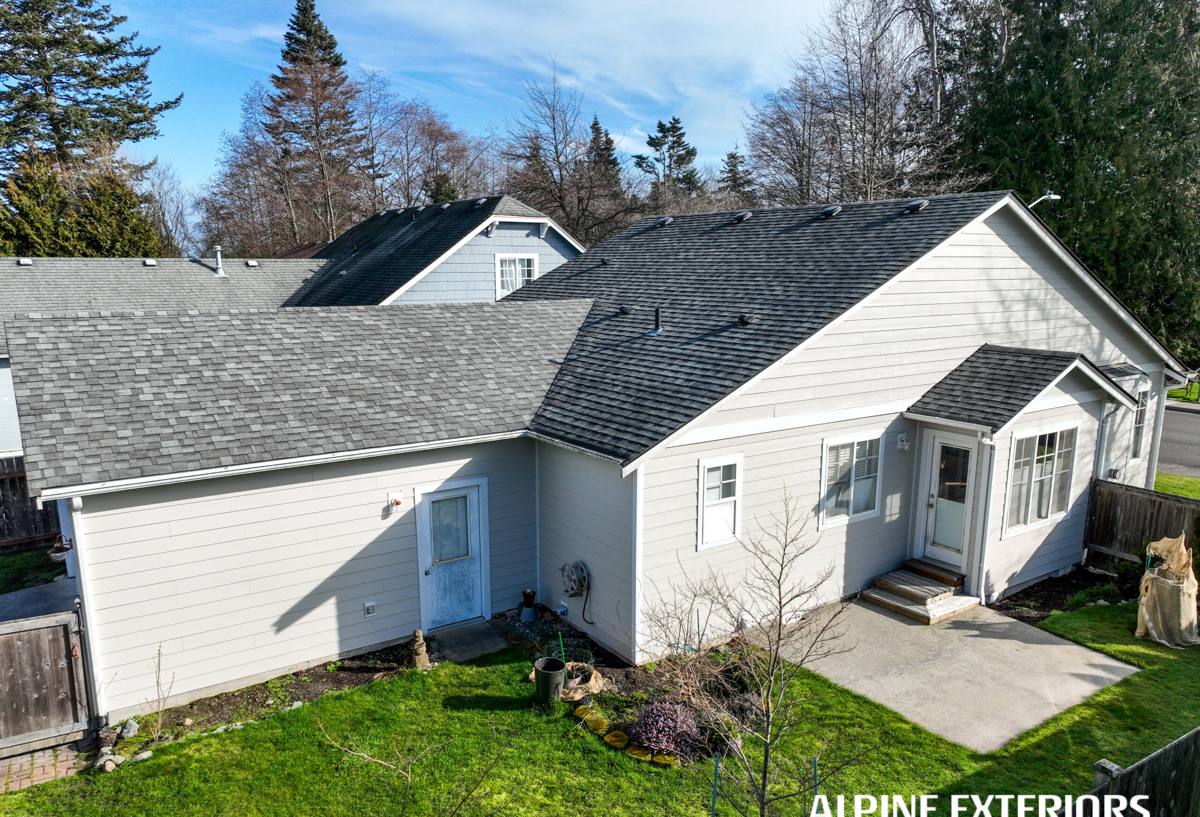
What Tampa Bay's Climate Does to Siding Over Time
Pinellas County sits in a demanding climate for exterior building materials, and siding damage rarely shows up out of nowhere. It's usually the accumulation of several stressors working on the same wall over years:
- Hurricane-force wind events — even when a storm doesn't cause obvious damage, repeated wind loading can loosen fasteners, work seams open, and stress caulked joints until they fail.
- Year-round intense UV exposure — Florida sun breaks down paint films, fades color, and dries out caulk and sealants faster than in most of the country.
- Wind-driven rain — Tampa Bay storms don't just fall straight down; wind pushes rain sideways into laps, seams, and trim intersections, which is where most hidden water intrusion starts.
- Salt air — Oldsmar's proximity to Tampa Bay means airborne salt reaches inland neighborhoods too, accelerating corrosion on fasteners, flashing, and any exposed metal components behind or around the siding.
None of these factors alone usually destroys a wall. It's the combination — UV drying out a caulk joint, wind opening it slightly, then wind-driven rain finding the gap — that turns a small maintenance item into a rot or moisture problem behind the siding.
Signs a Repair Is Needed, Not Just Cosmetic Touch-Up
Some damage is obvious — a cracked or missing panel after a storm. Other damage builds quietly and gets ignored until it's expensive. Homeowners in this neighborhood should watch for:
- Soft or spongy spots when you press on the siding, especially near the bottom courses or below windows
- Visible cracking, warping, or buckling in individual boards or panels
- Paint that's peeling, bubbling, or failing in one localized area while the rest of the wall looks fine — often a sign of moisture trapped behind that section
- Gaps opening up at seams, corners, or where siding meets trim, windows, or doors
- Discoloration or staining that doesn't wash off, which can indicate water tracking behind the surface
- Visible fastener corrosion or nail heads backing out
Diagnosing the Cause, Not Just the Symptom
The most common mistake in siding repair is treating the visible damage as the whole problem. A cracked board gets swapped out, but the flashing detail or caulk joint that let water in behind it never gets addressed — so the same spot fails again in a year or two. A correct repair starts with figuring out why that section failed in the first place:
- Was it a one-time impact (storm debris, a fallen limb) or ongoing moisture exposure?
- Is water getting in through a failed sealant joint, damaged flashing, or a penetration (a hose bib, vent, or light fixture) nearby?
- Is irrigation overspray hitting that section of wall every day, keeping it wet longer than it should ever be?
- Is there a grading or drainage issue at the foundation pushing moisture up into the lowest courses of siding?
Once we know the cause, we can decide whether the repair is a straightforward board or panel swap, or whether it needs to include a flashing correction, sealant detail, or a small adjustment to something like a sprinkler head so the same damage doesn't come back.
Repair vs. Replace: How We Make the Call
Not every damaged section needs a full re-side, and not every repair is worth doing in isolation. The right call depends on how widespread the damage is and what's causing it.
| Situation | Typical Recommendation |
|---|---|
| Isolated storm damage to a few boards or panels, siding otherwise sound | Targeted repair with matched material |
| Recurring moisture damage in the same spot despite past patch jobs | Investigate and fix the underlying cause first, then repair |
| Scattered soft spots or rot across multiple walls | Full inspection to assess whether repair or replacement is more cost-effective long term |
| Older lap or wood-based siding nearing the end of its service life, with new damage on top of general wear | Replacement usually makes more sense than continued patching |
| Fading or color mismatch only, no structural damage | Repaint or, if factory-finished Hardie, review warranty coverage before repainting |
We'll always tell you honestly when a repair is the right, cost-effective move — we don't push replacement on homes that don't need it. But we'll also tell you when continuing to patch the same failing spot is throwing money at a problem that needs to be fixed at the source.
Why Material Matching Matters
If your home already has James Hardie fiber cement siding, a proper repair means matching the exact profile, exposure, and finish so the repaired section is invisible once it's painted or, with ColorPlus finishes, color-matched. Hardie's product lines are engineered and manufactured with specific reveals and textures, so an off-brand patch — even one that looks close on the shelf — can leave a visible seam or shadow line once it's on the wall.
If your home has an older siding material that's showing its age throughout — not just in the damaged spot — that's often the moment to have an honest conversation about what goes back up. We only install James Hardie fiber cement, and when a repair area is large enough that we're recommending a section replacement rather than a patch, Hardie is what we use. It's non-combustible, holds up to Florida's humidity and moisture cycles far better than wood-based products, and its ColorPlus factory finish is engineered for the kind of UV exposure this region gets year-round — so a repaired section keeps its color and doesn't become the one visibly faded patch on the wall five years later.
What a Correct Repair Job Actually Involves
- On-site inspection — we look at the damaged area and the surrounding wall, not just the spot you called about, since related issues often show up nearby.
- Cause diagnosis — identifying whether the damage is impact, moisture, fastener failure, or a sealant/flashing issue.
- Material and color match — sourcing the correct profile and, for painted or ColorPlus finishes, the closest achievable match.
- Removal of damaged material — cut back to sound material and check the water-resistive barrier and sheathing underneath for hidden moisture damage.
- Correcting the underlying issue — repairing flashing, replacing failed sealant, or addressing a drainage or irrigation problem before new siding goes back up.
- Reinstallation to manufacturer spec — correct fastening pattern, gapping, and sealant detail so the repair performs like the rest of the wall.
- Final check — confirming the repair blends visually and that no other soft spots or damage were missed.
Why It Helps to Hire a Crew That Already Works This Neighborhood
A crew familiar with Tampa Bay Golf and Country Club already understands the practical side of working here — HOA expectations around exterior work, the layout and access considerations common to golf course lots, and the age range of homes in the community, which tells us what to expect before we even arrive. That familiarity translates into fewer surprises: we know to check for irrigation overspray patterns, we know what an HOA architectural review typically wants to see documented, and we know which siding eras are common enough in this neighborhood that we can usually source a close match quickly.
It also means a faster response after a storm. Wind and wind-driven rain events tend to affect a whole neighborhood at once, and a crew that already knows the area can prioritize and schedule repairs more efficiently than one starting from scratch.
Questions Worth Asking Before You Hire Anyone for a Siding Repair
- Will you diagnose the cause of the damage, or just patch what's visible?
- Can you match my existing siding's profile, reveal, and finish?
- Will you check for moisture or rot in the sheathing behind the damaged section?
- Are you licensed and insured to work in Pinellas County?
- What's your plan if the repair area turns out larger once you open it up?
Maintenance That Prevents the Next Repair
A few habits go a long way toward keeping siding in Tampa Bay Golf and Country Club from needing repair in the first place:
- Aim irrigation heads away from siding, and check them periodically since they can drift out of alignment
- Keep an eye on caulk joints around windows, doors, and trim — Florida sun ages sealant faster than in most climates
- Trim landscaping back from exterior walls so air can circulate and walls dry out after rain
- Do a visual walk-around after any significant wind event, checking for loosened panels or new gaps
- Address small issues early — a single loose or cracked board is a quick repair; the same issue left for two more storm seasons often isn't
If you're seeing damage, wear, or recurring issues on your home's siding in Tampa Bay Golf and Country Club, we're glad to take a look and give you a straight answer on what it needs. Reach out for a free, no-pressure estimate — there's a form right below to get started.