 Oldsmar Siding
 Why Citrus Park Siding Wears Out Faster Than the Warranty Promises
Homes in Citrus Park sit in one of the more punishing climates in the country for exterior building materials, even if it doesn't always feel that way on a calm afternoon. The combination that matters here isn't any single factor — it's all of them stacked together, year after year: sustained UV exposure that never really lets up, wind-driven rain that gets pushed sideways into every seam and joint, tropical-system winds that flex and stress panels and trim, and a steady dose of salt air drifting in off the Gulf. Individually, most siding products can handle one or two of these. Very few hold up well against all four for decades running.
That's why "how long will this siding last" is really the wrong question for a Citrus Park homeowner. The better question is "how will this siding behave after fifteen summers of UV, a few named storms, and constant coastal humidity?" That's the standard we replace siding to, not the standard printed on a sample chip in a showroom.
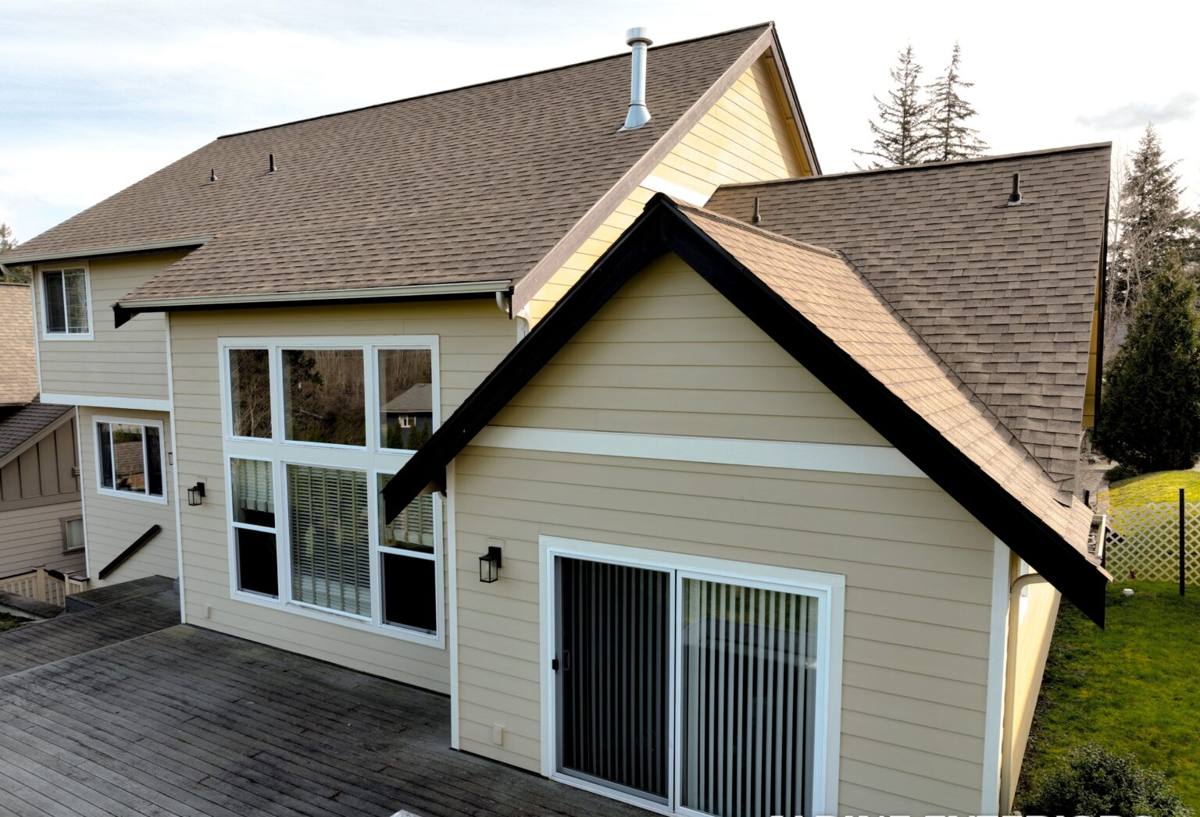
Signs a Citrus Park Home Needs Replacement, Not Another Repair
Siding failure in this climate rarely announces itself with a single obvious problem. It shows up as a pattern of small issues that, taken together, mean the material has reached the end of its useful life.
Visual and surface signs
- Fading or chalking that no longer responds to washing or a fresh coat of paint
- Warping, buckling, or panels that no longer sit flat against the wall
- Cracking at butt joints, corners, or anywhere panels were nailed too tight
- Visible gaps at seams where wind-driven rain has an easy path inward
Signs the damage has moved past the surface
- Soft or spongy spots when you press on the siding, especially near the bottom courses
- Peeling interior paint or wallpaper on the wall directly behind suspect siding
- A musty smell in a room along an exterior wall
- Rust streaking from fasteners, which usually means moisture has been sitting against them for a while
If you're seeing items from that second list, you're not looking at a cosmetic problem anymore — you're looking at moisture that has already gotten past the siding and into the wall assembly. At that point, patching the visible symptom without addressing what's underneath just buys a little time before the same section fails again.
What a Correct Siding Replacement Actually Involves
Siding replacement done right in a coastal, storm-exposed area is not just "remove old panels, nail up new ones." The siding itself is only one layer of a system, and every layer has to do its job or the whole assembly underperforms — regardless of how good the visible product is.
The parts that don't show once the job is done
A correct tear-off exposes the sheathing so it can actually be inspected, not just covered back up. Any rotted or water-damaged sheathing gets replaced before anything new goes on — installing new siding over compromised sheathing just hides a problem that will resurface. A weather-resistive barrier goes down next, lapped correctly so water is always directed outward and down, never into a seam. Flashing at windows, doors, and any wall penetration has to be integrated with that barrier in the right order — flashing installed after the fact, or caulked in as an afterthought, is one of the most common causes of hidden leaks in homes that otherwise look well-built.
The parts that do show — and still have to be done to spec
- Fastener type, length, and spacing matched to the manufacturer's requirements for this wind zone
- Proper clearance between the siding and the ground, roofline, and any hard surfaces
- Correct field-cut and factory-edge caulking and sealing at joints, per manufacturer instructions
- Trim, corners, and transitions installed to shed water rather than trap it
- Ventilation behind the cladding preserved or improved, not blocked
Skip any one of these steps and the failure clock starts over, no matter how good the siding material is. This is also why we don't quote a replacement without getting eyes on the sheathing first — what we find once the old siding comes off often changes the scope, and a Citrus Park home near the coast has a higher chance of hidden moisture damage than a comparable home further inland.
Why We Install Only James Hardie Fiber Cement
We made a deliberate decision to install one product line — James Hardie fiber cement — and not offer vinyl, LP SmartSide, cedar, or primed wood siding as alternatives. That's not a marketing position; it's a reflection of what actually holds up under the conditions described above.
Fiber cement is non-combustible, which matters in a state where wildfire and ember exposure are a real (if secondary) concern, and it doesn't soften, sag, or deform in high heat the way some engineered wood and vinyl products can on a west-facing wall in July. Hardie's ColorPlus factory finish is baked on under controlled conditions, which gives it more consistent UV resistance than field-applied paint — an important difference in a climate where UV exposure is close to constant. Hardie also engineers specific product lines (their HZ5 designation, for example) for higher-moisture, higher-humidity climates like ours, which is a level of climate-specific engineering most competing products don't offer.
None of this means other products are without merit — vinyl is inexpensive and low-maintenance in mild climates, engineered wood has a warmer appearance some homeowners prefer, and cedar has real aesthetic appeal. But when we weigh moisture behavior, impact resistance, installation sensitivity, and long-term warranty support against what a Citrus Park home actually experiences every year, fiber cement is what we're willing to put our name behind.
How Common Siding Materials Hold Up Locally
| Material | UV / Fading Resistance | Wind-Driven Rain | Salt Air Exposure | Typical Maintenance |
|---|---|---|---|---|
| Vinyl siding | Moderate — can fade and grow brittle over time | Moderate — seams can allow water intrusion | Moderate — can chalk and discolor near the coast | Low, but limited repair options once damaged |
| LP SmartSide / engineered wood | Good with factory finish, sensitive to cut-edge exposure | Moderate — vulnerable at unsealed cuts and joints | Moderate | Moderate — edge sealing and caulk upkeep required |
| Cedar / primed spruce | Fair — natural material, finish degrades with sun exposure | Fair — prone to swelling and checking | Fair — susceptible to rot in humid, salty air | High — regular refinishing and moisture monitoring |
| James Hardie fiber cement | Strong — factory ColorPlus finish resists fading | Strong when installed and flashed to spec | Strong — non-organic material resists salt-driven decay | Low — periodic cleaning and caulk inspection |
The comparison above reflects general material behavior, not a guarantee — every material's real-world performance still depends heavily on installation quality, which is why the process matters as much as the product choice.
Our Siding Replacement Process, Start to Finish
- On-site assessment. We walk the exterior, check for soft spots and existing moisture damage, and look at trim, flashing, and roofline transitions — not just the siding panels themselves.
- Scope and proposal. You get a clear breakdown of what's being replaced, what product and profile we're recommending, and what happens if we find sheathing damage once tear-off begins.
- Tear-off and inspection. Old siding comes off, sheathing gets inspected, and any rot or water damage is addressed before anything new goes up.
- Weather barrier and flashing. A new weather-resistive barrier is installed and integrated with correctly sequenced flashing at every window, door, and penetration.
- Hardie installation. Panels, planks, or shingles are installed to manufacturer fastening and clearance specifications for our wind zone.
- Finish work and walkthrough. Trim, caulking, and touch-up are completed, and we walk the finished job with you before calling it done.
What Drives the Cost of a Siding Replacement
We don't publish flat prices because two homes with the same square footage can have very different scopes once you account for what's actually driving labor and material needs. What we can tell you is which factors move the number most.
| Cost Factor | Why It Matters |
|---|---|
| Square footage of exterior wall area | The most direct driver of material and labor cost |
| Number of existing siding layers | Multiple layers mean more tear-off labor and disposal before installation can start |
| Sheathing condition found underneath | Rot or water damage discovered during tear-off adds repair scope |
| Trim, corners, and architectural detail | More cuts, transitions, and custom trim work add labor time |
| Siding profile and accessories chosen | Lap width, shingle profile, and trim style affect material cost |
| Access and site conditions | Height, landscaping, and staging space affect labor efficiency |
The only way to get a number that means anything is a proper on-site look — anything quoted sight unseen is a guess, and guesses tend to grow once the tear-off starts.
Why Local Experience in Citrus Park Actually Matters
A crew that mainly works inland doesn't necessarily think about wind-driven rain the same way a crew that works Gulf Coast homes every week does. Local experience shows up in small decisions: how tight to run fastener spacing given our wind exposure, how much clearance to leave at grade given our rain patterns, which flashing details tend to fail first on homes with this area's construction styles and roof pitches. It also shows up in the practical stuff — knowing the permitting process for the jurisdiction Citrus Park falls under, understanding local wind-load requirements, and being available if a named storm rolls through mid-project and work needs to pause and get secured. None of that is complicated, but it's the difference between a crew that's installed siding here for years and one that's installing it in this climate for the first time.
A Straightforward Checklist Before You Hire
- Do they inspect sheathing during tear-off, or just cover over what's there?
- Do they specify fastener type and spacing in writing, matched to local wind requirements?
- Do they explain their flashing sequence at windows and doors, not just the visible siding?
- Is the manufacturer warranty transferable, and do they explain what voids it?
- Will they give you a written scope before tear-off, and a change-order process if hidden damage is found?
If a contractor can't answer those five questions clearly, that's worth noticing before you sign anything.
If your Citrus Park home is showing any of the wear signs above, or you're simply planning ahead for a replacement, we're happy to take a look and walk you through what we find — no pressure, no obligation. Use the form below to request a free estimate.