 Oldsmar Siding
 Siding Repair Built for the Town 'N Country Climate
Homes in the Town 'N Country area near Oldsmar sit in one of the more demanding climates in the country for exterior building materials. Between hurricane-force wind events, months of intense subtropical UV exposure, wind-driven rain that finds every gap in a wall assembly, and the salt air that drifts inland off Tampa Bay and the Gulf, siding here works harder than siding almost anywhere else in the country. Repair work in this neighborhood isn't just about patching what's visible — it's about understanding how Pinellas County's climate attacks siding systems over time and fixing the problem at its source, not just its symptom.
We do siding repair work throughout the Oldsmar area, and Town 'N Country homes bring a fairly consistent set of issues: sun-baked and warped panels on west- and south-facing walls, water intrusion around trim and penetrations after wind-driven rain, and corrosion or fastener failure accelerated by salt-laden air. Knowing what to expect before we ever open a wall section lets us diagnose faster and repair more accurately.
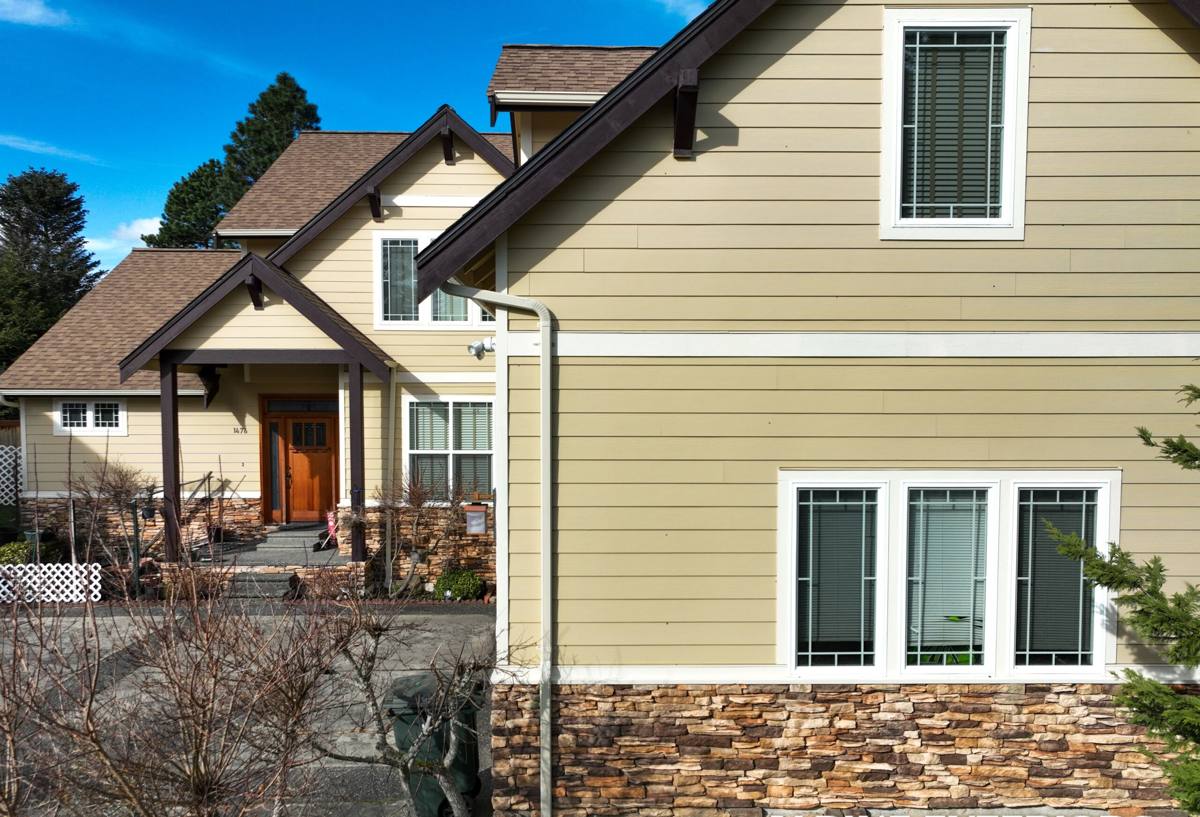
Signs Your Siding Needs Repair — Not Just Cosmetic Attention
Some siding damage is obvious. A lot of it isn't, especially when it starts behind the surface. Homeowners in this area should watch for the following:
- Visible cracking, splitting, or buckling in individual panels, especially near corners and butt joints
- Soft or spongy spots when you press on the siding or the trim around windows and doors
- Peeling, bubbling, or chalky paint that keeps coming back after touch-ups
- Staining or dark streaking near seams, which usually points to water getting behind the panel
- Warping or bowing on walls that face the most direct afternoon sun
- Rust streaks around fasteners or trim, common after years of salt-air exposure
- Gaps opening up at seams, corners, or where siding meets windows, doors, or the roofline
- A musty smell or visible mold/mildew growth on an interior wall that shares an exterior wall with damaged siding
Any one of these on its own might be minor. Several together, especially on the same wall, usually means moisture has been getting in for a while and the damage extends further than what you can see from the ground.
What Actually Damages Siding in This Part of Florida
Siding failure in Pinellas County rarely comes from one cause. It's usually a combination of stressors compounding over years. Here's how the main ones break down and what they typically do to a wall system:
| Climate Factor | Typical Effect on Siding | What Correct Repair Addresses |
|---|---|---|
| Hurricane-force / tropical storm winds | Loosened or torn-off panels, cracked corners, damaged fastening points | Re-securing to framing at correct nailing pattern, replacing cracked sections rather than caulking over them |
| Year-round intense UV exposure | Fading, chalking, warping on sun-facing walls, breakdown of lesser paint systems | Matching factory-finished material that resists UV fade instead of field-painted patches that weather differently |
| Wind-driven rain | Water forced up under laps and around trim, leading to hidden moisture behind the cladding | Correcting flashing, house wrap, and lap overlap — not just resealing the surface |
| Salt air / coastal humidity | Corroded fasteners and trim hardware, accelerated breakdown of moisture-sensitive materials | Using corrosion-resistant fasteners and materials engineered for humid, salt-exposed climates |
The common thread: most of what shows up as "cosmetic" damage on the surface started as a moisture or fastening problem underneath. A repair that only addresses the visible layer tends to fail again within a season or two.
What a Correct Siding Repair Actually Involves
Diagnosing Before Cutting Anything
Before we replace a single panel, we check what's behind it. That means inspecting the house wrap or weather barrier, checking for soft or rotted sheathing, and confirming whether water has traveled beyond the immediate damaged area. Cutting out a bad board and nailing up a new one without checking what's underneath is how the same repair ends up needed again in two years.
Matching Material, Profile, and Finish
One of the hardest parts of siding repair on an existing home is matching what's already there — the reveal, the profile, and especially the color. Mismatched patches are one of the most common complaints homeowners have after a repair done elsewhere. We work from James Hardie's factory-finished ColorPlus product lines specifically because that finish is manufactured to a consistent standard, which gives us the best chance of a clean match on an existing wall, and the best long-term color stability going forward.
Addressing the Water Path, Not Just the Hole
Any competent repair has to correct the water management detail that let moisture in to begin with — proper lap overlap, correct flashing at windows, doors, and penetrations, and a sound weather-resistant barrier behind the cladding. Skipping this step is the single biggest reason siding repairs fail to hold up through the next storm season.
Why We Repair With James Hardie Fiber Cement Only
We install and repair exclusively with James Hardie fiber cement siding. We don't install or patch with vinyl, LP SmartSide, Cemplank, Allura, or primed wood siding, and we think that's worth explaining rather than just stating.
Fiber cement is non-combustible and dimensionally stable in a way that matters a lot in a climate like ours — it doesn't warp, buckle, or soften from heat and humidity the way some engineered wood and vinyl products can over time. James Hardie also produces HZ5 products specifically engineered for high-humidity, storm-prone climates like Florida's, which is a meaningful distinction when the material is going to spend its life absorbing wind-driven rain and salt air. The ColorPlus factory finish process is baked and cured under controlled conditions, which gives it a real durability advantage over field-applied paint, and it carries a strong transferable warranty when installed to spec.
Practically speaking, this also means our repair work is more consistent. When we're patching a section of Hardie siding, we're working within one engineered system with known specs, rather than trying to reconcile installation methods and moisture behavior across several different product types. That consistency shows up in how well a repair holds up five and ten years later.
Our Repair Process, Step by Step
1. On-Site Assessment
We walk the affected areas of the home, check the extent of visible damage, and look for signs the problem extends past what's obvious from the outside — soft sheathing, interior staining, or damage at multiple points on the same wall plane.
2. Diagnosis and Scope
We identify the actual cause — wind damage, UV breakdown, water intrusion, fastener corrosion — and scope the repair around fixing that cause, not just replacing panels.
3. Material Matching
We source James Hardie material that matches the existing profile, reveal, and ColorPlus finish as closely as possible, so the repaired section reads as part of the wall rather than an obvious patch.
4. Removal and Underlying Repair
Damaged panels come off, and we address anything found underneath — compromised house wrap, damaged sheathing, or incorrect flashing — before anything new goes back up.
5. Installation to Manufacturer Spec
New material goes on following James Hardie's installation specifications for fastening pattern, clearances, and lap overlap, which is also what keeps the manufacturer's warranty intact.
6. Final Check
We walk the completed repair with you, confirm the fit and finish, and make sure water management details — caulking, flashing, trim — are sealed correctly before we consider the job done.
Repair or Replace? How We Help You Decide
Not every damaged section needs a full re-side, and not every "repair" candidate should stay a repair. We're honest about which is which, because a patch on a wall that's structurally compromised isn't doing you any favors.
| Situation | Usually Points To |
|---|---|
| Isolated damage to one or two panels, sound sheathing underneath | Targeted repair |
| Damage concentrated on one wall from a specific storm or impact event | Section repair or replacement of that wall |
| Widespread warping, staining, or soft spots across multiple walls | Full re-side likely more cost-effective long term |
| Siding is original, decades old, and failing in several places at once | Full replacement worth serious consideration |
| Damage is cosmetic only, structure and moisture barrier intact | Simple repair, no further work needed |
We'll tell you plainly if we think a repair is a short-term fix on a wall that's due for replacement in a few years anyway. That's a judgment call best made in person, after we've actually opened up the damaged area and seen what's underneath.
Why It Matters to Hire a Crew That Already Works Town 'N Country
Siding repair in this part of Pinellas County isn't identical to siding repair inland. A crew that regularly works this neighborhood already knows what wind-driven rain does at wall penetrations here, how fast UV breaks down lesser materials on west-facing walls, and how salt air accelerates fastener corrosion faster than it would forty miles inland. That local pattern recognition speeds up diagnosis and reduces the chance of a repair that looks fine going in but fails again after the next storm season.
It also matters for timing. Scheduling repairs ahead of hurricane season, and knowing how permitting and inspection typically move in this area, keeps a repair project from dragging on longer than it needs to.
Maintaining Your Siding After the Repair
A correct repair should hold up for years, but a little upkeep extends that considerably in this climate. Rinse siding periodically to clear salt residue and airborne grime, especially on walls facing prevailing wind off the water. Keep an eye on caulking at trim and penetrations, since that's the first line of defense against wind-driven rain. Trim back vegetation that holds moisture against the wall, and after any major storm, do a quick visual walk of the exterior looking for the same warning signs covered earlier — cracking, soft spots, or new staining near seams.
If you're seeing any of these signs on your Town 'N Country home, we're happy to come take a look. We offer free, no-pressure estimates — we'll tell you honestly whether you're looking at a straightforward repair or something more, and walk you through exactly what we'd do and why.