 Oldsmar Siding
 Board & Batten Siding for the Carrollwood Look, Built for Pinellas County Weather
Board and batten has become one of the most requested siding profiles for homeowners updating a home near Carrollwood and the greater Oldsmar area. The vertical lines read as clean, modern farmhouse, or coastal, depending on trim and color choices, and it pairs well with the mix of ranch, two-story, and newer-build homes common to this part of Pinellas County. But board and batten is also one of the least forgiving siding profiles to install badly. The same vertical seams and raised battens that make it look sharp are the exact details that fail first when a contractor treats it like a cosmetic upgrade instead of a weather-management system.
We install board and batten exclusively in James Hardie fiber cement, and we treat every board and batten job in this area as a wind, water, and UV problem first, an aesthetic choice second. Get the first part right and the second part takes care of itself for decades.
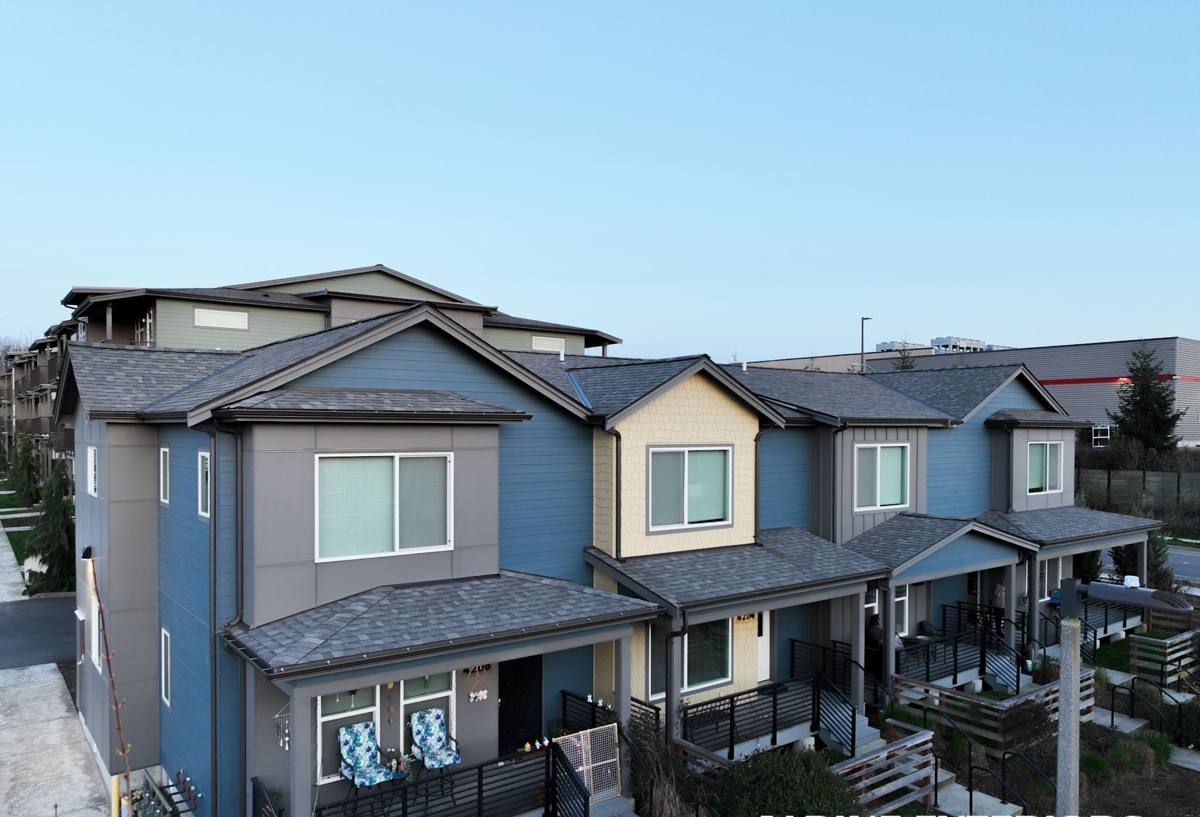
What Oldsmar and Carrollwood-Area Homes Ask of Vertical Siding
This part of Florida is not a gentle climate for exterior building products, and vertical siding profiles feel that stress differently than traditional horizontal lap siding.
Hurricane-force wind loads
Board and batten relies on individual boards and cover strips fastened to the wall, each with its own edges and reveals. In sustained wind and hurricane gusts, those edges are where uplift concentrates. A batten that isn't fastened on the correct schedule, or a board that was hung without enough clearance to move, becomes the first thing that lifts, cracks, or pulls loose in a storm.
Wind-driven rain at every seam
Vertical board and batten has more linear seams per square foot of wall than lap siding does. Wind-driven rain off Tampa Bay doesn't fall straight down — it drives sideways into those seams under pressure. Every seam is a potential entry point for moisture unless the water-resistive barrier, flashing, and fastening behind the boards are detailed correctly.
Intense, near year-round UV
Central Florida sun is hard on painted wood and lower-grade composite products. Board and batten's raised battens create more shadow lines and more surface area exposed to direct sun at different angles throughout the day, which accelerates fading, chalking, and coating breakdown on anything that isn't factory-finished to hold color.
Salt air corrosion
Homes near Old Tampa Bay and the surrounding waterways deal with airborne salt that attacks unprotected fasteners and lower-grade trim hardware over time. Fastener corrosion on a board and batten wall doesn't just stain — it weakens the exact connection points that keep boards attached during wind events.
Why We Only Install Board & Batten in James Hardie Fiber Cement
Board and batten can be built out of primed wood, engineered wood like LP SmartSide, vinyl panel systems styled to look like board and batten, or fiber cement. We've made the call to install it only in James Hardie fiber cement, and it comes down to how each material actually performs once it's exposed to this specific climate over years, not just how it looks on installation day.
- Primed wood and engineered wood depend on an unbroken paint film to stay dry. In a climate with this much sun and humidity cycling, that film fails faster than most homeowners expect, and once moisture gets behind a board, swelling and rot follow — especially at the exposed edges vertical siding has plenty of.
- Vinyl board and batten panels are lightweight and can distort or blow off in high wind, and their factory color has no protection against fading once the resin starts to break down under sustained UV.
- James Hardie fiber cement is non-combustible, dimensionally stable in heat and humidity swings, and finished with the ColorPlus factory coating system, which is baked on and warranted against fading and peeling in a way field-applied paint cannot match.
This is our professional standard, not a judgment on every homeowner's past choice — we simply won't put our name on a board and batten installation we don't believe will hold up here.
What a Correct Board & Batten Installation Actually Involves
The finished look of board and batten hides most of what determines whether it lasts. Underneath the visible boards and battens, a correct installation includes:
- A continuous, properly lapped water-resistive barrier behind the entire wall, with no gaps at penetrations
- Furring or strapping where required to create a drainage plane behind vertical boards, so any moisture that does get past a seam has somewhere to go
- Correct fastener type, length, and spacing driven into framing — not just sheathing — on both boards and battens
- Expansion clearance at every board end and butt joint, since fiber cement moves slightly with temperature and humidity and needs room to do that without cracking
- Flashing integrated at every window, door, and roofline intersection before boards go up, not caulked in as an afterthought
- Batten spacing and reveal consistent across the wall, which is a craftsmanship detail but also affects how evenly the wall sheds water
Skipping any one of these doesn't usually show up on install day. It shows up two or three storm seasons later, as a soft spot, a stained seam, or a batten that's started to separate from the wall.
Our Process, Start to Finish
| Step | What Happens |
|---|---|
| On-site estimate | We walk the home, check existing siding and sheathing condition, and measure for board and batten layout, including window and corner details. |
| Written scope | You get a clear breakdown of materials, prep work, and price before anything is scheduled — no verbal estimates. |
| Tear-off and inspection | Old siding comes off and we inspect the sheathing underneath for any rot or moisture damage before closing the wall back up. |
| Weather barrier and flashing | New water-resistive barrier and flashing are installed at every penetration before a single board goes up. |
| Board and batten installation | James Hardie boards and battens are fastened to spec, with correct reveal, spacing, and expansion gaps throughout. |
| Trim, caulking, and final walkthrough | Trim details are finished, joints sealed where appropriate, and we walk the finished home with you before calling the job done. |
Cost Factors for Board & Batten Projects in This Area
| Factor | Why It Matters |
|---|---|
| Wall condition underneath | Sheathing repair or rot remediation found during tear-off affects labor and material costs. |
| Board and batten coverage | Full-home board and batten costs more than using it as an accent on gables, entries, or a single elevation. |
| Home height and access | Two-story walls and steep rooflines require more scaffolding and time than single-story walls. |
| Trim and corner detailing | Custom corner boards, window trim, and transitions to other siding profiles add labor. |
| ColorPlus vs. field paint | Factory-finished ColorPlus boards cost more up front than field-painted product but remove repainting from your maintenance list for years. |
Living With Board & Batten Long-Term
Board and batten installed correctly in James Hardie fiber cement is low-maintenance, not no-maintenance. A short annual routine keeps it performing the way it was designed to:
- Rinse the exterior periodically to clear salt residue and airborne grime, especially on homes closer to the water
- Inspect caulking at trim and penetration points once a year and re-caulk any joints that have opened up
- Walk the base of the walls after major storms and check for any boards or battens that look loose or shifted
- Keep sprinklers and landscaping from spraying directly on siding, which shortens the life of any exterior material over time
- Address any suspected moisture intrusion quickly rather than waiting for it to become visible damage
Why Local Experience Matters for This Profile
Board and batten is more sensitive to bad installation than lap siding, which means the contractor's familiarity with local wind requirements, permitting, and typical home construction in the Oldsmar and Carrollwood area isn't a nice-to-have — it directly affects how the wall performs. A crew that regularly works in this part of Pinellas County already knows the wind zone fastening requirements local building departments expect, has a feel for how the area's humidity and UV exposure affect sequencing and cure times, and isn't learning those lessons on your house. That familiarity shows up in the details that don't get skipped: flashing done right the first time, fastening schedules that meet code rather than the minimum that looks fine on install day, and a finished wall built to actually handle what a Gulf Coast storm season brings.
If you're considering board and batten for your home near Carrollwood, we're happy to walk the property, look at your existing siding, and put together a straightforward, no-pressure estimate. Use the form below to get started.