 Oldsmar Siding
 Why Siding Repair Comes Up So Often on Clearwater Homes
Clearwater sits close to the Gulf, just a short drive from our base in Oldsmar, and that location cuts both ways. It's part of what makes the area a great place to live, but it's also part of why siding here takes a beating faster than it does in most of the country. Between hurricane-force wind events, twelve months of intense UV exposure, wind-driven rain that gets forced sideways into seams and joints, and a constant low-grade dose of salt air off the water, exterior siding in this part of Pinellas County is working harder than the manufacturer's warranty documentation usually assumes.
That doesn't mean every Clearwater home needs new siding. Most of the calls we get for this area are legitimate repair jobs — a damaged section here, a moisture problem there — not full replacements. But it does mean repairs in this climate need to be done correctly the first time, because a patch job that looks fine today can fail again within a year or two if it doesn't account for what this environment actually does to a wall assembly.
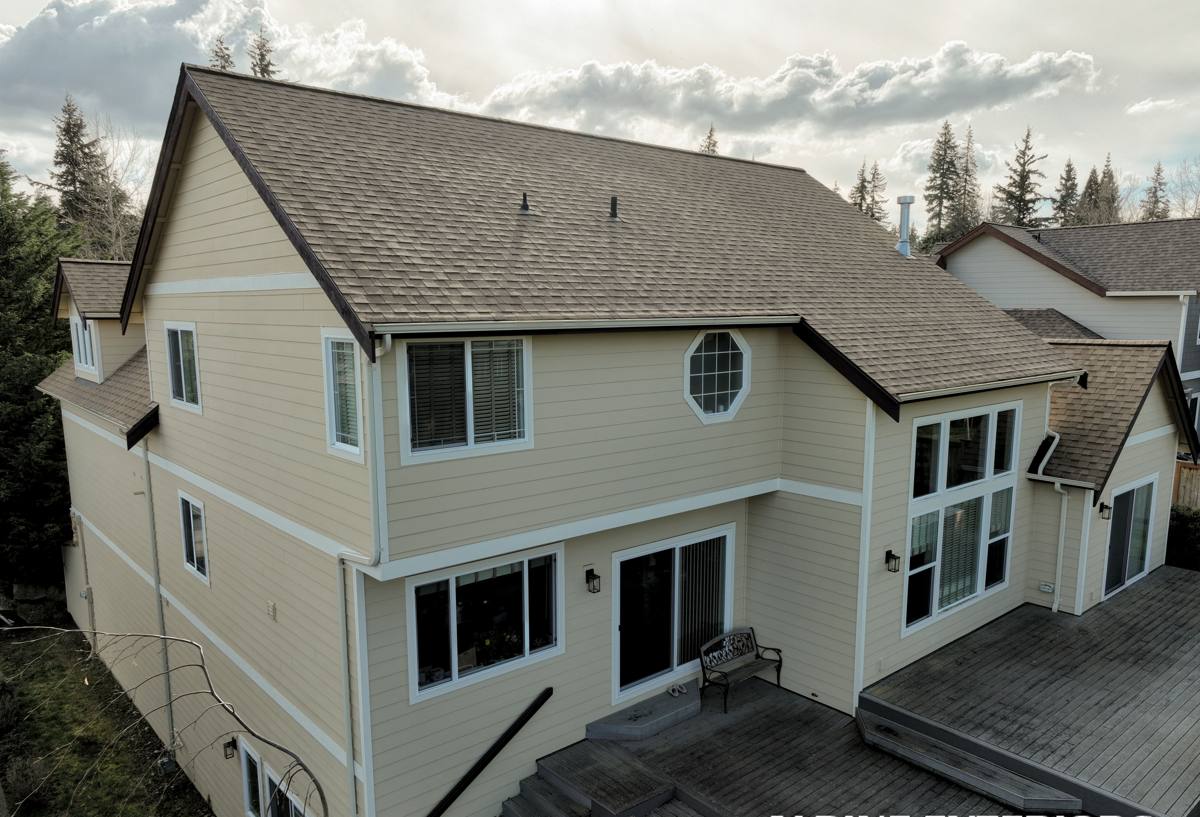
Signs Your Clearwater Home Needs Siding Repair
Siding damage doesn't always announce itself with a cracked panel. Some of the most costly problems start quietly, behind the surface, while the siding still looks fine from the driveway.
Visible Damage
Cracked, split, or missing sections of siding, dented or dinged panels from wind-blown debris, and buckled or warped boards are the obvious ones. Warping is especially common after a stretch of heavy heat followed by driving rain — the material expands and contracts, and if it wasn't installed with the right clearances, it has nowhere to go.
Moisture and Hidden Damage
Soft spots when you press on the siding, dark staining or streaking at seams, peeling or bubbling paint, a musty smell near exterior walls, or soft drywall on the inside of the same wall are all signs that water has been getting behind the siding for a while. By the time these show up, the sheathing or framing underneath may already be affected, which changes the scope of the repair.
Storm-Related Damage
After any named storm or significant wind event, it's worth a walk-around: loose or lifted panels, siding pulled away from corners or trim, and caulking that's split or missing at joints are the first places wind-driven rain finds a way in. Damage from a storm is also one of the more common triggers for an insurance claim, so documenting it promptly matters.
What's Actually Driving the Damage
UV and Heat Cycling
Florida sun is relentless, and siding faces it year-round, not just in summer. UV breaks down pigments and surface coatings over time, which is why color fade and chalking are common complaints on lower-quality or poorly-finished siding products. Repeated heat-and-cool cycling also stresses joints and fasteners, especially on materials that expand and contract more than fiber cement does.
Wind-Driven Rain
Rain that falls straight down is rarely the problem. Rain that gets pushed horizontally by 40, 50, 60+ mph gusts finds every gap — a nail hole without sealant, a butt joint without proper flashing, a corner where the water-resistive barrier wasn't lapped correctly. Once water gets behind siding, it can sit against the sheathing for days before it evaporates, which is where rot and mold start.
Salt Air and Corrosion
Clearwater's proximity to the Gulf means salt-laden air reaches homes well inland from the immediate coastline. Salt accelerates corrosion on fasteners, trim, and any exposed metal flashing, and it can also degrade lower-quality caulks and sealants faster than their labeled lifespan suggests. Over years, that adds up to more frequent maintenance and repair needs than the same house would see further inland.
Named Storms and High Wind Events
Hurricane-force and near-hurricane wind gusts put direct pressure on siding panels and, more importantly, on the fasteners and clips holding them in place. Siding that was installed to spec generally holds up; siding that was installed with shortcuts — wrong fastener spacing, panels hung too tight against each other, missing corner flashing — is where storm damage concentrates.
Repair or Replace? How We Make That Call
Not every damaged section needs a full re-side, and we don't push replacement when a repair will genuinely hold up. The decision usually comes down to how contained the damage is, what's happening underneath the siding, and how much useful life the rest of the exterior has left.
| Factor | Repair Is Usually the Right Call | Replacement Is Usually the Right Call |
|---|---|---|
| Extent of damage | Isolated to a few panels or one area of the home | Spread across multiple elevations |
| Underlying sheathing | Dry, solid, no rot found on inspection | Soft, discolored, or rotted sheathing found |
| Age of existing siding | Siding is mid-life and otherwise sound | Siding is near or past its expected service life |
| Product on the wall now | Fiber cement in good condition elsewhere | Vinyl, LP SmartSide, or wood showing widespread wear |
| Cause of damage | Isolated impact damage (debris, one storm event) | Chronic moisture intrusion or repeated storm exposure |
We're honest about this both ways. If a repair will genuinely solve the problem, we say so — there's no reason to sell a homeowner a full re-side for damage that's contained. But if we open a wall and find rot has already spread, or the damage keeps recurring in the same spots because of an underlying installation flaw, we'll tell you that too, with specifics about what we found.
What a Correct Siding Repair Actually Involves
Inspection Before Anything Gets Touched
A repair starts with figuring out why the damage happened, not just patching what's visible. That means checking the sheathing and water-resistive barrier behind the damaged section, looking at how the surrounding panels were fastened, and checking whether flashing at windows, doors, and corners is doing its job. Skipping this step is how the same spot ends up damaged again in two years.
Matching the Material Correctly
Replacement pieces need to match the existing siding's profile, exposure, and — for painted or factory-finished products — as close a color match as the existing product allows. For James Hardie's ColorPlus finish, that means using ColorPlus-matched components rather than field-painting a patch, since a field-painted repair will weather differently than the factory finish around it over time.
Getting the Moisture Details Right
This is the part that separates a repair that lasts from one that doesn't. Proper lapping of the water-resistive barrier, correctly placed and sealed flashing at joints and penetrations, and the right sealant in the right locations all matter more in a wind-driven-rain climate than they would somewhere drier. We don't consider a repair finished until the water management behind the siding is right, not just the panel in front of it.
Fastening to Spec
Fastener type, spacing, and placement affect how well siding holds up in high wind. We fasten repairs the way the manufacturer's installation instructions specify for this wind zone, not the way it's fastest to get the job closed up.
Why We Only Work in James Hardie Fiber Cement
Oldsmar Siding Company installs and repairs James Hardie fiber cement siding exclusively. We don't install vinyl, LP SmartSide, Cemplank, Allura, or primed wood siding, and that standard shapes how we approach repair work too.
Vinyl siding softens, warps, and becomes brittle under the combination of intense UV and heat this area sees, which means repairs on it often involve tracking down a matching color and profile from a product line that may have changed since the original installation — vinyl fades unevenly, so an exact match gets harder every year. LP SmartSide and other wood-based composite products are engineered wood, and once moisture gets behind a panel and the edges start to swell, that damage tends to spread rather than stay contained to one board. Primed cedar or spruce siding needs ongoing paint maintenance to keep water out at all, and in a climate with this much UV and salt exposure, that maintenance cycle is shorter than most homeowners expect going in.
James Hardie fiber cement doesn't share those failure modes. It's non-combustible, it doesn't swell or rot the way wood-based products can, and the ColorPlus factory finish is baked on and warranted separately from the substrate, which means color match on a repair is far more consistent than trying to field-match a faded painted product. Hardie's HZ5 product line is engineered specifically for climates with hurricane exposure and high moisture, which is exactly what Clearwater and the rest of Pinellas County deal with. When we repair Hardie siding, we're repairing a product designed for this climate in the first place — which is a meaningfully different job than patching a product that was never really suited to it.
Our Process for a Clearwater Repair Call
- Phone or online request with a description and, if possible, photos of the damage
- On-site inspection where we assess the visible damage and check for underlying moisture or sheathing issues
- A written scope and estimate that lays out exactly what we found and what the repair involves — including if we think replacement makes more sense
- Material matching, including ColorPlus-matched Hardie components where needed
- The repair itself: removal of the damaged section, inspection and correction of the water-resistive barrier and flashing underneath, installation of matched siding fastened to spec
- A final walk-through so you can see exactly what was done and ask questions before we consider the job closed
We travel to Clearwater regularly as part of our normal Pinellas County service area, so a repair call here isn't a special trip — it's part of the territory we already know.
Why Hiring a Crew That Already Works in Clearwater Matters
A crew that's unfamiliar with this specific area is more likely to miss things that a crew already working here catches automatically — how salt air affects fastener and flashing choices, how the local wind exposure factors into fastening patterns, and what Pinellas County's permitting and inspection process actually requires for exterior repair work. Permit requirements for siding repair can depend on the scope of work, so it's worth confirming what applies to your specific job rather than assuming a small patch never needs one.
There's also a practical side to this: a contractor who's already established in the area is easier to reach for a follow-up question six months later, and has a track record you can actually check with neighbors rather than reviews from homeowners three counties away.
Keeping Repaired Siding From Needing Repair Again
A correct repair should hold up, but a little routine attention extends the life of any siding in this climate, repaired or original.
- Rinse siding periodically to remove salt residue, especially on elevations facing prevailing winds off the water
- Walk the exterior after any significant storm and look for lifted panels, new gaps, or damaged caulking at joints and trim
- Keep an eye on caulking and sealant around windows, doors, and penetrations — it degrades faster here than in drier climates
- Trim back vegetation and irrigation spray that keeps siding consistently wet in one spot
- Address small issues — a cracked panel, a lifted corner — promptly, since wind-driven rain will find a small opening quickly
- Have siding checked after major storm events even if no damage is visible from the ground
If you're seeing damage, staining, or storm wear on your Clearwater home's siding, we're happy to take a look and give you a straight answer about what it needs — a targeted repair, or something more. Reach out for a free, no-pressure estimate and we'll walk the property with you.