 Oldsmar Siding
 Building a Deck That Actually Holds Up in East Lake
East Lake sits close enough to Tampa Bay and the Gulf that a deck built here is under different stress than the same deck built inland in Georgia or the Carolinas. The sun is stronger and more consistent, the humidity rarely lets up, seasonal storms bring sideways rain and real wind loads, and airborne salt from the coast finds its way into fasteners and hardware even on properties that aren't waterfront. A deck that isn't built with that in mind will look fine for a year or two and then start showing problems — cupped boards, rusted screws bleeding orange streaks, a railing that's gone soft. We build decks in this part of Pinellas County specifically to hold up against that combination, not against a generic national spec sheet.
This page is about deck building as a standalone project for East Lake homes — new construction, replacement of a failing deck, or extending an existing one. If you're pairing it with siding or exterior work, we handle that too, but the guidance below is specific to decks.
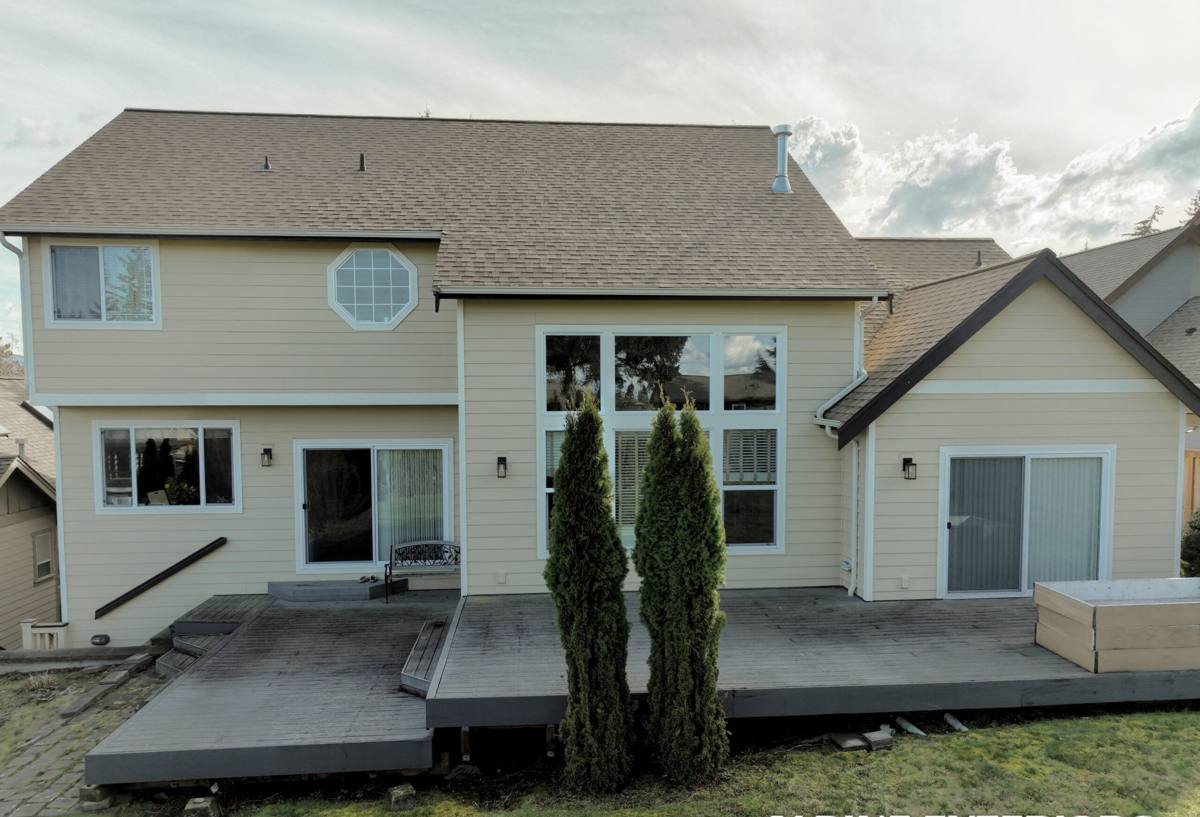
What East Lake's Climate Actually Does to a Deck
A few regional realities drive almost every material and construction decision on a deck project here:
- UV load: Florida sun breaks down cheap sealers and low-grade composite caps faster than manufacturers' national warranty language usually accounts for. Surface color fade and chalking show up early on lower-tier products.
- Humidity and wind-driven rain: Moisture gets pushed into joints and end grain during storms, not just from above. Framing and fastening details matter more here than in drier climates.
- Salt air: Even away from the immediate coastline, salt in the air accelerates corrosion on standard-grade fasteners, brackets, and hardware over a few seasons.
- Storm wind: Railings, stair stringers, and ledger connections need to be built to resist real wind loading, not just support foot traffic.
None of this means a deck in East Lake has to be over-engineered or absurdly expensive — it means the details that don't show up in a quick estimate (fastener grade, flashing at the ledger, footing depth) are exactly where corners get cut on lower-bid jobs, and exactly where problems show up two or three years later.
Choosing the Right Decking Material for This Climate
There's no single "best" decking material — the right call depends on budget, how much upkeep you want to do, and how the deck will be used. Here's how the common options actually perform in a Pinellas County backyard:
| Material | Heat/UV Behavior | Moisture Behavior | Maintenance | Typical Lifespan Here |
|---|---|---|---|---|
| Pressure-treated pine | Fades and grays without sealing; can get hot but less than composite | Handles wetting/drying well if properly sealed and ventilated underneath | Needs re-sealing every 1-2 years in this sun | 10-15 years with upkeep |
| Capped composite | Better color retention than wood; darker colors run noticeably hotter underfoot | Resists rot but can trap moisture if drainage under boards is poor | Periodic cleaning, no sealing/staining | 20-25+ years |
| Uncapped/lower-grade composite | More prone to fading and surface wear in intense UV | More susceptible to moisture absorption at cut edges | Low but not zero — mildew cleaning | Shorter than capped composite |
| Tropical hardwood (e.g. ipe) | Excellent UV resistance in dense woods, but will gray without oiling | Naturally dense and rot-resistant | Periodic oiling to hold color | 25+ years structurally |
We're honest with clients about the trade-offs rather than pushing one product line. Pressure-treated framing under any decking type is standard and appropriate — it's the visible surface material where the climate and maintenance-tolerance conversation matters most.
A Note on Color Choice
In East Lake's sun, dark composite decking can get genuinely too hot to walk on barefoot during summer afternoons. If the deck gets full sun for most of the day, we'll talk through lighter or mid-tone color options before you commit to a dark board that looks great in a showroom but is uncomfortable on your own patio by July.
Framing and Fasteners: Where Florida Decks Actually Fail
Most deck failures we get called out to inspect aren't decking-surface problems — they're framing and connection problems that were invisible on installation day. A few things we build into every deck regardless of budget tier:
- Corrosion-resistant, coating-rated fasteners and structural hardware — matched to the treated lumber they're going into, since the wrong metal combination accelerates corrosion in humid, salt-tinged air.
- Proper ledger board flashing where the deck attaches to the house, so wind-driven rain doesn't track behind the siding or into the rim joist.
- Footing depth and post spacing sized to Pinellas County wind and load requirements, not a minimum "it'll probably hold" spec.
- Railing posts through-bolted to framing, not just screwed to the rim joist — this is the single most common shortcut we see fail during storm-force wind events.
- Adequate ventilation and drainage under the deck surface so trapped moisture from wind-driven rain has somewhere to go.
Permitting and Code Considerations
Deck construction in Oldsmar and unincorporated Pinellas County generally requires a permit, with inspection at the framing stage and again at final. Requirements cover things like footing depth, railing height and baluster spacing, guardrail load ratings, and stair geometry. We handle the permit process as part of the build rather than leaving it to the homeowner, and we build to pass inspection the first time — not to the bare minimum that squeaks by. If your property has an HOA (common in many East Lake communities), there may be additional design or material approval steps on top of county permitting, and we'll flag that early so it doesn't stall the project.
Our Process for a Deck Project
- On-site assessment: We walk the yard, check grade and drainage, look at how the deck will attach to the house, and talk through how you actually plan to use the space.
- Design and material selection: Layout, size, railing style, and decking material, with honest cost-versus-durability trade-offs laid out up front.
- Permit and engineering as needed: We pull the permit and handle any structural documentation the county requires.
- Framing and structural build: Footings, posts, beams, joists, and ledger attachment — built to the load and corrosion standards above.
- Decking, railing, and finish work: Surface installation, railings, stairs, and any lighting or finishing details.
- Final walkthrough and inspection: We confirm everything passes county inspection and walk the finished deck with you before calling the job done.
Maintaining a Deck in East Lake's Climate
What a deck needs after installation depends on the material, but a few habits apply across the board:
- Sweep debris off regularly — trapped leaves and pollen hold moisture against the surface and encourage mildew.
- Rinse composite decking periodically to prevent surface mildew film, especially in shaded or low-airflow areas.
- Re-seal or re-oil wood decking on the schedule the product actually needs in this climate, not the mildest-climate estimate on the label.
- Check railing connections and fasteners annually for early corrosion, especially after storm season.
- Keep vegetation and irrigation heads from spraying directly onto framing or the underside of the deck.
Why Hire a Crew That Already Works in East Lake
A deck builder who mostly works in a different climate zone will default to specs and habits that are correct somewhere else but wrong here — under-flashed ledgers, standard-grade fasteners, or footing depths that meet a lighter wind spec than Pinellas County actually needs. Crews who regularly build and repair decks in this part of Florida know which shortcuts show up as callbacks in year two, and they build past them the first time. That local pattern-recognition — not a sales pitch — is the real value of hiring someone who already works this area.
Questions Worth Asking Before You Hire
- Will you pull the permit and handle inspections, or is that on me?
- What fastener and hardware grade do you use, and why?
- How is the ledger board flashed where it meets the house?
- What's the footing depth and post spacing you're building to, and how does that match county requirements?
- What does the decking material actually need for upkeep in full Florida sun?
If you're planning a new deck, replacing one that's showing its age, or just want an honest read on whether an existing deck was built correctly, we're happy to come take a look. Estimates are free, there's no pressure, and you'll get a straight answer about what your yard and your budget actually call for — use the form below to get started.