 Oldsmar Siding
 Largo's Climate Is Harder on Siding Than Most Homeowners Realize
Largo sits in the middle of Pinellas County, wedged between two bodies of salt water and squarely in the path of every tropical system that tracks through Tampa Bay. That combination puts a specific set of stresses on exterior cladding that a lot of siding products simply weren't built to handle over the long term. Homeowners here aren't just dealing with normal weathering — they're dealing with hurricane-force wind gusts, wind-driven rain that gets forced sideways into wall assemblies, some of the most intense year-round UV exposure in the continental United States, and a steady drift of salt-laden air off the bay and the Gulf.
Any one of those on its own is manageable for most exterior products. Stacked together, year after year, they expose the weak points in siding that isn't rated for it — and they expose the weak points in installations that skip steps most homeowners never see. This page is specifically about fiber cement siding for Largo properties: what the local climate demands of it, what a correct installation looks like, and how our process is built around those realities rather than around a generic install we run everywhere.
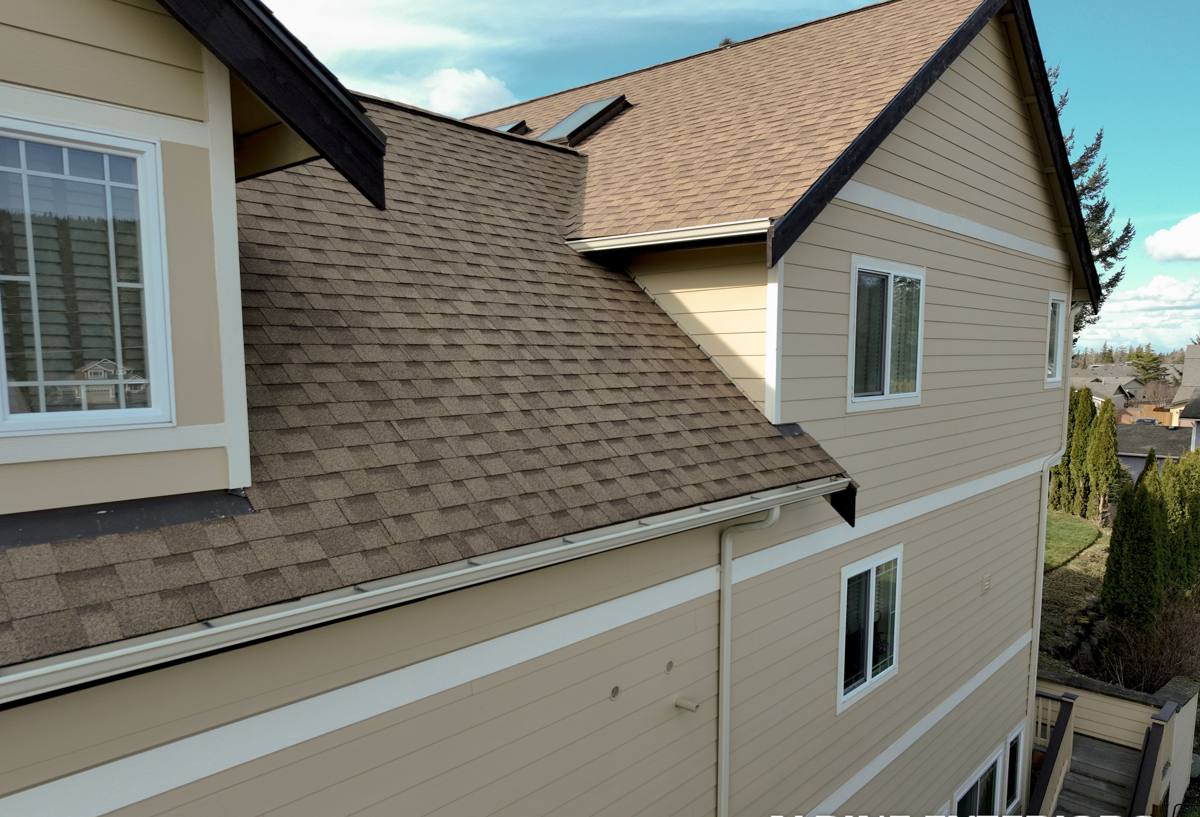
What Largo Homes Actually Need From Their Siding
Wind Resistance That's Rated, Not Assumed
Pinellas County building code exists because of storms like the ones that have crossed this peninsula before, and siding fastening schedules matter as much as the product itself. Fiber cement has a real advantage here: it's heavy, dense, and dimensionally stable, so it doesn't flex and rattle loose the way lighter cladding can under sustained wind loads. But that advantage only shows up if the siding is fastened correctly — right nail pattern, right penetration depth, right clearances — for the exposure category the home actually sits in.
Moisture Management, Not Just Water Resistance
Wind-driven rain during a tropical system doesn't fall — it's pushed horizontally into every seam, joint, and penetration on a wall. A siding product can be technically water-resistant and still fail a home if the water-resistive barrier behind it, the flashing above windows and doors, and the caulking at joints aren't installed as a system. Fiber cement gives you a durable outer layer; the water management underneath it is where most long-term problems actually start.
UV and Color Stability
Florida sun is relentless on painted surfaces. Field-applied paint chalks, fades unevenly, and needs recoating on a schedule most homeowners underestimate. This is one of the biggest reasons we standardized on James Hardie's factory-applied ColorPlus finish rather than site-painted fiber cement — it's baked on and cured under controlled conditions, which holds color and resists UV breakdown far better than paint applied on-site in Florida humidity.
Salt Air Corrosion
Largo isn't oceanfront, but it's close enough to Tampa Bay and the Gulf that salt-laden air still reaches inland neighborhoods, especially with onshore wind patterns. Salt air is hard on fasteners, trim accessories, and any metal component in a wall assembly. Fiber cement itself doesn't corrode, but every screw, nail, and flashing piece behind it needs to be rated for coastal exposure, or the siding ends up outlasting the hardware holding it on.
Why We Install Only James Hardie
We don't install LP SmartSide, vinyl, Cemplank, Allura, or unfinished wood siding, and we're upfront about why. Each of those products has legitimate strengths, but none of them combine non-combustible fiber cement construction with a factory-cured finish and a climate-specific engineering line the way James Hardie's HZ10 product does — HZ10 is Hardie's formulation built for Florida's hot, humid, moisture-heavy conditions specifically. For a market like Largo, where humidity, UV, and storm exposure all hit at once, we'd rather install one product we can stand behind completely than offer several and hope one holds up.
| Factor | Vinyl Siding | Engineered Wood Siding | James Hardie Fiber Cement |
|---|---|---|---|
| Wind performance | Lighter, can flex/detach in high gusts if not rated for exposure | Rigid, but panel edges are moisture-sensitive under wind-driven rain | Dense and heavy; performs well when fastened to spec for local wind zone |
| UV/color retention | Can fade or become brittle over time in intense sun | Field paint fades and needs recoating on a set schedule | Factory ColorPlus finish resists UV fading, backed by its own warranty |
| Moisture behavior | Sheds water but seams can allow intrusion behind panels | Wood-based core is vulnerable if moisture reaches cut edges | Cement-based composition doesn't rot; performance depends on correct sealing at joints |
| Fire rating | Combustible | Combustible | Non-combustible |
What a Correct Fiber Cement Installation Involves
The product is only half the equation. A James Hardie installation in a coastal-influenced, storm-exposed market like Largo needs to get the details right, every time, not just when it's convenient. The pieces that matter most:
- Proper clearance between the bottom of the siding and grade, roofing, decks, and patios — too little clearance is one of the most common causes of moisture problems on older homes
- A continuous, correctly lapped water-resistive barrier behind the siding, not just housewrap stapled up quickly
- Flashing integrated at every window, door, and penetration — not caulk used as a substitute for flashing
- Corrosion-resistant fasteners rated for coastal/humid exposure, driven to the manufacturer's specified depth and pattern
- Joints and seams sealed with a flexible, paintable sealant rated for exterior use, not general-purpose caulk
- Fastening schedule matched to the home's actual wind exposure category under current Florida Building Code, not a one-size-fits-all pattern
Our Process for Largo Homes
1. On-Site Assessment
We walk the home in person before quoting anything. That means checking the current siding condition, looking for existing moisture damage around windows and low-clearance areas, and noting anything about the home's exposure — how open the lot is, which direction it faces relative to prevailing wind and rain.
2. Tear-Off and Substrate Check
Once old siding comes off, we inspect the sheathing underneath. This is the point where hidden moisture damage from a previous installation often shows up, and it needs to be addressed before anything new goes on the wall — covering over a compromised substrate just hides the problem for the next owner.
3. Water-Resistive Barrier and Flashing
This is the layer that does the real work during wind-driven rain events. We install it as a continuous system, with proper lapping and integrated flashing at every penetration, before a single piece of Hardie siding goes up.
4. Siding Installation to Spec
HardiePlank, HardiePanel, or HardieShingle — whichever fits the home's design — installed with the correct clearances, fastening pattern, and joint treatment for Pinellas County's wind exposure requirements.
5. Final Inspection
We walk the finished job checking clearances, fastener placement, and sealant lines before calling it complete — the details that don't show up until the next tropical storm are exactly the ones we check for now.
Signs Existing Siding in Largo Is Already Failing
If your home has older vinyl, wood, or improperly installed fiber cement, a few warning signs are worth taking seriously before the next storm season:
- Soft or spongy spots when you press on the siding near the bottom courses or below windows
- Visible gaps, warping, or panels that have pulled away slightly from the wall
- Cracked or missing caulk at joints, corners, and window trim
- Peeling or chalking paint that leaves residue on your hand when wiped
- Siding installed with little to no clearance from a deck, patio, or grade
Ongoing Maintenance for Fiber Cement in This Climate
James Hardie siding is low-maintenance compared to painted wood, but "low-maintenance" doesn't mean "no maintenance" in a climate like this one. A simple annual check goes a long way:
- Rinse the siding periodically to clear salt residue and airborne grime, especially on sides facing the water
- Inspect caulking at joints and trim once a year and touch up before small gaps become entry points
- Trim back landscaping so it isn't holding moisture against the siding
- After any major storm, do a visual walk-around checking for impact damage or loosened panels
Why Local Experience Matters Here
A crew that already works in Largo and across Pinellas County knows the difference between a spec sheet and how a product actually behaves in this specific mix of heat, humidity, salt air, and storm exposure. We're not learning the local wind zone requirements or the common failure points on a job — we've already seen them on homes in this area, and we build our process around avoiding them from the start.
If you're weighing a siding replacement or dealing with a home that's already showing wear, we're happy to take a look and give you a straight answer about what your home actually needs — no pressure, no inflated scope. Reach out for a free estimate using the form below.