 Oldsmar Siding
 Siding for a Coastal Pinellas County Home
Palm Harbor sits in one of the more demanding exterior environments in the state. Homes here take on hurricane-force wind loads during storm season, near-constant UV exposure the rest of the year, wind-driven rain that finds its way into seams and laps most siding was never engineered to handle, and salt air drifting in off the Gulf and the bay that quietly works on fasteners, trim, and finishes year-round. Siding in Palm Harbor isn't cosmetic. It's the first line of defense on a wall assembly that gets tested harder, and more often, than siding almost anywhere inland.
We install James Hardie fiber cement exclusively, and this page is specifically about what that means for a Palm Harbor home — not a generic rundown of the Hardie product line, but what local homes actually need from their siding given this climate, what a correct installation involves here, and why hiring a crew that already works this part of Pinellas County matters more than it might in a milder climate.
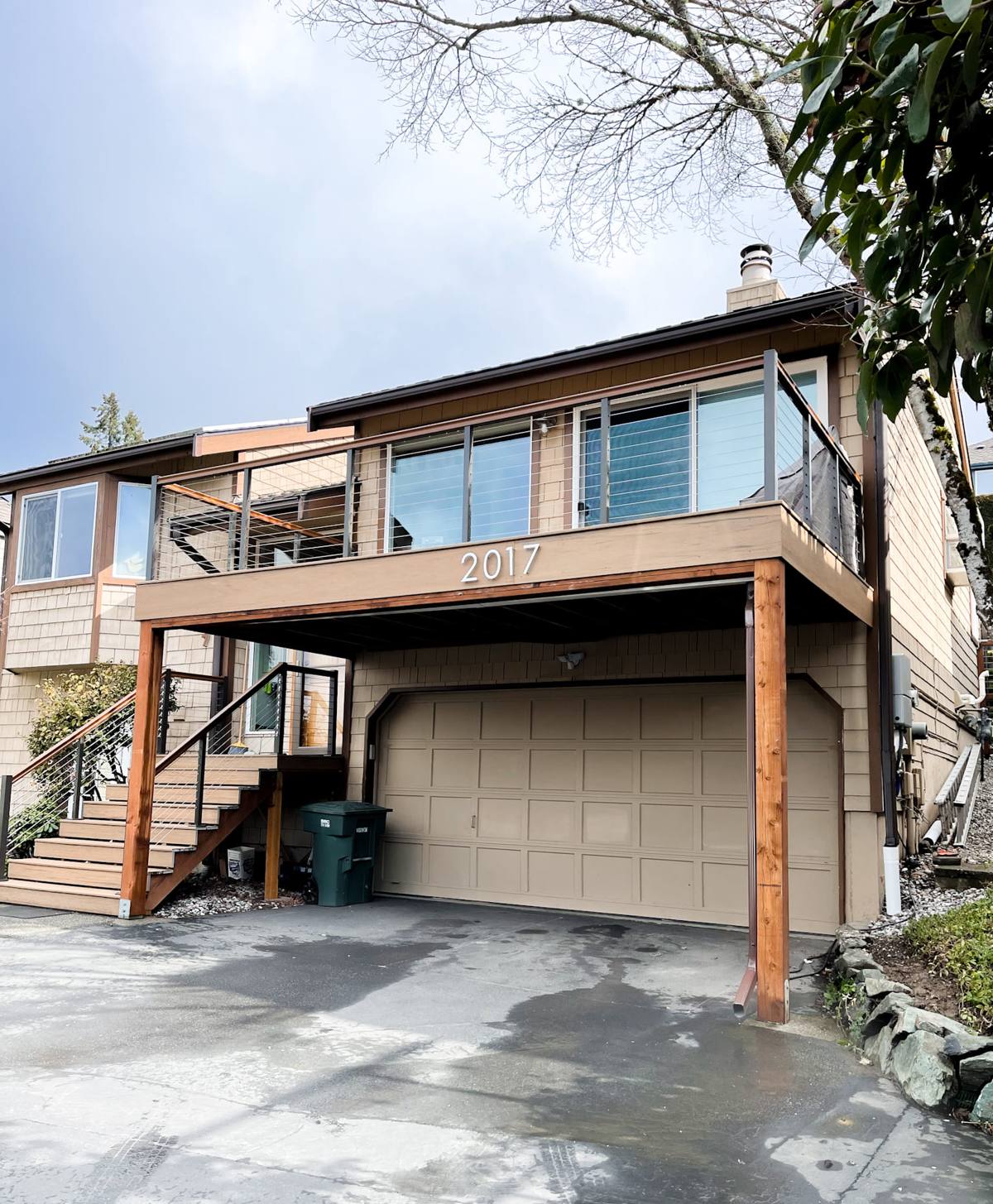
What Palm Harbor's Climate Actually Demands From Siding
Hurricane-Force Wind Loads
Palm Harbor falls within a coastal Florida wind zone where siding has to be rated and fastened to hold up under sustained hurricane-force gusts, not just everyday wind. That's a structural requirement, not a marketing detail — the fastening schedule, nailing pattern, and product itself all have to be matched to the wind exposure category the home actually sits in.
Intense, Near Year-Round UV
Florida's sun angle and day length put more cumulative UV load on an exterior than most of the country sees, and that load doesn't really ease up outside of summer the way it does further north. Finishes that aren't engineered for it fade, chalk, or break down faster than their rated life would suggest.
Wind-Driven Rain
During a tropical system, rain doesn't fall straight down — it gets pushed sideways and even upward into laps, joints, and penetrations that are designed to shed water moving in the ordinary direction. Wind-driven rain is the condition that exposes weak flashing, thin caulk joints, and under-detailed siding faster than anything else this climate throws at a house.
Salt Air
Palm Harbor's position on Pinellas County's Gulf-facing coastline means salt-laden air is a constant, not an occasional coastal event. Salt accelerates corrosion on fasteners and exposed metal trim and speeds up finish breakdown on lower-quality coatings, and it reaches well beyond the homes closest to the water.
Why James Hardie Fits This Climate
We standardized on James Hardie fiber cement because it's engineered to hold up against exactly this combination of stresses, rather than being a general-purpose product pressed into service in a demanding coastal market.
Non-Combustible Material
Fiber cement is non-combustible, which matters in Florida's dry lightning season as much as it does anywhere else, and it's a meaningful difference from wood-based or wood-fiber siding products.
HZ5 Product Engineering
Hardie builds climate-specific HZ product lines rather than one board formulated for the entire country. For Florida's humidity, heat, and moisture-cycling conditions, the HZ5 line is engineered to resist the swelling, cracking, and moisture-driven damage that a product built for a drier or colder climate zone would be more prone to here.
ColorPlus Factory Finish
Instead of depending on a field-applied paint job to survive Palm Harbor's sun and salt air, ColorPlus Technology bakes the color onto the board in a controlled factory setting, under conditions no jobsite can match, and backs it with its own finish warranty separate from the substrate warranty on the board. That matters directly in a climate where field-applied coatings tend to fail early.
A Strong, Transferable Warranty
Hardie's limited warranty is a real factor if you plan to sell the home down the road — a documented, transferable warranty on the siding is worth something to a buyer evaluating a coastal property, especially one who's aware of what salt air and storm exposure do to lesser materials.
What a Correct Installation Involves Here
James Hardie siding performs the way it's engineered to only when it's installed to spec, and in a hurricane-exposed coastal market like Palm Harbor, the margin for shortcuts is thinner than it would be inland. A correct job here involves several details that matter more in this climate than they would somewhere milder.
Fastening for Wind Uplift
The nailing pattern, fastener spacing, and fastener embedment all need to match both the manufacturer's specification and the wind zone the home sits in. Under-fastened siding is one of the most common failure points in a coastal wind event, and it's rarely visible until wind actually tests it.
Flashing and Water Management
Every window, door, penetration, and horizontal transition needs flashing detailed to shed wind-driven rain, not just ordinary rainfall. A weather-resistive barrier behind the siding and correctly lapped, sealed flashing at every penetration is what keeps a storm's sideways rain out of the wall assembly rather than behind it.
Joints, Gaps, and Caulking
Hardie specifies precise gapping at butt joints and terminations to allow for the board's normal moisture-driven movement, along with the correct sealant at those joints. Closing gaps too tight or using the wrong sealant is a common corner-cutting error that shows up later as cracking or trapped moisture.
Fastener and Trim Material
In a salt-air environment, fastener material matters as much as fastener placement. Corrosion-resistant fasteners and trim hardware rated for coastal exposure hold up where standard-grade hardware starts showing rust and staining within a few seasons.
Comparing Siding Approaches for a Palm Harbor Home
| Factor | James Hardie Fiber Cement | Vinyl Siding | Wood or Wood-Fiber Siding |
|---|---|---|---|
| Hurricane wind performance | HZ5 line engineered for high-wind coastal zones, properly fastened | Can deform, crack, or blow off under sustained high wind | Performance depends heavily on fastening and finish condition |
| UV and fade resistance | Factory ColorPlus finish, separately warranted | Color molded through material but can fade and chalk over time | Needs recurring field-applied finish to resist fading |
| Salt air / corrosion exposure | Holds up with correct coastal-rated fasteners | Panel itself resists corrosion but fasteners and trim still exposed | Finish and fasteners both vulnerable to salt-accelerated wear |
| Wind-driven rain / moisture intrusion | Engineered dimensional stability, resists moisture-driven warping | Prone to gapping at seams that can admit driven rain | Absorbs moisture once finish breaks down; prone to cupping/splitting |
| Combustibility | Non-combustible | Combustible, can melt or deform under heat | Combustible |
| Ongoing maintenance | Periodic washing; no field refinishing needed | Low maintenance but limited repair options if damaged | Recurring refinishing on a short cycle in this climate |
None of this means every alternative product fails in Palm Harbor. It means the maintenance and risk profile is meaningfully heavier for products not engineered for this specific combination of wind, sun, rain, and salt — which is the standard we built our business around addressing.
How Our Process Works for Palm Harbor Homeowners
Walkthrough and Wind Exposure Assessment
We start with an on-site walkthrough that looks at more than square footage — orientation to prevailing wind and sun, proximity to open water, existing moisture damage, and the current condition of trim, flashing, and any penetrations behind the existing siding.
Scope, Product Line, and Written Estimate
You get a written scope specifying the Hardie product line and profile, fastener and trim hardware specification, and flashing detailing before any material is ordered — not a verbal estimate that leaves the specifics to be worked out on the jobsite.
Permitting
Siding work in Pinellas County generally requires a permit, and wind-zone-rated installation documentation is part of that process here in a way it wouldn't be in a lower-wind-exposure market. We handle that as part of the job rather than leaving it to the homeowner to sort out.
Installation to Spec, Not to Shortcuts
Fastening schedule, flashing, gapping, and sealant all follow manufacturer specification and local wind-zone requirements, with a final walkthrough before we call the job done.
Why Hiring a Crew That Already Works Palm Harbor Matters
Siding installation rules aren't uniform across Florida. Wind-zone fastening requirements, permitting expectations, and even which product line makes sense shift depending on how close a property sits to open water and how exposed it is to prevailing storm tracks. A crew that installs siding across a wide range of climates — or that treats Florida as one uniform market — is more likely to default to a generic installation rather than one detailed for this coastline specifically.
A crew with regular Palm Harbor and greater Pinellas County experience already knows the wind exposure categories, has a working relationship with local permitting expectations, and has seen firsthand what happens when flashing, fastening, or gapping gets cut short on a coastal home — because they're the ones who get called back to fix it. That local track record is worth more than a lower bid from a crew unfamiliar with what this specific stretch of coastline does to an under-detailed installation.
Before You Hire: A Practical Checklist
- Confirm the contractor holds an active Florida contractor license and current liability and workers' compensation coverage
- Get the fastening schedule and fastener material specified in writing, matched to your property's wind exposure category
- Ask specifically how flashing and wind-driven rain detailing will be handled at windows, doors, and penetrations
- Confirm which Hardie product line (HZ5) and profile is being quoted, and get it in writing along with the ColorPlus color or finish
- Verify who pulls the permit and confirm the scope includes final inspection sign-off
- Ask what the workmanship warranty covers separately from the manufacturer's material and finish warranties
A contractor who can't answer these specifics clearly, or who wants to keep the scope verbal, is a sign the installation details are being left loose rather than locked down before work starts.
What to Expect Long-Term
Installed to spec, a James Hardie exterior on a Palm Harbor home is built to go a long stretch of time without needing the kind of recurring refinishing that wood and lower-grade products require in this climate. It still needs periodic washing to keep salt residue, pollen, and mildew film from building up, and caulking at joints and penetrations is worth a periodic look, especially after an active storm season. What it doesn't need is a repainting cycle every few years just to keep moisture out — the factory finish and the fiber cement substrate are doing that work continuously, which is the entire point of building to this climate rather than around it.
If you're weighing siding options for a home in Palm Harbor or elsewhere in Pinellas County, we're glad to walk the property, talk through its specific wind and water exposure, and give you a straight answer about what it needs. Reach out below for a free, no-pressure estimate.