 Oldsmar Siding
 Palm Harbor sits close enough to the water that its homes take a different kind of beating than roofs twenty miles inland. Between Gulf-driven storm bands, near-constant summer sun, and the salt content in the air, a roof here ages on its own schedule — not the one printed on the shingle wrapper. If you're starting to research roof replacement for a Palm Harbor property, this page walks through what actually wears these roofs out, what a correct replacement involves, and what to look for in a crew that will be around to stand behind the work.
What Palm Harbor's Climate Actually Does to a Roof
Every coastal Pinellas County roof is fighting the same four things at once, and most premature failures trace back to one of them.
Hurricane-force and straight-line wind
Wind doesn't just push on a roof — it lifts. Uplift pressure concentrates at the edges, ridges, and corners first, which is exactly where under-driven nails, thin starter courses, and skipped edge metal show up as missing shingles after a storm. A roof that looks fine from the driveway can have a weak perimeter that only reveals itself in a 60 mph gust.
Intense, year-round UV exposure
Florida sun is harder on roofing materials than most manufacturers' testing accounts for. UV breaks down the asphalt oils in shingles, making them brittle years before their rated lifespan, and it degrades exposed sealants and rubber boots around vents and pipes long before the field of the roof looks worn.
Wind-driven rain
Rain that falls straight down is easy for any roof to shed. Rain that's being pushed sideways by 40+ mph wind finds every gap in flashing, every lifted shingle tab, and every place where underlayment laps the wrong direction. This is why so many Palm Harbor roof leaks show up during or right after a named storm rather than during an ordinary afternoon shower.
Salt air corrosion
Being close to the coast means airborne salt settles on metal roofing components — fasteners, flashing, drip edge, vent stacks — and accelerates corrosion compared to the same materials used further inland. Untreated or lower-grade metal parts can start rusting from the underside out, long before the shingles themselves are due for replacement.
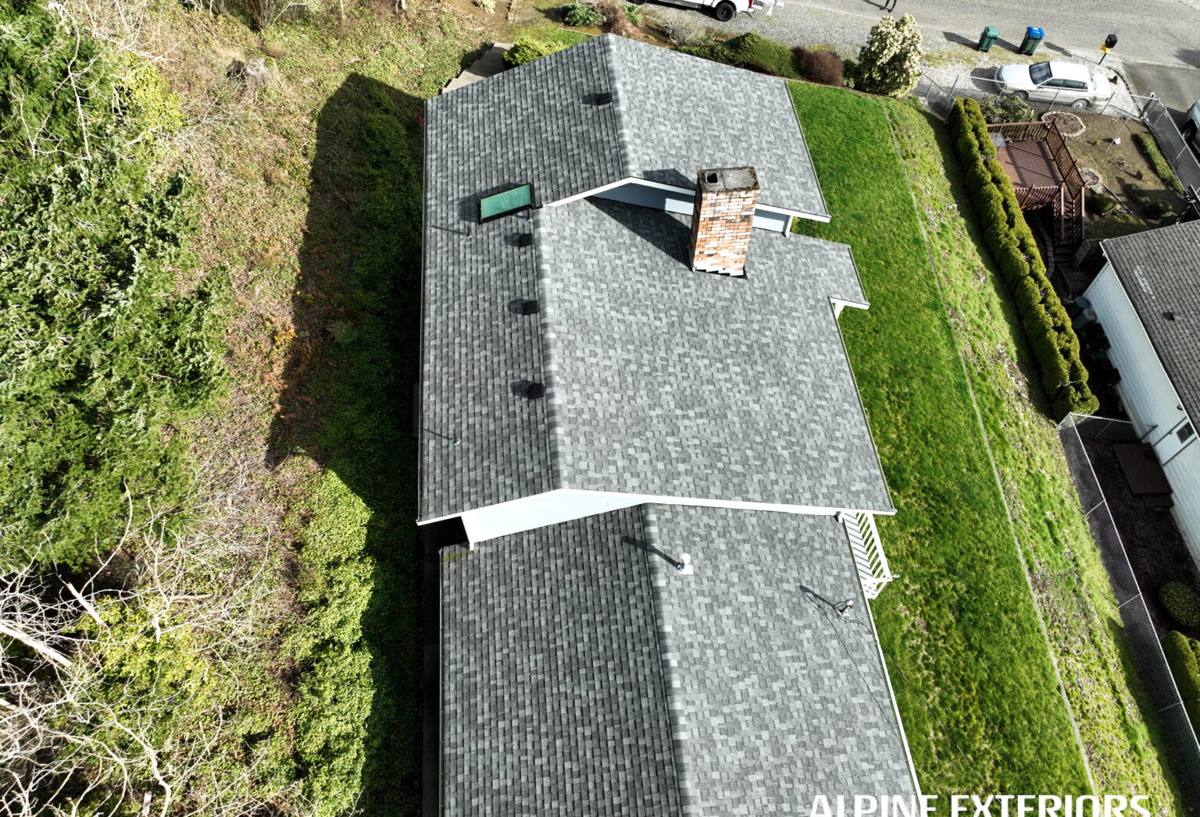
Repair or Replace? Reading the Signs
Not every aging roof needs a full replacement, but in this climate the window between "repairable" and "replace now" tends to close faster than homeowners expect. Some signs worth taking seriously:
- Granules collecting in gutters or at downspout outlets — a sign shingles are past their protective life, not just dirty
- Shingles that look curled, cupped, or cracked when viewed from the ground or a ladder
- Soft spots or noticeable sag anywhere in the roof deck
- Daylight visible through the attic at the ridge, eaves, or around vent penetrations
- Recurring leaks in the same spot after multiple patch repairs
- Missing or lifted shingles after every significant wind event, even minor ones
- A roof approaching or past 18-20 years of age, regardless of appearance
If you're seeing two or more of these, it's worth getting a full inspection rather than another patch — chasing individual leaks on a roof that's structurally past its service life usually costs more over time than replacing it once, correctly.
What a Correct Replacement Actually Involves
A roof replacement done right in this climate is not just "old shingles off, new shingles on." The parts that don't show from the street are what determine whether the roof holds up through the next decade of Gulf coast weather.
Full tear-off and deck inspection
We remove the existing roofing down to the deck rather than layering over it. That's the only way to actually see the plywood or OSB underneath — soft, delaminated, or water-stained sections get replaced before anything new goes down. Covering over a compromised deck is how roofs fail early from the inside out.
Underlayment built for wind-driven rain
Given how often rain arrives sideways here, the underlayment layer matters more than in drier, calmer climates. Synthetic or self-adhering underlayment, properly lapped and sealed at penetrations, is what keeps water out even if a shingle tab lifts in a storm before it can be resealed.
Flashing and edge metal done properly
Since wind uplift concentrates at edges and transitions, we pay particular attention to drip edge, valley flashing, and step flashing around walls and chimneys — corrosion-resistant materials, correctly lapped, correctly fastened. This is the detail work that separates a roof that survives a storm from one that doesn't.
Attic ventilation
Constant Florida heat means attic ventilation isn't optional — poor airflow shortens shingle life from underneath by trapping heat and moisture against the deck. We check intake and exhaust balance as part of every replacement, not as an upsell afterward.
Fastening to wind-rated standards
Nail pattern, nail placement, and fastener count all affect how a roof performs under uplift. We follow manufacturer and Florida Building Code wind-rated installation specs rather than the minimum a shingle bundle technically allows.
Comparing Roofing Material Options for Palm Harbor Homes
There's no single "best" roofing material — the right choice depends on budget, how long you plan to stay in the home, and how much long-term maintenance you want to take on. Here's how the common options compare for a coastal Pinellas County property:
| Material | Typical Lifespan Here | Wind Performance | Maintenance Considerations |
|---|---|---|---|
| Architectural asphalt shingles | 15-20 years | Good, when properly fastened and rated for high wind | Moderate — periodic inspection of sealant and flashing points |
| Standing seam metal | 30-40+ years | Excellent uplift resistance when installed correctly | Low, but requires corrosion-resistant fasteners and coatings near the coast |
| Concrete or clay tile | 30-50 years | Very good, but individual tiles can be dislodged by debris impact | Underlayment beneath tile typically needs replacement before the tile itself |
| 3-tab asphalt shingles | 10-15 years | Lower wind rating than architectural shingles | Higher long-term cost due to shorter replacement cycle |
Whatever material you choose, we'll walk through the honest trade-offs for your specific roof — including how each option holds up to the combination of UV, salt air, and wind this area sees every year — rather than steering you toward whatever is easiest to install.
Florida Building Code, Permits, and Wind Mitigation
Pinellas County requires permits and inspections for roof replacements, and Florida's building code has specific wind-rated installation requirements that go beyond what's standard in many other states. A correctly permitted, correctly inspected roof replacement also sets you up for a wind mitigation inspection afterward — the report insurers use to determine windstorm premium discounts based on things like roof shape, deck attachment, and roof-to-wall connections. Skipping permits to save time or money on the front end is one of the more common ways homeowners end up with insurance or resale complications later.
Our Process for Palm Harbor Roof Replacements
- Inspection and assessment — we get on the roof and in the attic, not just walk the yard, to evaluate deck condition, ventilation, flashing, and storm damage history.
- Written proposal — a clear scope of work and material options, with pricing broken down so you know what you're paying for and why.
- Permitting — we pull the required Pinellas County permit and coordinate the required inspections.
- Tear-off and deck repair — old roofing removed, deck inspected, any compromised sheathing replaced before underlayment goes down.
- Installation — underlayment, flashing, ventilation, and final roofing material installed to wind-rated specifications.
- Final inspection and cleanup — county inspection sign-off, full site cleanup, and a walkthrough so you know exactly what was done.
Why Local Experience in Palm Harbor Matters
A roofing crew that regularly works Palm Harbor and the surrounding Oldsmar area already knows the county's permitting process, the inspection expectations, and how these specific roofs tend to fail — which means fewer surprises and fewer delays. Just as importantly, a crew based nearby can respond faster if a tarp comes loose or a leak shows up between the estimate and the installation date, rather than making you wait behind jobs scheduled across a much wider service area.
Questions Worth Asking Before You Sign a Contract
- Is the contractor licensed in Florida and insured for both liability and workers' compensation?
- Will they pull the required Pinellas County permit themselves, in writing?
- Does the written proposal specify underlayment type, flashing materials, and fastening method — not just the shingle brand?
- Is deck repair (if needed) priced separately, or included as a contingency in the contract?
- What manufacturer warranty applies, and does it require a certified installer to remain valid?
- Will they provide documentation needed for a wind mitigation inspection afterward?
A contractor who answers these plainly, without hedging, is generally the one worth hiring.
If your Palm Harbor roof is showing its age or storm wear, we're happy to take a look and give you a straight answer about repair versus replacement — no pressure, no inflated urgency. Use the form below to request a free estimate.