 Oldsmar Siding
 Composite Decking for Westchase Homes
Westchase sits close enough to Tampa Bay and the Gulf that its outdoor living spaces take a beating most inland homeowners never have to think about. Between the intense Florida sun, the humidity that never really lets up, and the occasional tropical system pushing wind-driven rain sideways across a deck, an outdoor structure here needs to be built differently than one going up in a drier, milder climate. Composite decking has become the material of choice for a lot of Westchase homeowners for exactly that reason — it's engineered to shrug off moisture and UV in a way traditional lumber simply can't match over the long haul.
We install composite decking throughout the Oldsmar and greater Pinellas County area, and Westchase's mix of established neighborhoods and newer construction means we see a wide range of existing deck conditions — from wood decks that have taken storm and sun damage to blank slabs and yards ready for a first deck. This page covers what actually matters for a composite deck built to last in this specific climate, not generic decking advice.
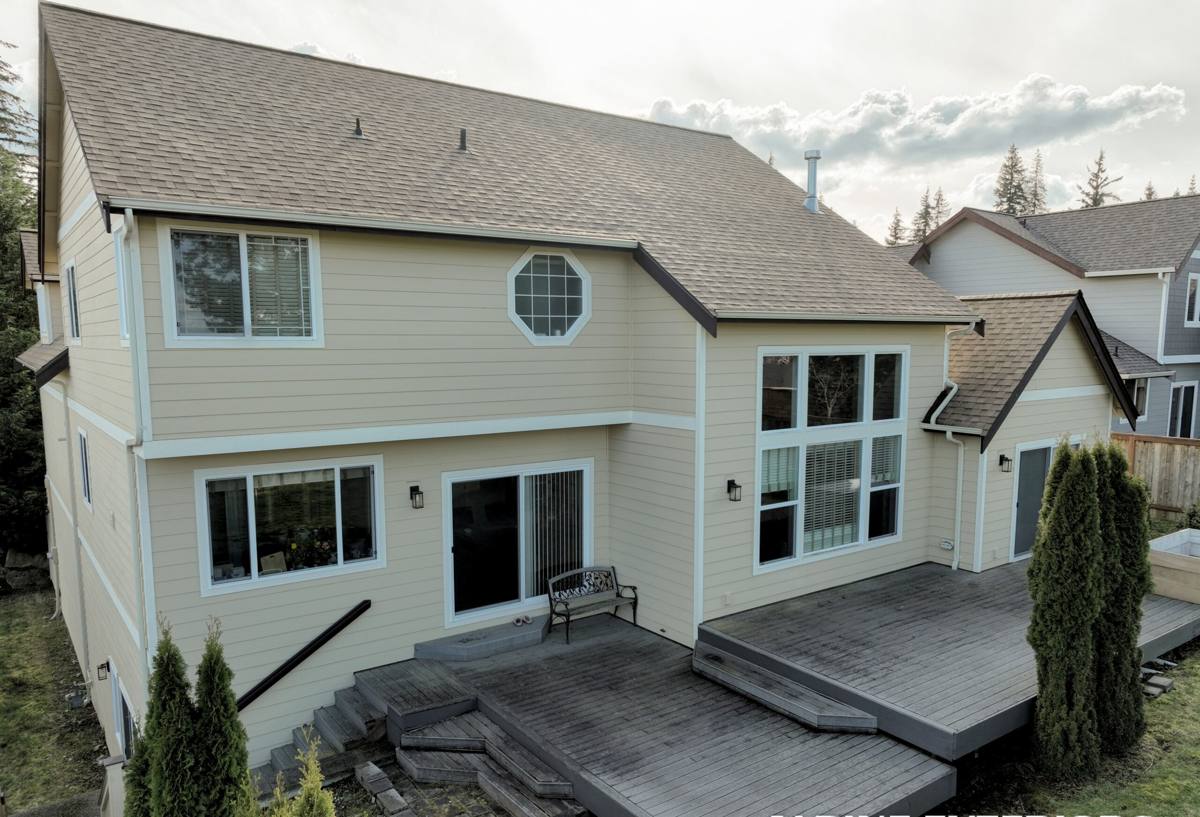
What Westchase's Climate Actually Does to a Deck
It helps to be specific about what a deck in this area is up against, because it shapes almost every material and installation decision that follows.
- Year-round UV exposure: Florida sun doesn't take an off-season. Untreated or poorly finished wood grays, splits, and checks within a couple of seasons; cheaper composite blends can fade unevenly if they lack real UV inhibitors.
- Humidity and moisture cycling: Constant humidity keeps wood decking damp at the core even when the surface looks dry, which is exactly the condition rot and fungal growth need.
- Wind-driven rain: Storms in this region rarely fall straight down. Rain gets pushed under rail caps, into fastener holes, and behind ledger boards if flashing and gaps aren't handled correctly at install.
- Hurricane-force wind loads: Ledger attachment, joist hangers, and railing posts all need to be engineered for uplift and lateral load, not just vertical weight.
- Salt air: Even well inland of the immediate coastline, salt-laden air accelerates corrosion on lower-grade fasteners and hardware, which is a common hidden cause of deck failures that have nothing to do with the decking boards themselves.
None of these factors are unique to Westchase specifically, but together they define what "correct" looks like for any deck built in this part of Pinellas County — and they're the baseline we design and build to on every job.
Why Composite Makes Sense Here
Composite decking is made from a blend of wood fiber and recycled plastic, capped (on quality boards) with a protective polymer shell. That shell is the part that matters most in this climate — it's what keeps moisture from soaking into the board core and what resists UV fading, staining, and scratching far better than the wood-plastic blends used a decade or two ago.
The honest trade-off: composite costs more up front than pressure-treated pine. Where it earns that back is in what you don't have to do — no annual sanding, staining, or sealing, no chasing splinters or cupped boards, and no worrying about a board rotting from the inside where you can't see it. For a lot of Westchase homeowners who want a deck they actually use rather than one they maintain, that trade makes sense. We'll still walk you through wood options honestly if budget is the deciding factor — it's just not what we'd put on our own house in this climate.
Composite vs. Other Common Decking Materials
| Material | Moisture/Rot Resistance | UV & Fade Resistance | Maintenance | Typical Lifespan Here |
|---|---|---|---|---|
| Capped composite | Very good — sealed core | Good to very good, brand dependent | Occasional soap-and-water cleaning | 25-30+ years |
| Uncapped/older composite | Fair — can absorb moisture at cut edges | Fair, more prone to fading | Low, but edge sealing matters | 15-20 years |
| Pressure-treated pine | Fair with diligent upkeep | Poor without regular sealing | Annual sanding/staining/sealing | 10-15 years realistically |
| Tropical hardwood (e.g., ipe) | Very good, naturally dense | Fair — grays without oiling | Regular oiling to maintain color | 25+ years with upkeep |
What a Correct Composite Deck Install Involves
The boards get most of the attention, but in a climate like ours, what's underneath and behind them determines whether the deck survives its first decade — or its first named storm.
Substructure and Framing
We frame with joist spacing matched to the specific composite product's span rating — composite boards generally need tighter joist spacing than wood decking, and skipping that step is one of the most common corner-cutting mistakes we see on decks we're called to repair. Hardware needs to be corrosion-resistant rated for ground contact and coastal-adjacent exposure, not standard interior-grade fasteners.
Ledger Attachment and Flashing
Where a deck attaches to the house, proper flashing keeps wind-driven rain from working its way behind the ledger board and into the home's structure or siding. This is a spot we inspect closely, since a poorly flashed ledger is one of the most common sources of hidden water damage — to both the deck framing and the house itself.
Ventilation and Drainage
Composite decking still needs airflow underneath it. Low-clearance decks or ones built too close to grade trap humidity against the joists and can shorten the life of the substructure even when the boards on top are holding up fine.
Fastening Method
Hidden fastener systems give a clean surface with no exposed screw heads (and fewer entry points for water), but they need to be installed to the board manufacturer's spacing and gapping specs — get that wrong and you get board movement, squeaking, or buckling from thermal expansion in our summer heat.
Railings and Structural Connections
Railing posts need to be through-bolted to the framing, not just screwed to the rim joist, to hold up under wind loads. This is a life-safety detail, not a cosmetic one.
Our Process for Westchase Deck Projects
- On-site assessment: We look at grade, drainage, sun exposure, and — for replacement projects — the condition of the existing structure, not just the surface boards.
- Design and material selection: We walk through composite options and configurations honestly, including realistic cost ranges, based on your layout and how you actually plan to use the space.
- Permitting: Deck construction in this area typically requires permitting through the local building department; we handle that process as part of the job.
- Framing and structural work: Built to the load and fastening standards above, sized for hurricane-force wind exposure.
- Decking, railing, and finish work: Installed to the manufacturer's spec for gapping, fastening, and edge treatment.
- Final walkthrough: We go over care basics and warranty coverage before we consider the job done.
Cost Factors for a Westchase Composite Deck
| Factor | Why It Moves the Price |
|---|---|
| Deck size and shape | Multi-level decks, curves, and inset stairs add labor and material beyond simple square footage |
| Composite tier | Entry-level capped boards vs. premium capped composite lines carry a real price gap tied to warranty length and fade resistance |
| Height above grade | Taller decks need more substantial framing, footings, and stair runs |
| Railing style | Composite or aluminum rail systems cost more than basic wood or cable options but hold up better long-term in this climate |
| Site access and existing conditions | Removal of an old wood deck, tricky yard access, or grading work adds to labor |
We give straightforward, itemized estimates — no vague allowances that turn into surprise change orders once the project starts.
Maintaining a Composite Deck in This Climate
One of composite's real advantages is how little upkeep it needs, but "low-maintenance" doesn't mean "no-maintenance" here.
- Sweep off leaves, pollen, and debris regularly — trapped organic matter can lead to surface mildew even on capped boards.
- Rinse with soap and water a few times a year; a pressure washer on a wide, low-pressure setting works but should never be aimed to gouge the cap surface.
- Check railing posts and stair connections annually for looseness, especially after storm season.
- Inspect fastener heads and hardware for corrosion, particularly if the deck is closer to open water or exposed to salt-laden wind.
- Keep gutters and downspouts near the deck clear so runoff isn't dumping extra water onto or under the structure.
Why a Crew That Already Works Westchase Matters
Deck codes, permitting requirements, and typical soil and drainage conditions vary by jurisdiction, and a crew that regularly pulls permits and builds in this part of Pinellas County already knows what the local building department expects — which means fewer delays and fewer inspection surprises. We're also familiar with how homes in this area are typically sited relative to sun and prevailing wind, which factors into railing choice, board color (darker composite boards run hotter underfoot in full sun), and where shade structures make sense.
Just as important, we stand behind the work locally. If a connection needs a second look after the first big storm rolls through, we're not a crew that packed up and left the region.
Get a Free Estimate for Your Westchase Deck
Whether you're replacing a tired wood deck or planning a new one from scratch, we're happy to take a look, talk through honest material options for your budget, and give you a straightforward estimate — no pressure, no sales script. Fill out the form below to get started.