 Oldsmar Siding
 Westchase Siding Has to Answer to the Gulf Coast, Not a Catalog Photo
Westchase homes take a beating that a lot of siding products were never engineered for. Between hurricane-force wind events, sun exposure that runs strong essentially year-round, wind-driven rain that gets pushed sideways into wall assemblies, and a steady dose of salt air blowing in off the Gulf, the exterior of a house here is under constant low-grade attack even in a quiet year. Add in the humidity that never really goes away, and you have a climate that finds every weak point in a siding system — the seams, the fasteners, the paint film, the substrate itself.
We install James Hardie fiber cement siding exclusively, and Westchase is one of the areas we work regularly. This page is about that one product, in this one area: what the climate actually demands, what a correct installation looks like, how our process runs, and why it matters that the crew on your roofline has already worked houses like yours nearby.
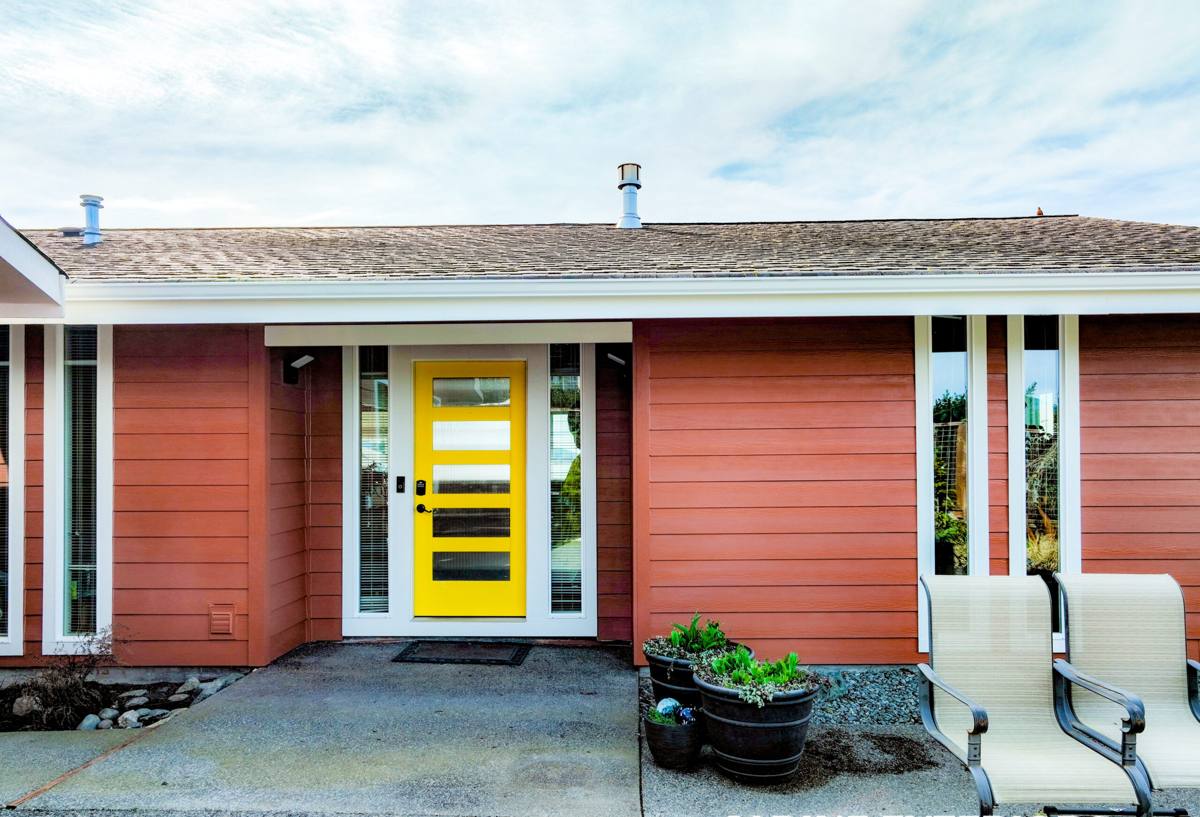
What This Climate Does to a Wall System Over Time
It helps to be specific about the failure modes, because "Florida weather is tough on siding" undersells it.
Wind and wind-driven rain
Sustained tropical-storm and hurricane-force winds don't just threaten to peel siding off the wall — they drive rain sideways into every lap, joint, and penetration. A siding system that isn't detailed correctly at the laps, corners, and around windows and doors will let water behind the cladding long before a panel ever blows off.
UV load
Strong, near-constant sun breaks down pigments and resins. Paint films chalk, fade, and eventually crack and peel. Products that rely on a field-applied or thin factory coating tend to show this first, usually on south- and west-facing walls.
Salt air
Even well inland of the immediate coastline, salt-laden air corrodes exposed metal fasteners and trim and accelerates the breakdown of lower-grade coatings. It's a slow process, but it's constant, and it doesn't take a hurricane to do the damage — it happens on ordinary humid days.
Moisture and humidity
Any siding material that absorbs water and doesn't shed it quickly is at risk of swelling, softening, or hosting mold and mildew growth behind the surface, especially where sun exposure is limited by landscaping or roof overhangs.
Why James Hardie Fiber Cement Fits This Environment
A non-combustible, dimensionally stable core
James Hardie siding is made from fiber cement — sand, cement, and cellulose fibers. It doesn't expand and contract with humidity swings the way wood-based products do, it doesn't provide fuel in a fire, and it doesn't soften or delaminate when it gets wet. That stability matters in a climate that cycles between soaking humidity and intense dry heat within the same week.
HZ5 engineered for this climate zone
James Hardie engineers its HZ product line by climate zone specifically because products behave differently in humid, high-moisture regions than in dry ones. For the Tampa Bay area, that means a formulation built to resist moisture intrusion and the freeze-thaw is not a factor here, but sustained humidity and driving rain very much are.
ColorPlus factory finish
Rather than a job-site coat of paint, ColorPlus finishes are baked on in a controlled factory environment in multiple coats, which gives far better UV and fade resistance than field-applied paint typically achieves. In a location where the sun is doing damage nearly every day of the year, that finish quality is the difference between repainting in a few years and going a decade or more before touch-up is even a conversation.
A warranty that's actually transferable
James Hardie backs its products with a strong limited warranty that's transferable to a new owner if the home sells — a real factor for resale in a desirable community like Westchase, where buyers increasingly ask what the exterior is made of and how it's backed.
What a Correct Installation Actually Involves
Fiber cement siding is only as good as the installation behind it. Most of the problems we get called out to inspect on other contractors' work trace back to a handful of installation shortcuts, not the product itself.
Fastening and clearances
Hardie panels need to be fastened per the manufacturer's specifications for the specific wind zone and exposure — corrosion-resistant fasteners, correct spacing, and proper penetration into framing. Panels also need minimum clearances from roof lines, decks, and grade so water has somewhere to go instead of wicking into the bottom edge of the siding.
Flashing and water management
Every window, door, and penetration needs correct flashing and a drainage plane behind the siding so that any water that does get past the surface has a way out. This is the single biggest factor in whether a siding job holds up through wind-driven rain events, and it's invisible once the job is finished — which is exactly why it's worth asking about before hiring.
Joints, caulking, and factory-cut edges
Field-cut edges need to be sealed and primed per spec, joints need the correct sealant, and butt joints should be planned to shed water rather than trap it. Sloppy joint work is one of the most common places moisture problems start.
A simple pre-hire checklist
- Ask whether the crew is factory-trained or certified specifically on James Hardie installation, not just "familiar with it"
- Ask what fastener type and spacing they use, and why
- Ask how they handle flashing at windows, doors, and roof intersections
- Ask for the manufacturer's written installation instructions for your specific wind zone
- Ask how warranty claims are handled if something goes wrong after installation
Why We Standardized on James Hardie and Don't Install Everything Else
We get asked fairly often about vinyl, LP SmartSide, and other fiber cement or engineered wood alternatives. Each has legitimate uses elsewhere, but for the wind, UV, rain, and salt-air combination Westchase homes face, we made a deliberate decision to install James Hardie only and stand behind one system we know inside and out.
| Factor | Vinyl Siding | Engineered Wood (LP SmartSide) | James Hardie Fiber Cement |
|---|---|---|---|
| Wind resistance | Can deform or detach in high sustained wind | Generally solid if installed correctly | Engineered and rated for high wind zones |
| Moisture behavior | Doesn't absorb water, but seams can trap it | Wood-based core can swell if moisture reaches it | Non-combustible core, doesn't swell or rot |
| UV/fade resistance | Color is molded-in but can fade and chalk over time | Field or factory paint, varies by product | ColorPlus factory finish, strong fade resistance |
| Salt air durability | Fasteners and trim pieces can corrode over time | Coating breakdown exposes wood-based substrate | Cement core is inert; coating engineered for the finish |
| Fire performance | Combustible | Combustible | Non-combustible |
This isn't a knock on every product on that list — it's an honest account of the trade-offs, and why we'd rather install one system correctly, every time, than offer several and hope each one performs the same way in this climate.
Our Process for a Westchase Project
- On-site assessment — we look at your home's current siding, wall assembly, sun exposure, and any existing moisture or trim issues before quoting anything.
- Product and color selection — choosing the right James Hardie profile and ColorPlus color for your home's style and HOA guidelines, where applicable.
- Prep and removal — removing old siding, inspecting sheathing and framing underneath for hidden damage, and addressing anything we find before new siding goes up.
- Water management first — house wrap, flashing, and drainage details are installed and inspected before a single panel goes on.
- Installation to manufacturer spec — correct fasteners, clearances, and joint treatment for our wind zone.
- Final walkthrough — we go over the finished job with you, including care and maintenance notes specific to ColorPlus finishes.
Signs a Westchase Home May Be Due for New Siding
- Visible warping, buckling, or gaps between panels
- Paint that's chalking, peeling, or fading unevenly, especially on south- and west-facing walls
- Soft spots, or a "give" when you press on the siding near the bottom edge or around windows
- Persistent mildew or dark streaking that comes back quickly after cleaning
- Rusted or failing fasteners and trim pieces
- Rising energy bills that may point to a compromised wall assembly, not just the siding surface
Cost Factors Homeowners Should Actually Weigh
We won't quote a number without seeing the home, but the real cost drivers on a James Hardie project are consistent: the size and complexity of the home's exterior, how much of the existing siding and sheathing needs to be removed and repaired versus simply covered, the profile and finish chosen (lap siding, shingle-style accents, or panel systems all price differently), and access considerations for two-story sections. A home with existing moisture damage behind the current siding will cost more to do right than one where the substrate is sound — which is exactly why we inspect before we quote rather than after.
Why It Matters That We Already Work in Westchase
A crew that's worked this specific area knows the practical realities: typical HOA color and material expectations, common home styles and how they were originally built, and the kind of wind and rain exposure a given lot orientation actually sees. That familiarity shows up in small decisions — where to add extra attention at a corner exposed to prevailing wind, how to sequence a job around a Florida summer's afternoon storm pattern — that a crew unfamiliar with the area might not think to make.
If your Westchase home's siding is showing its age, or you're planning ahead rather than waiting for a problem, we're happy to take a look and walk you through what James Hardie would involve for your specific house. There's no pressure and no cost to get an honest assessment — just fill out the form below to schedule a free estimate.