 Oldsmar Siding
 Composite Decking Built for the Clearwater Climate
Homeowners in the Clearwater area of Pinellas County live with a specific combination of stresses that most decking products were never designed around: intense year-round UV exposure, salt-laden air drifting in off the Gulf, wind-driven rain during storm season, and long stretches of humidity that never really let a deck dry out overnight. A deck built here has to handle all of that at once, not just one or two of those factors in isolation. That's the lens we use whenever we're scoping a composite decking job in this part of Pinellas County — not "what looks good on day one" but "what still looks and performs the same way in year ten."
Composite decking earns its place in this climate because it doesn't rely on a sealant film or a paint coat to survive UV and moisture. The color and moisture resistance are built into the material itself. But "composite" isn't one product — quality, core construction, and capping vary a lot between manufacturers, and the installation details matter just as much as the board you choose.
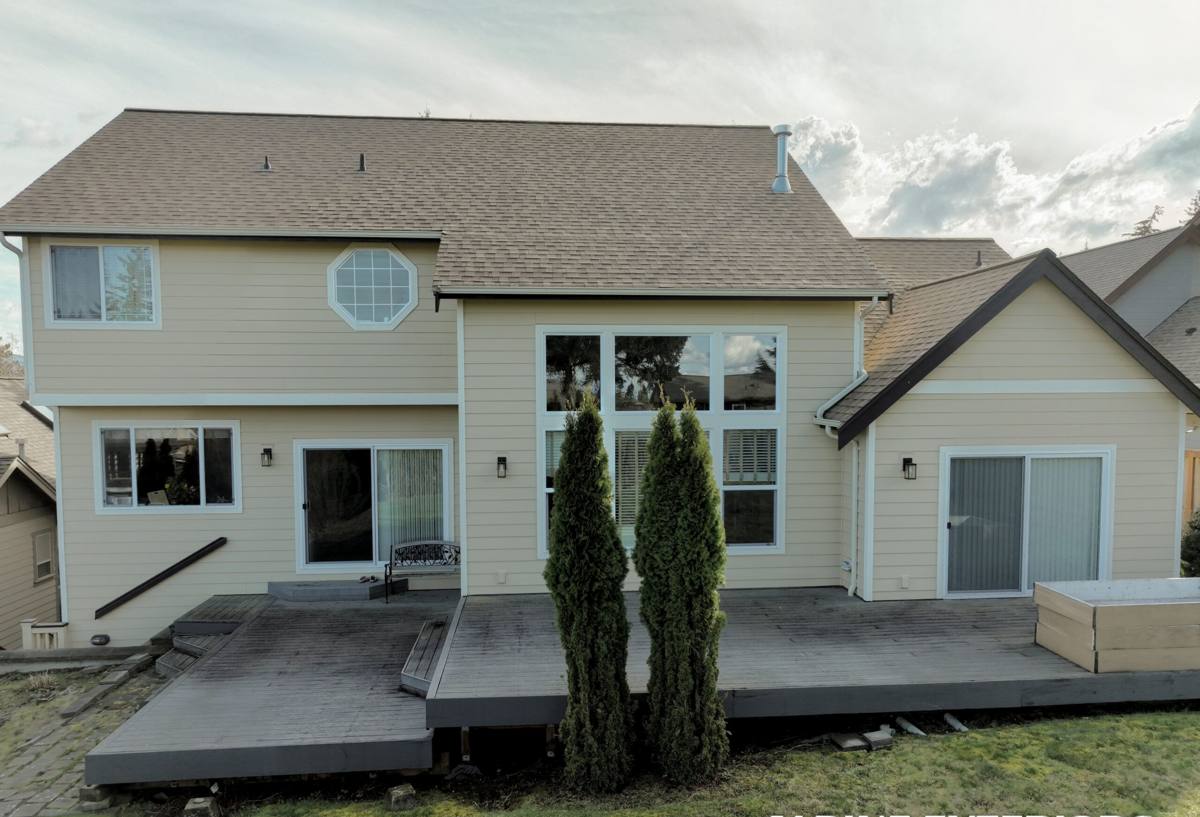
What Local Homes Actually Need From a Deck
Every deck we build near Clearwater and Oldsmar has to answer to three things: sun, salt, and storms.
UV and Heat
Pinellas County gets sun exposure most of the year, and uncapped or lower-grade composite boards can fade, chalk, or go slightly soft underfoot after repeated heat cycling. Capped composite boards — with a protective polymer shell wrapped around the core — hold color and rigidity far better under sustained sun than early-generation composite products did.
Salt Air and Moisture
Even a few miles inland from the Gulf, salt air accelerates corrosion on fasteners and any exposed metal hardware. It also means humidity sits in the air more consistently than in drier climates, which is exactly the condition that causes wood decking to cup, split, and host mold in the gaps between boards. Composite doesn't absorb moisture the way wood does, but the substructure underneath it — joists, ledger boards, fasteners — is still vulnerable if it's not addressed correctly.
Wind and Storm Exposure
Pinellas County sits in a hurricane-exposed zone, and a deck attached to the house is a structural connection, not just a surface. Ledger board attachment, joist hangers, and railing post anchoring all need to be sized and fastened to hold up under wind-driven rain and gusts, not just support foot traffic on a calm day.
Where Composite Decking Goes Wrong
Most composite decking failures we get called out to inspect aren't a failure of the decking material itself — they're installation shortcuts that the board's warranty never covered in the first place. The common ones:
- Boards fastened tight against each other with no gap for thermal expansion, which causes buckling as the material heats and cools
- Joist spacing sized for wood framing lumber instead of the tighter spacing composite manufacturers require
- Ledger boards attached to the house without proper flashing, letting water track back into the rim joist or wall framing
- Standard steel fasteners used instead of stainless or coated fasteners rated for coastal, high-moisture exposure
- Poor or blocked ventilation underneath the deck, trapping moisture against the underside of boards and the substructure
- Railing posts anchored with hardware that isn't rated for the wind loads actually seen in this part of Florida
None of these show up on day one. They show up two, three, five years in — which is exactly why the installation standard matters more than the marketing on the board itself.
How a Correct Installation Works
A composite deck done right in this climate follows a specific sequence, and skipping steps is where the shortcuts above come from.
1. Substructure First
We start with the framing, not the decking. Joists get sized and spaced to the manufacturer's composite-specific span tables — not standard residential framing tables, which assume a stiffer wood board. Any framing lumber gets a proper ground-contact or above-ground rated treatment appropriate to its exposure, and ledger boards get flashed to shed water away from the house rather than behind it.
2. Fasteners and Hardware
Everything below and around the decking — hangers, screws, post bases, railing brackets — gets specified for coastal exposure. In a salt-air environment, the cost difference between standard and corrosion-resistant hardware is small; the difference in how it holds up over a decade is not.
3. Ventilation and Drainage
The space underneath a deck needs airflow so moisture doesn't sit against the underside of the boards or the framing. We also make sure water has somewhere to go — grading and drainage under a ground-level deck, or proper flashing and gapping under an elevated one.
4. Board Installation
Composite boards need consistent expansion gaps between boards and at butt joints — the spacing isn't optional and it isn't the same for every product, so we follow the specific manufacturer's spec rather than a generic rule of thumb. Hidden fastener clip systems, where the product supports them, give a cleaner surface and avoid the exposed screw heads that can work loose under thermal cycling.
5. Railings and Trim
Railing posts get anchored to blocking rated for real wind load, not just screwed into the deck surface. Fascia and trim boards get the same coastal-rated fastening as the deck field itself, since trim edges are often the first place UV and moisture damage shows up.
Composite vs. Other Decking Materials
| Material | Coastal Sun/Salt Performance | Maintenance | Typical Lifespan Here |
|---|---|---|---|
| Capped Composite | Strong — built-in UV and moisture resistance | Occasional wash, no sealing or staining | 25–30+ years |
| Uncapped/Early Composite | Moderate — can fade and chalk over time | Periodic cleaning; more prone to surface wear | 15–20 years |
| Pressure-Treated Wood | Weaker — cups, splits, and grays under UV/humidity cycling | Annual sealing/staining recommended | 10–15 years with upkeep |
| PVC Decking | Strong — fully synthetic, no wood core to absorb moisture | Low; similar cleaning to composite | 25–30+ years |
We don't install every product on this list. Pressure-treated wood decks are still requested regularly, and we'll build one if that's what a homeowner wants — but we're upfront that in this climate, wood asks for a maintenance commitment (annual sealing, closer inspection for rot) that composite and PVC simply don't. That's a trade-off we lay out honestly rather than talk anyone out of.
What Drives the Cost of a Composite Deck
| Factor | Why It Matters |
|---|---|
| Board tier (capped vs. base composite) | Capped boards cost more per square foot but hold color and resist moisture longer |
| Deck height and substructure | Elevated decks need more framing, footings, and often permitting/engineering |
| Railing system | Composite, aluminum, and cable railing all price differently and change the anchoring work |
| Fastener system | Hidden-fastener clip systems cost more in labor but give a cleaner, longer-lasting surface |
| Site access and demo | Removing an old wood deck, or working around tight side-yard access, adds labor time |
| Permitting | Most deck rebuilds and new decks in Pinellas County require a permit and inspection |
We won't quote a price without seeing the site — deck cost swings too much based on height, access, and railing choice to give an honest number sight unseen. What we can tell you upfront is that composite costs more than pressure-treated wood at the outset and less over ten years, once you factor in the sealing, staining, and board replacement that wood decks in this climate tend to need.
Why Local Experience Matters for This Job
A deck built to a generic national spec sheet can still fail here if it ignores what Pinellas County conditions actually do to a structure. A crew that works Clearwater and Oldsmar regularly knows the wind exposure categories that apply locally, works with the county permitting process instead of guessing at it, and has already seen how specific composite products hold up a few years after installation in this exact climate — not just what the manufacturer's brochure claims. That local track record is also why we can speak plainly about which products we trust for coastal exposure and which ones we've moved away from, based on what we've seen come back for repair.
Maintaining a Composite Deck Near the Coast
Composite decking is low-maintenance, not no-maintenance. A few habits keep it performing the way it's supposed to in this climate:
- Rinse off salt residue and pollen buildup periodically, especially after storms
- Sweep debris out of board gaps so moisture and organic matter don't sit trapped
- Check railing post anchors and fasteners annually, especially after hurricane season
- Keep gutters and downspouts near the deck clear so runoff isn't dumping directly onto or under it
- Avoid pressure-washing at close range or high PSI, which can damage the cap layer on some composite products
Our Process
We keep the process straightforward and don't push a product line before we've seen the site.
- On-site evaluation of the space, existing structure (if replacing a deck), house attachment point, and drainage
- Honest conversation about composite tiers, railing options, and what actually fits the budget and the site's exposure
- Permit handling with Pinellas County/local jurisdiction where required
- Framing and substructure built to composite-specific span and fastening standards
- Board and railing installation, then a final walkthrough before we consider the job done
If you're weighing a composite deck for a home in the Clearwater or Oldsmar area, we're glad to walk the site and give you a straight assessment — no pressure, no upsell, just what the space actually needs. Use the form below to request a free estimate.