 Oldsmar Siding
 Why Decks Near Citrus Park Wear Out Faster Than the National Average
A deck built to a generic national spec does not hold up the same way in the Tampa Bay area as it would in a drier, milder climate. Homes in and around Citrus Park near Oldsmar deal with a specific combination of stresses: hurricane-force wind gusts that load framing and connections in ways most of the country never sees, intense year-round UV that breaks down wood fiber and fades finishes even in winter, wind-driven rain that gets pushed sideways into ledger boards and railings during storms, and salt-laden air drifting in off Tampa Bay and the Gulf that accelerates corrosion on anything metal. None of these are exotic problems — they're just constant, and they add up faster than most homeowners expect.
That's the difference between a deck that needs full replacement at 12-15 years and one that's still solid at 25. It's rarely one dramatic failure. It's small, boring maintenance items — a fastener, a flashing detail, a ventilation gap — that got skipped or done to a lower standard, and Pinellas County's climate found every one of them.
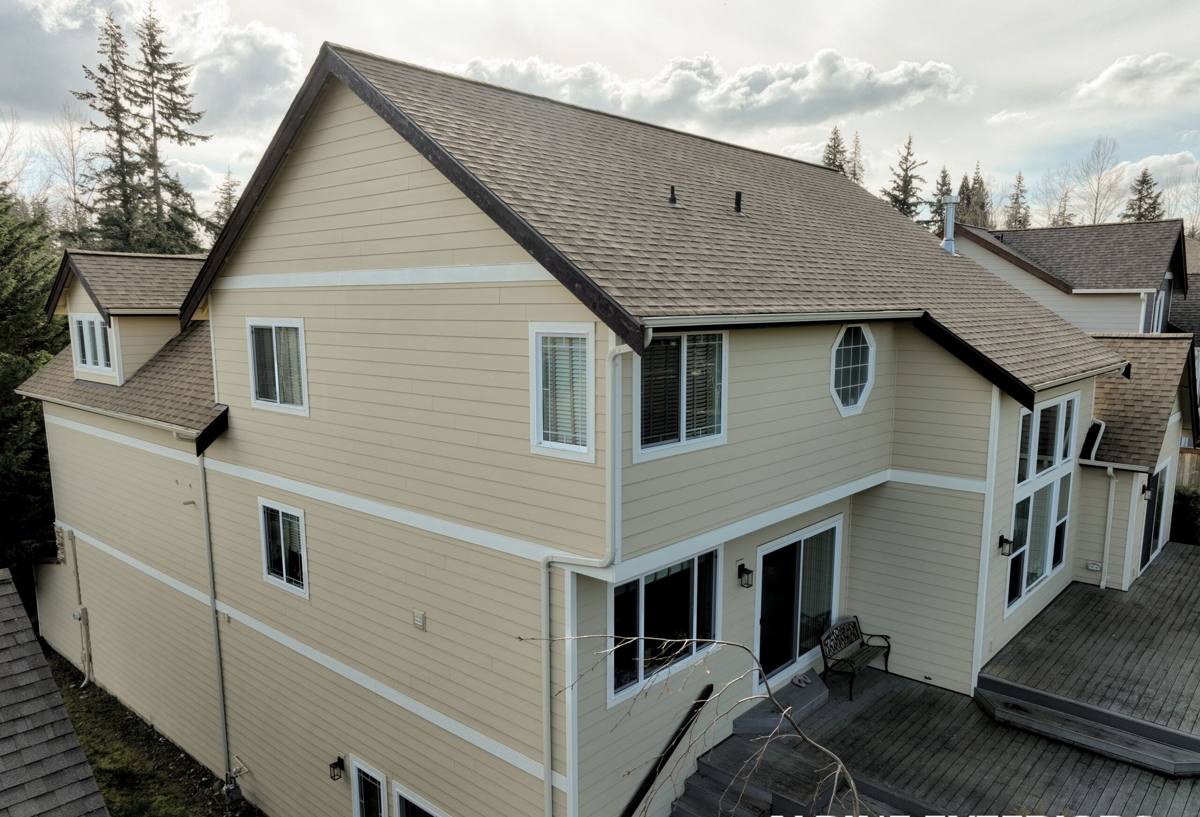
Signs Your Deck in the Citrus Park Area Needs Replacing, Not Just Repairing
Not every tired-looking deck needs a full teardown. But certain signs mean patching individual boards is just delaying a bigger, more expensive failure:
- Soft or spongy spots underfoot, especially near the house or around post bases
- Rust streaks bleeding down from fasteners, joist hangers, or post brackets
- Gaps opening up between the ledger board and the house siding or foundation
- Loose or wobbly railings — a code and safety issue, not just cosmetic
- Visible mold, mildew, or persistent dampness on the underside of the decking
- Cupping, splintering, or graying wood that no longer takes stain evenly
- Stair stringers that flex or show cracking at the cut notches
If you're seeing two or more of these at once, the framing underneath has usually been compromised for a while — the surface just showed it last.
What's Actually Failing Underneath the Surface
Ledger Board and Flashing
The ledger board — where the deck bolts to the house — is the single most common failure point on Florida decks, and it's almost always a water problem, not a structural one. Wind-driven rain gets pushed up and under decking that wasn't properly flashed where it meets the house, and the wood behind the siding rots quietly for years before anyone notices sagging. A correct replacement means removing decking back to bare framing, checking the rim joist and sheathing behind it, and installing proper step flashing and a drainage gap — not just caulking over the old connection and moving on.
Footings, Framing, and Hardware
Wind uplift is the load a lot of older Florida decks were never really designed for. Correct footings sized for local soil conditions, properly spaced posts, and hurricane-rated connector hardware at every post-to-beam and beam-to-joist junction matter more here than in calmer climates. This is also where corrosion-resistant hardware earns its keep — standard galvanized hardware can start showing rust within a few years this close to the water, while hot-dip galvanized or stainless connectors hold up for the life of the deck.
Fasteners and Salt Air Corrosion
Screws and nails are a small line item that causes a disproportionate share of callbacks. Salt air corrodes standard fasteners from the inside out, so a deck can look fine on top while the screws holding it together are losing strength underneath. We use fasteners rated for coastal or treated-lumber exposure on every replacement, which costs more up front and saves the whole project down the line.
Choosing the Right Decking Material for This Climate
There's no single "best" decking material — there's a best fit for your budget, how much upkeep you want to do, and how the deck gets used. Here's how the common options actually perform under Florida sun, humidity, and salt air:
| Material | Upfront Cost | Maintenance | Heat Underfoot | Typical Lifespan Here |
|---|---|---|---|---|
| Pressure-treated wood | Lowest | Annual sealing/staining recommended | Moderate | 10-15 years |
| Uncapped composite | Mid | Occasional cleaning; can fade/stain | Higher in direct sun | 15-20 years |
| Capped composite (PVC-wrapped) | Higher | Wash occasionally, no sealing | Varies by color, better than uncapped | 20-30 years |
| Aluminum | Highest | Minimal; won't rot, warp, or burn | Can get hot; lighter colors help | 30+ years |
Pressure-treated wood is still a reasonable choice if you're comfortable staying on top of resealing every year or two — Florida's UV load is unforgiving on unmaintained wood. Capped composite is the most common upgrade we install because it resists the exact things that beat up wood here: it won't rot from wind-driven rain intrusion, and it doesn't fade or chalk the way lower-grade composite can under year-round sun. Whatever material you pick, ask about the actual warranty terms in writing — fade and stain warranties on composite decking vary a lot between product lines.
Railings, Stairs, and Code Compliance
Deck replacement is also the moment to fix anything that's out of code, since you're already opening things up. Common items we check and correct:
- Railing height meeting current Florida Building Code minimums for the deck's height above grade
- Baluster spacing tight enough that a small child or pet can't slip through
- Stair stringer sizing and rise/run consistency — uneven steps are a common trip hazard on older decks
- Guard post attachment strong enough to resist a lateral push, not just decorative
- Handrail graspability on stairs with more than a few risers
These aren't upsells — they're the difference between a deck that passes inspection and one that gets flagged, and more importantly, one that's actually safe for the people using it.
Permitting and Wind-Load Requirements in Pinellas County
Deck replacement in Oldsmar and the surrounding Pinellas County area generally requires a building permit, since it involves structural framing attached to your home. Permitted work means an inspector verifies the footings, framing, and connections before decking goes down — which is exactly the stage where problems are cheapest to catch. It also means the work is on record if you ever sell the house or file an insurance claim after a storm.
Pinellas County's wind-load requirements reflect the region's real hurricane exposure, which is why generic, big-box deck plans built for a milder climate often don't meet local code without modification. A contractor who pulls permits regularly in this county already knows what the inspectors are going to check and builds to that standard from day one, instead of finding out at the inspection.
Our Deck Replacement Process
- On-site assessment — we inspect the existing deck, ledger connection, and framing to confirm what's salvageable versus what needs full replacement
- Written estimate — material options, scope, and a realistic timeline, no pressure to decide on the spot
- Permit filing — we handle the paperwork with the local building department
- Tear-out — full removal of old decking, railings, and any compromised framing, with a check behind the ledger for hidden rot
- Framing and hardware — new footings or post repairs as needed, corrosion-resistant connectors and fasteners throughout
- Decking, railings, and stairs installed to current code
- Inspection — county sign-off before we consider the job done
- Final walkthrough with you, including care instructions specific to whatever material you chose
Why Hiring a Crew That Already Works in Citrus Park Matters
A deck built by a crew that only occasionally works this far south learns Florida's climate lessons on your project. A crew that regularly works the Citrus Park area near Oldsmar has already made the adjustments — the right hardware grade, the flashing detail that stops wind-driven rain, the fastener spec that shrugs off salt air — before your project ever starts. That familiarity also means faster scheduling, a known relationship with the local permitting office, and someone who's still around and easy to reach if a warranty question comes up years later, rather than a crew that was passing through for one job.
Protecting Your New Deck Once It's Installed
Whatever material you choose, a few habits extend the life of a Florida deck significantly:
- Rinse off salt residue and debris periodically, especially after storms
- Keep gutters and downspouts directing water away from the deck area, not onto it
- Check railing and stair connections once a year for looseness before it becomes a safety issue
- If you chose wood, stay on a resealing schedule rather than waiting until it visibly fades
- Keep the area under the deck ventilated and clear of debris to avoid trapped moisture
A correctly built deck with reasonable upkeep should give you two decades or more of solid use in this climate — a poorly built one can start failing in under ten.
If your deck is showing its age or you're planning ahead of a sale, we're happy to take a look and give you a straightforward, no-pressure estimate. Use the form below to get started.