 Oldsmar Siding
 Why Decks in Westchase Wear Out Faster Than People Expect
Homeowners near Westchase often assume a deck failure is just old age. Usually it's the climate working exactly as it always does. This part of the Tampa Bay area sees intense, near-constant UV exposure, sudden wind-driven rain that gets up under boards and around fasteners, and salt-laden air drifting in off the Gulf that accelerates corrosion on anything metal. Add the occasional hurricane-force wind event and you have a structure that's being tested from every direction, every season, not just during storms.
A deck built with a generic, one-size-fits-all approach — the kind you'll get from a crew that mostly does decks somewhere inland — tends to show stress within a few years here: cupped boards, rusted-out fasteners, soft spots around the ledger board, and railing posts that wiggle more than they should. A deck built for this specific climate, with the right materials and the right connections, holds up because it was designed to handle exactly the conditions it's sitting in.
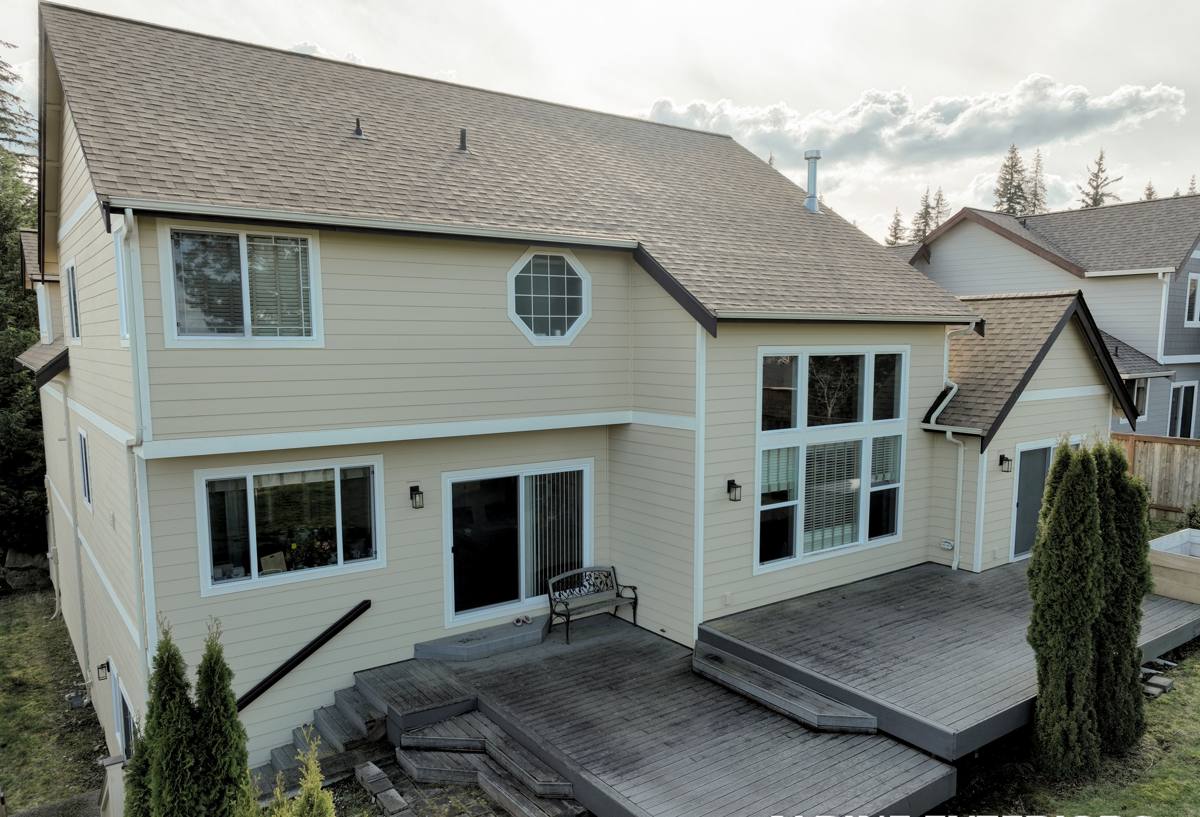
Signs a Deck Needs Replacement, Not Another Repair
Not every problem deck needs a full teardown. But there's a point where patching individual boards is just delaying a bigger job, and often spending money that won't carry forward into the new structure. Some signs it's time to talk replacement instead of repair:
- Soft, spongy, or discolored wood at the ledger board (where the deck attaches to the house) — this is a structural connection, not a cosmetic one
- Multiple joists or beams with visible rot, splitting, or insect damage, not just an isolated board or two
- Fasteners that are heavily rusted, popped up, or leaving rust streaks down the decking
- Railings or posts that flex noticeably when leaned on
- A deck more than 15-20 years old built with older fastening methods that don't meet current wind and connection standards
- Visible gaps opening between deck and house, or a deck that feels like it's pulling slightly away from the structure
If what you're seeing is limited to a few worn boards on an otherwise sound frame, repair can make sense. If the frame itself — ledger, joists, posts, footings — is the problem, replacement is the honest recommendation, because new decking on a compromised frame just hides the real issue.
Choosing the Right Decking Material for This Climate
Material choice matters more here than in drier, milder climates. Constant humidity, UV, and salt air punish materials differently than they would inland. Here's how the common options actually perform under those conditions, based on what we see in the field:
| Material | How It Handles UV & Heat | How It Handles Moisture & Salt Air | Maintenance |
|---|---|---|---|
| Pressure-treated wood | Fades, can check and splinter with heavy sun exposure | Prone to warping and fastener corrosion if not sealed regularly | Needs re-sealing every 1-2 years |
| Composite decking | Fade-resistant formulations hold color well | Doesn't absorb moisture like wood; resists rot | Occasional cleaning, no sealing or staining |
| Capped PVC decking | Strong UV resistance, minimal fading over time | Fully moisture-resistant, no rot risk | Lowest maintenance of the group |
| Tropical hardwoods | Naturally dense, holds up to sun but will gray without upkeep | Naturally rot-resistant but still needs oiling to look its best | Requires periodic oiling to maintain appearance |
We'll walk you through the real trade-offs for your situation — budget, how much upkeep you actually want to do, and how the deck will be used — rather than pushing one product line. What matters most is that whatever decking goes on top, it's fastened to a frame built to handle this environment.
What We Steer Homeowners Away From, and Why
We're selective about a few product categories, not because a brand is bad, but because certain constructions are more sensitive to installation error and moisture intrusion in a hot, humid, salt-air environment — and the failure mode when something goes wrong (hidden rot, delamination) is harder to catch early. Our standard is to use materials and hardware with a track record in coastal Florida conditions specifically, backed by manufacturer specs that match this climate, not just general-purpose ratings.
What a Correct Deck Replacement Actually Involves
The decking boards are the part everyone sees, but they're the smallest part of what determines whether a deck lasts. A correct replacement addresses the whole system:
The Ledger Connection
This is where the deck attaches to your house, and it's the single most common point of failure we find on older decks. It needs proper flashing to keep water from tracking behind it into the house structure, and lag bolts or through-bolts sized and spaced correctly — not just nails or undersized screws.
Framing and Fasteners
Joists, beams, and posts should be rated for exterior/ground contact use where applicable, with hardware — joist hangers, post bases, structural screws — rated for corrosion resistance appropriate to a coastal-influenced, salt-air environment. Standard interior-grade fasteners corrode fast out here and are one of the top reasons older decks develop soft spots and loose connections.
Footings and Post Bases
Footings need to be sized and set to local code depth and bearing requirements, with post bases that keep wood off standing water and direct contact with concrete.
Railings and Guards
Beyond meeting code height and baluster spacing requirements, railing posts need to be through-bolted into the frame, not just screwed to the rim joist, so they hold up to real leaning weight and wind loads over time.
Our Deck Replacement Process
- On-site assessment. We inspect the existing deck's frame, ledger, footings, and decking to determine what's actually driving the failure, and take accurate measurements for the new structure.
- Material and layout discussion. We go over decking options, railing style, and layout with you, with honest guidance on cost and maintenance trade-offs for your specific deck.
- Permitting. We handle the permit application and coordinate required inspections with the local building department, so the finished deck is documented as code-compliant — which matters for insurance and resale.
- Demolition and disposal. The old deck is removed and hauled off, including old footings or posts that aren't being reused.
- Framing rebuild. New ledger, joists, beams, and posts go in first, with proper flashing and corrosion-resistant hardware throughout, ready for inspection before decking goes on.
- Decking, railing, and finish work. Decking boards, railings, stairs, and any trim are installed and checked for level, fastener pattern, and finish quality.
- Final walkthrough. We go over the finished deck with you, including basic care guidance for the specific material installed.
Permits, Codes, and Wind Requirements
Deck construction in Pinellas County requires a permit and inspection in nearly all cases, and the framing has to meet load and connection requirements set for this wind zone — not a generic national minimum. This isn't paperwork for its own sake: proper permitting means an independent inspector is verifying the ledger connection, footing depth, and structural fasteners before everything gets covered up by decking. Skipping this step, or hiring someone who does, leaves you with no record that the structure was actually built to hold up in a real wind event, and can complicate things at resale or with insurance.
Protecting Your New Deck After Installation
Even the best-built deck benefits from a little routine attention, especially in this climate. A simple annual checklist goes a long way:
- Sweep debris out from between boards regularly so moisture doesn't sit trapped against the frame
- Rinse off salt residue periodically, especially after storms with onshore wind
- Check railing posts and stair connections once a year for any looseness
- Trim back landscaping that's shading the deck and keeping it damp longer than it should be
- For wood or hardwood decking, keep to a sealing or oiling schedule rather than waiting until it looks weathered
- Have the ledger flashing and connection area glanced at every couple of years, since it's the hardest spot to inspect yourself
Why Hire a Crew That Already Works in Westchase
A deck replacement done by a crew unfamiliar with this specific stretch of the Tampa Bay area is more likely to default to generic specs — hardware, fastener spacing, material choices — that were fine somewhere else but fall short here. Working regularly in and around Westchase and greater Oldsmar means we already know the wind zone requirements, what the local building department expects to see at inspection, and which materials and hardware actually hold up long-term against the UV, humidity, and salt air this area deals with year-round. That familiarity translates into fewer surprises during the permitting process and a deck built to the standard this climate actually demands, not just the minimum somewhere else would allow.
If your deck is showing its age or you're planning a replacement before it becomes a safety issue, we're happy to take a look and give you a straightforward assessment. Reach out for a free, no-pressure estimate using the form below — there's no obligation, just an honest read on what your deck needs.