 Oldsmar Siding
 Feather Sound's Climate Is Hard on Decks
Decks in the Feather Sound area sit close enough to Tampa Bay and Old Tampa Bay to catch salt-laden air almost year-round, and that's on top of everything else Pinellas County weather throws at an exterior wood or composite structure. Intense UV breaks down finishes and dries out wood fibers faster than most homeowners expect. Wind-driven rain gets pushed sideways into joints, fastener heads, and end grain that was never meant to stay wet. And when a tropical system rolls through with hurricane-force gusts, a deck's structural connections — ledger boards, posts, joist hangers — take real lateral and uplift loads, not just foot traffic.
None of this means a deck is doomed. It means repairs done here need to account for conditions a contractor in a drier, cooler climate never has to think about. A patch that would last a decade in Ohio might fail in three years a few blocks from the water in Oldsmar.
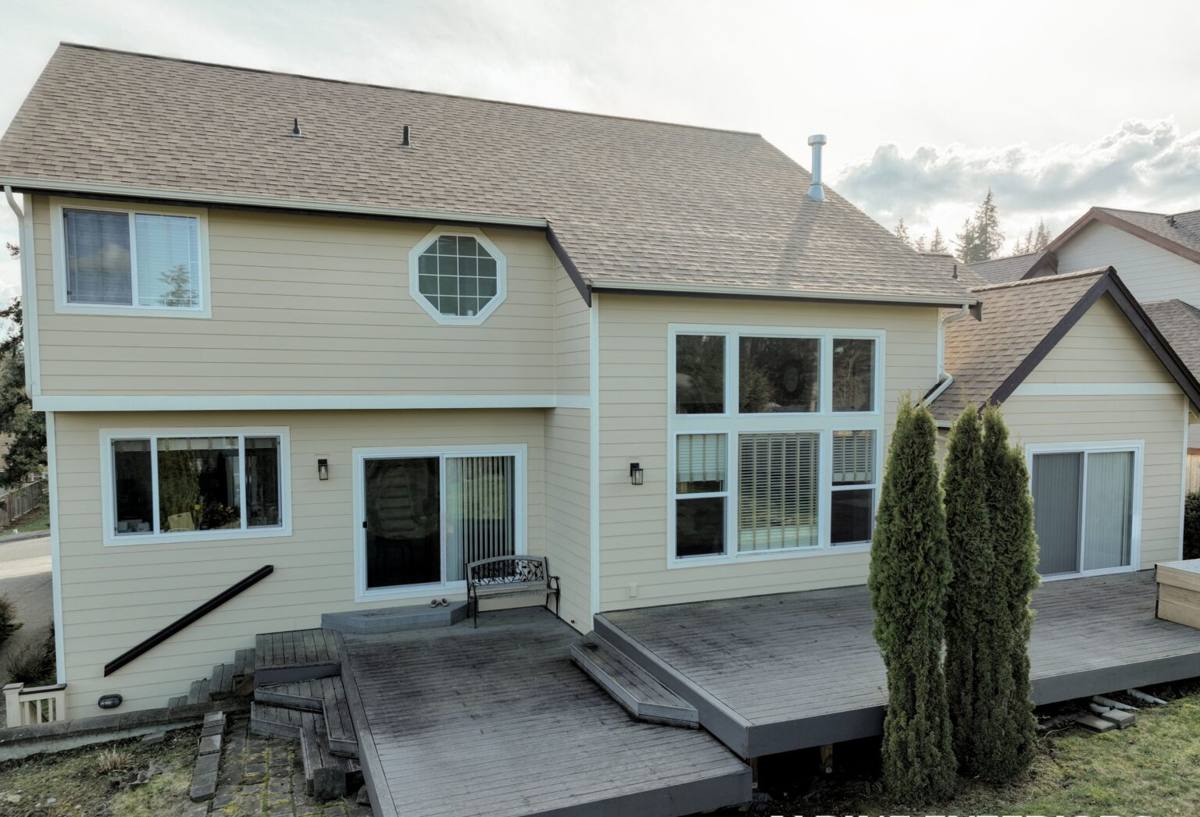
The Deck Problems We See Most Often Here
Most of the repair calls we get in this neighborhood fall into a handful of categories:
- Ledger board separation or rot — where the deck attaches to the house, moisture gets trapped behind flashing that's failed or was never installed correctly.
- Corroded or failing fasteners — screws and nails that rust, weep stains onto the decking, and lose their grip strength.
- Cupped, split, or silvered boards — sun and moisture cycling causes wood to warp and crack, especially on boards that get full afternoon sun.
- Loose or wobbly railings — a safety issue as much as a cosmetic one, often from posts that were under-attached to begin with.
- Post and beam movement — settling, rot at the base where posts meet concrete, or connections that were undersized for the loads they're carrying.
- Storm damage — lifted boards, sheared fasteners, or racked framing after high winds, even when the damage looks minor from the surface.
Some of these are cosmetic annoyances. Others are structural, and the difference matters — a deck that looks fine but has a compromised ledger connection or rotted post base is a real safety concern, not just a maintenance item.
What a Proper Repair Looks Like (vs. a Patch Job)
A lot of "deck repair" in this climate ends up being cosmetic — swap a bad board, sink a few new screws, call it done. That approach treats the symptom, not the cause, and in a coastal, high-UV environment the same failure tends to come back within a season or two.
A correct repair starts with actually finding out why something failed. If a board rotted, was it just age, or is there a drainage problem sending water where it shouldn't go? If a railing post is loose, is it the fastener, the post itself, or the framing member it's tied into? We probe suspect wood, check moisture content where it matters, and look at the structural connections before we touch a single deck board — because replacing surface material over a hidden structural problem just hides it for a while.
Once we know what's actually wrong, the repair addresses the cause: correcting flashing and drainage details, upgrading fasteners to something that will actually hold up near the bay, and rebuilding structural connections to current standards rather than just matching what was there before.
Repair or Replace? How We Help You Decide
Not every damaged deck needs full replacement, and not every deck is worth patching. We walk homeowners through the honest trade-offs rather than defaulting to the bigger job.
| Factor | Repair Often Makes Sense | Replacement Often Makes Sense |
|---|---|---|
| Framing condition | Posts, beams, and joists are structurally sound | Widespread rot or storm damage in the frame itself |
| Age of structure | Deck is within its expected service life | Original construction is decades old and undersized by modern standards |
| Extent of damage | Isolated boards, fasteners, or railing sections | Damage is spread across most of the deck surface |
| Ledger connection | Flashing and attachment are sound or easily corrected | Ledger has significant rot or was never properly flashed |
| Code compliance | Existing railings and guards meet current requirements | Railing height, spacing, or fastening falls short of code |
We'll tell you plainly if a repair is the responsible move, and just as plainly if it's not — a deck built on a weak frame isn't something we'll patch over just to make a sale.
Our Deck Repair Process, Step by Step
- On-site inspection. We check the frame, fasteners, ledger connection, railings, and decking surface, including areas that are hard to see from the top.
- Honest scope and estimate. You get a clear explanation of what's failing, why, and what it will take to fix it correctly — no inflated scope, no vague line items.
- Structural repairs first. Any compromised framing, posts, or ledger issues get addressed before cosmetic work starts.
- Fastener and hardware upgrade. Corroded connectors and fasteners are replaced with hardware suited to a coastal, high-humidity environment.
- Decking and railing repair or replacement. Damaged boards and railing components are replaced to match or improve on the existing deck.
- Final check and cleanup. We confirm everything is secure, level, and code-appropriate, and leave the site clean.
Materials and Fasteners That Hold Up Near the Bay
Material choice matters more here than in most parts of the country, and we're upfront about the trade-offs of each option rather than pushing whatever's easiest for us to install.
Pressure-treated lumber is affordable and familiar, but it requires ongoing sealing and staining to hold up against UV and wind-driven rain — skip that maintenance for a couple of years near the water and it shows. Composite decking costs more up front but handles moisture and sun exposure with far less upkeep, which is a real consideration for a deck exposed to this much salt air and UV. Neither one is objectively "better" — it's a maintenance-versus-upfront-cost decision, and we lay out both honestly so you can choose based on how much deck maintenance you actually want to do.
Fasteners matter just as much as decking material. Standard galvanized screws and nails corrode faster in salt-air environments than most homeowners expect, leading to the black staining and loose boards we see constantly on repair calls. We use stainless steel or coated fasteners rated for coastal exposure, along with corrosion-resistant structural connectors at posts, beams, and ledger attachments. It costs a bit more than standard hardware, but replacing rusted-out fasteners every few years costs more in the long run — and rusted fasteners are exactly the kind of small failure that leads to a bigger structural problem later.
Permits, Railings, and Wind-Load Requirements
Deck work in Oldsmar and unincorporated Pinellas County areas like Feather Sound is subject to Florida Building Code requirements, and repairs that touch structural framing, railings, or the ledger connection typically require a permit — not just cosmetic board swaps. Florida's code accounts for wind loads that are considerably higher than what older decks in this area were originally built to, which is one reason a repair is a good opportunity to bring railing height, baluster spacing, and structural connections up to current standards rather than just replacing like-for-like.
We handle the permitting and inspection process as part of the job, so you're not left guessing whether a repair was done to code — which matters both for safety and for any future home sale or insurance review.
Keeping Your Repaired Deck Solid Year to Year
A properly executed repair should last, but a little upkeep goes a long way in this climate. Between inspections, homeowners can watch for:
- Soft, spongy, or discolored spots on decking boards
- Rust streaks running from screw heads or connectors
- Gaps or movement where the deck meets the house
- Wobble or flex in railings and posts
- Standing water or debris buildup between boards
- Peeling or worn sealant/stain on wood decking
- Any visible damage after a tropical storm or high-wind event, even if the deck seems usable
Catching these early is almost always cheaper than waiting for a full repair call, and it's the single biggest factor in how long a deck lasts in a salt-air, high-UV environment.
Why a Crew That Already Works Feather Sound Matters
Deck repair here isn't the same job as deck repair inland. A crew that regularly works this area already knows how fast fasteners corrode near the bay, what ledger and flashing details tend to fail first, and what Pinellas County and Oldsmar permitting actually requires for structural and railing work — instead of learning it on your project. That familiarity shows up in fewer surprises, fewer callbacks, and repairs that are built for the conditions your deck actually faces, not generic conditions from a manual written for somewhere else.
If your deck in Feather Sound has damage, movement, or just doesn't feel as solid as it used to, we're happy to take a look and give you a straightforward assessment — free, no pressure, and no upsell to work you don't need. Use the form below to request an estimate.