 Oldsmar Siding
 Composite Decking in Forest Lakes: Built for the Climate, Not Just the Curb Appeal
Forest Lakes is one of Oldsmar's established residential neighborhoods, and like most of Pinellas County, it sits squarely in a climate that is hard on outdoor living spaces. A deck here isn't just a weekend project — it's an investment that has to survive intense year-round sun, sudden downpours, salt-laden air drifting in off Tampa Bay, and the real possibility of hurricane-force wind gusts during storm season. Composite decking has become the go-to choice for homeowners in this area precisely because it's engineered to handle that combination of stresses better than traditional lumber, but only when it's installed correctly for local conditions. This page covers what that actually means for a Forest Lakes property.
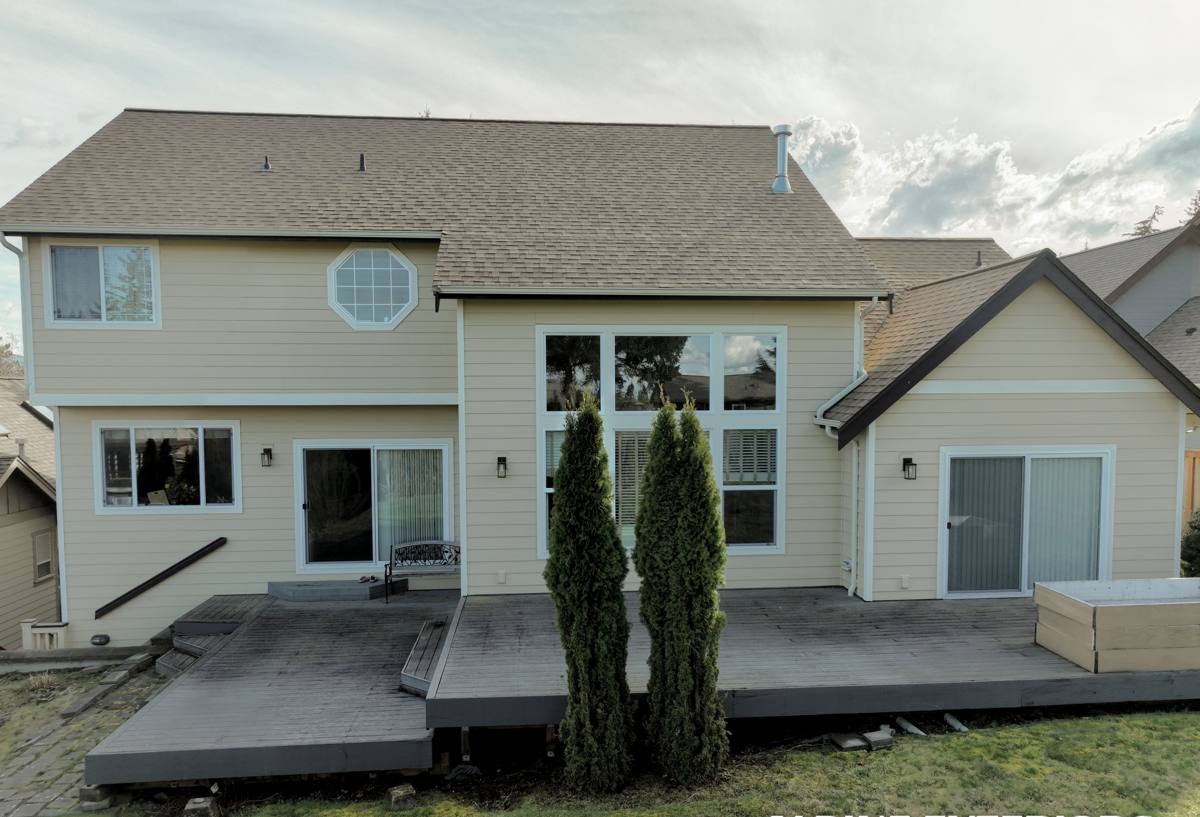
What Pinellas County's Climate Does to a Deck Over Time
Before talking about materials, it helps to understand what a deck in this part of Florida is actually up against. It's not one single threat — it's several, working on the structure at the same time, year after year.
UV Exposure
Florida sun is stronger and more consistent than in most of the country. Untreated or poorly finished wood grays and checks within a couple of seasons. Lower-grade composite boards without adequate UV inhibitors can fade unevenly, especially on south- and west-facing sections of a deck that get the most direct afternoon sun.
Wind-Driven Rain and Humidity
Afternoon storms in Oldsmar don't just wet the surface of a deck — wind pushes rain sideways and underneath boards, into fastener holes, and against ledger connections. Combined with Florida's humidity, this is where wood rot and hidden substructure decay usually start, often long before it's visible from the top.
Salt Air
Even at a few miles from open water, salt air corrodes standard fasteners, joist hangers, and metal railing components faster than it would inland. Over years, this is one of the most common reasons a deck that "looks fine" on top turns out to have a compromised frame underneath.
Hurricane-Force Wind
Pinellas County deck and railing work has to account for uplift and lateral loads during tropical storms and hurricanes, not just everyday wind. Ledger attachment, post connections, and railing anchoring all matter more here than in a low-wind-zone state.
What a Correct Composite Deck Installation Actually Involves
Composite boards get most of the attention because they're what you see and touch, but the surface material is only part of the job. A deck that's going to hold up in Forest Lakes' climate depends just as much on what's underneath it.
- Ledger board attachment: Properly flashed and lag-bolted or through-bolted into the home's structure, with a moisture barrier to stop water intrusion at the house connection — one of the most common failure points on older Florida decks.
- Substructure and fasteners: Corrosion-resistant, coated or stainless fasteners and joist hangers rated for coastal exposure, not standard interior-grade hardware.
- Joist spacing: Tightened up from typical wood-deck spacing when required by the composite manufacturer's span tables, especially at angles or picture-frame border details.
- Ventilation and drainage: Enough airflow beneath the deck to let moisture escape, plus proper slope so wind-driven rain doesn't pool against the house or low points in the frame.
- Railing and post anchoring: Engineered to meet Florida Building Code load requirements, which matters both for safety and for passing inspection.
- Hidden fastening systems: Correctly installed per the board manufacturer's spec, since incorrect gapping is a common cause of buckling in high-heat, high-humidity conditions.
Any one of these done wrong won't necessarily show up on day one. It shows up two, five, or eight years later — as a soft spot near the house, a squeaking board, or a railing post that's gone loose after a storm season.
Composite vs. Wood vs. PVC: What Actually Makes Sense in This Climate
We get asked regularly why we lead with composite for decks in this area rather than pressure-treated wood or full PVC. Here's the honest comparison, including the trade-offs of each.
| Factor | Pressure-Treated Wood | Composite | Cellular PVC |
|---|---|---|---|
| UV / fading resistance | Weak — grays and checks without regular refinishing | Strong, especially capped boards | Strong |
| Moisture / rot resistance | Moderate, depends on sealing upkeep | Strong | Strong |
| Upfront cost | Lowest | Mid-range | Highest |
| Maintenance | Annual sealing/staining | Occasional cleaning only | Minimal |
| Surface heat in direct sun | Moderate | Can run hot in dark colors | Runs hot in dark colors |
| Feel underfoot / flex | Natural wood feel | Solid, wood-like | Can feel more plastic |
| Long-term value in coastal climate | Lowest — highest upkeep burden | Strong balance of cost and durability | Strong, at a premium |
Wood isn't a bad material — it's a maintenance commitment. In a climate that alternates between blazing UV and soaking humidity, that upkeep schedule is unforgiving, and skipping even one season of sealing accelerates damage. PVC is a legitimate option for homeowners who want the lowest possible maintenance and are comfortable with the added cost. For most Forest Lakes projects, quality composite hits the practical middle: strong resistance to this area's specific climate stresses, a realistic maintenance routine, and a cost that fits typical residential budgets.
Our Installation Process for Forest Lakes Projects
Because we work in this neighborhood regularly, our process is built around the conditions we already know are relevant to it — not a generic national checklist.
- On-site assessment: We evaluate the existing structure or ground conditions, sun exposure by side of the house, drainage patterns, and any evidence of prior moisture issues.
- Design and material selection: We walk through board color, capped vs. uncapped composite, and railing style, factoring in how much direct afternoon sun the deck will actually get.
- Permitting: We handle the permit application through the applicable local building department, including the structural details Pinellas County reviewers expect to see for wind load and railing attachment.
- Framing and substructure: Built with corrosion-resistant hardware and correct joist spacing for the chosen board profile, with attention to ledger flashing at the house connection.
- Decking and railing installation: Installed to the manufacturer's fastening and gapping specifications, which is what keeps the surface performing correctly through Florida's heat cycles.
- Final inspection and walkthrough: We confirm the deck passes inspection and walk the homeowner through basic care before we consider the job finished.
Hurricane Wind and Code Considerations Specific to This Area
Pinellas County's building code reflects its hurricane exposure, and decks are not exempt from that. Railing systems have to meet specific load requirements, post connections need engineered anchoring rather than surface-mounted brackets, and elevated decks need bracing sized to actual wind exposure rather than a one-size-fits-all approach. This is also where cutting corners is least visible until it matters most — a railing that looks fine in July can fail exactly when it's needed during a September storm. We build and permit every project to meet these requirements, not just to pass a visual inspection.
Maintaining a Composite Deck in a Coastal, High-Humidity Climate
Composite decking is low-maintenance compared to wood, but "low-maintenance" doesn't mean "no maintenance," especially this close to the Gulf and Tampa Bay. A short seasonal routine goes a long way:
- Rinse the deck surface periodically to remove salt residue, pollen, and organic debris before it can stain or trap moisture.
- Clear leaves and debris from between boards and around railing posts, especially after storms, so trapped moisture doesn't sit against the frame.
- Check the underside of the deck once or twice a year for any signs of hardware corrosion or moisture pooling.
- Confirm gutters and downspouts near the deck are directing water away rather than onto the structure.
- Inspect railing posts and connections after major storms for any looseness before the next use.
Why Hiring a Crew That Already Works in Forest Lakes Matters
A lot of deck problems in this region trace back to installation choices that would be perfectly fine somewhere without hurricane exposure or salt air, but aren't fine here. A crew that regularly works Oldsmar and greater Pinellas County already knows which fasteners hold up, how local permitting reviewers expect wind-load details documented, and how sun exposure varies house to house across Forest Lakes' lots. That familiarity shows up less in how the deck looks on installation day and more in how it's still performing five or ten summers later.
If you're considering a new composite deck or replacing an aging one in Forest Lakes, we're happy to take a look and put together a straightforward, no-pressure estimate — just use the form below to get started.