 Oldsmar Siding
 Why East Lake Siding Has to Work Harder Than the Average Wall
East Lake sits close enough to Tampa Bay and the Gulf that its homes take on a specific mix of punishment most inland houses never see. Wind-driven rain during summer storms gets forced sideways into every seam and joint. Salt-laden air corrodes fasteners and trim faster than it would forty miles inland. Add in the intense, nearly year-round Florida UV load, and you have a climate that will find every weak point in a siding system within a few storm seasons. Any product that goes on an East Lake exterior needs to handle all three at once, not just one of them.
This is the reason we don't treat siding as a cosmetic upgrade. It's the primary barrier between the wood framing of a house and the most corrosive climate in the continental United States. Get the product or the installation wrong, and the failure shows up as soft sheathing, stained trim, and paint that won't hold — usually a few years after the crew that installed it has moved on.
What James Hardie Fiber Cement Actually Is (and Why HZ5 Matters Here)
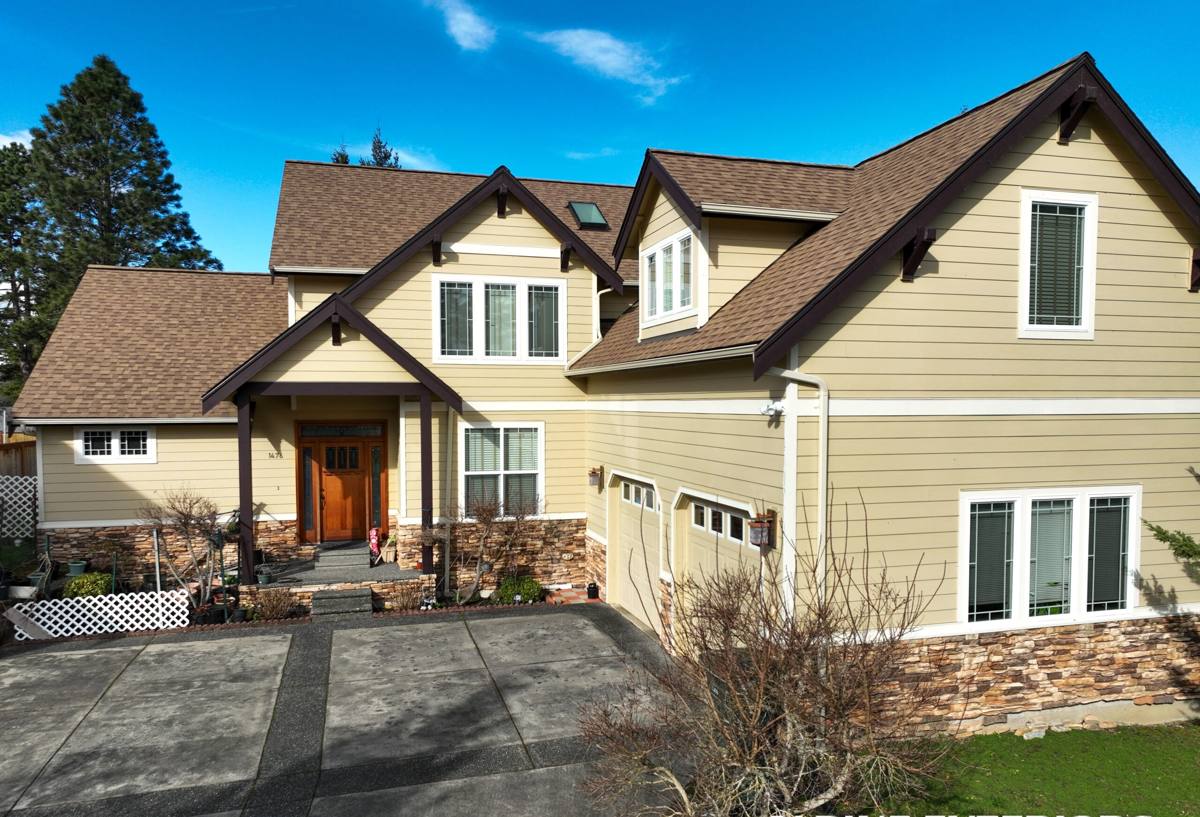
James Hardie siding is fiber cement: a mix of Portland cement, sand, and cellulose fiber pressed and cured into planks and panels. It doesn't rot, it isn't a food source for termites or carpenter ants, and it's non-combustible — a real consideration in a region where wildfire and lightning-strike ignition both happen. Hardie also engineers its products by climate zone, and homes in Pinellas County fall into the HZ5 zone, which is formulated and tested specifically for high humidity, heavy rainfall, and coastal exposure rather than a generic national spec.
Every board also comes from the factory with Hardie's ColorPlus finish already baked on — a baked-on, UV-cured coating applied under controlled conditions rather than a topcoat rolled on outdoors after installation. In a market with this much sun exposure, that difference in finish durability is the difference between a wall that holds its color for a decade and one that starts chalking and fading within a few summers.
Picking the Right Hardie Profile for an East Lake Home
Lap Siding (HardiePlank)
HardiePlank is the workhorse for most East Lake homes — horizontal boards in a range of exposure widths that read as traditional wood lap siding without the wood's moisture problems. It's the right call for the vast majority of single-family homes in the area, and it pairs well with the ranch and traditional Florida profiles common in this part of Pinellas County.
Panel and Board-and-Batten Looks
HardiePanel gives a smoother, more vertical, board-and-batten appearance that works well on gable ends, accent walls, or homes going for a more modern or coastal look. We'll often mix panel accents with plank siding on the same house rather than defaulting to one profile everywhere.
Trim and Soffit
HardieTrim boards finish out corners, window and door surrounds, and fascia. Using Hardie trim alongside Hardie siding matters more than it sounds — mixing fiber cement siding with wood or composite trim reintroduces exactly the rot-prone joints the siding was supposed to eliminate.
What Correct Installation Involves (Beyond Nailing Boards Up)
Moisture Management Comes First
The siding itself is only one layer of the wall assembly. Before a single board goes up, the sheathing gets inspected for existing water damage, and a code-compliant weather-resistant barrier goes on with correctly lapped and taped seams, proper flashing at windows, doors, and any wall penetration, and rainscreen or furring where the assembly calls for it. Skip this step and you can install perfect siding over a wall that's already set up to trap water behind it — the single most common cause of siding failure we see on older Pinellas County homes.
Fastening and Clearances
Hardie publishes specific fastener types, spacing, and penetration depth requirements, and those specs change slightly by exposure and wind zone. Given the wind loads this area sees during tropical systems, correct fastening isn't optional — it's what keeps boards attached and keeps the manufacturer's warranty valid if something ever needs to be claimed. Butt joints, corner details, and the minimum clearance between the bottom of the siding and grade, roofing, or a patio slab all have to be respected too, since that clearance is what keeps splashback and standing water off the bottom course.
Finish Work
Cut edges get sealed, factory finish gets matched at joints, and caulking is applied only where Hardie's details call for it — not as a substitute for proper flashing. Done right, the finished wall shouldn't need re-caulking or repainting for many years.
Hardie vs. the Alternatives: A Straight Comparison
We get asked regularly why we don't offer vinyl, LP SmartSide, or the cheaper fiber cement alternatives. Here's the honest comparison for a coastal Pinellas County climate specifically:
| Factor | James Hardie Fiber Cement | Vinyl | Engineered Wood (LP-type) |
|---|---|---|---|
| Moisture/rot resistance | Non-organic, won't rot | Won't rot, but seams can let water behind panel | Wood-based core, vulnerable if moisture gets in |
| Wind performance | Heavy, rigid, strong fastened hold | Lightweight, can crack or blow off in high gusts | Decent when new, weakens if edges swell |
| UV/color fade | Baked-on ColorPlus finish resists fading | Can fade and go brittle in intense sun over time | Field-applied paint needs earlier repainting |
| Fire resistance | Non-combustible | Combustible, can melt/deform | Combustible |
| Typical lifespan when correctly installed | Decades, per manufacturer warranty terms | Shorter in coastal/high-UV climates | Shorter if moisture protocols aren't followed exactly |
Vinyl and engineered wood aren't bad products in every climate — but in a zone with this much combined wind, UV, and moisture, we'd rather stand behind one system we can install to spec every time than offer several and manage different failure modes across all of them.
Our Process, Start to Finish
The process is the same whether it's a full re-side or a section replacement after storm damage:
- On-site inspection of existing siding, trim, and sheathing to catch any hidden moisture damage before a quote is finalized.
- Detailed proposal specifying Hardie product line, profile, color, and trim details — no vague "siding allowance" line items.
- Careful tear-off with sheathing inspected and repaired as needed before anything new goes on.
- Weather-resistant barrier and flashing installed to current code and Hardie's written specifications.
- Siding, trim, and accessories installed to manufacturer fastening and clearance requirements.
- Final walkthrough and punch list before the job is called complete.
Maintenance and Warranty Once It's On the Wall
One of the practical advantages of ColorPlus-finished Hardie siding is how little upkeep it asks for. There's no annual repainting cycle, no sealing schedule, and no need to worry about wood-boring insects. Realistic homeowner maintenance is limited to an occasional rinse to keep salt residue and grime off the surface, and a visual check after major storms for any impact damage or lifted trim. James Hardie backs its products with a manufacturer's limited warranty that's transferable to a new owner if the house sells — worth confirming in writing with any contractor, since warranty coverage depends on installation following Hardie's published specifications.
Why It Matters That We Already Work in East Lake
A crew that's worked other homes in this same neighborhood knows the building stock — the common wall assemblies, the typical age of sheathing, and the kind of storm exposure a given lot orientation actually sees. That familiarity shortens the inspection phase and avoids surprises mid-job. We're also familiar with Pinellas County's permitting requirements and inspection process for exterior work, which keeps a project moving instead of stalling on paperwork. None of that replaces doing the installation correctly, but it does mean fewer unknowns going into the job.
Signs Your Current Siding Is Already Behind
Not sure if it's time to look into replacement? A few warning signs are worth acting on before they become bigger repairs:
- Soft or spongy spots when you press on siding, especially near the bottom courses or window trim
- Visible warping, buckling, or gaps opening up between boards
- Paint that's peeling, bubbling, or chalking heavily to the touch
- Persistent staining or dark streaks that don't wash off
- Rising energy bills with no other obvious cause, which can point to a compromised wall assembly
- Visible fastener corrosion or rust streaks bleeding down the face of the siding
If you're seeing any of these on an East Lake home, it's worth having someone look at the wall assembly, not just the surface.
If you'd like an honest read on your home's current siding, or you're ready to talk through James Hardie options for an East Lake project, we're happy to walk the exterior with you and put together a free, no-pressure estimate using the form below.