 Oldsmar Siding
 Windows in Land O' Lakes: Built for Gulf Coast Weather
Homes in and around Land O' Lakes sit in one of the more demanding climates in the country for exterior building products, and windows take more of that punishment than almost any other component of the house. A window has to be a structural barrier during hurricane season, a UV-resistant surface through a summer that never really lets up, and a watertight seal against rain that rarely falls straight down here. When any one of those jobs is done poorly, the failure usually doesn't show up as a dramatic leak on day one. It shows up two or three years later as a soft sill, a fogged pane, or water staining on an interior wall that traces back to a window that was never properly flashed.
Oldsmar Siding Company installs and replaces windows for homeowners throughout the Land O' Lakes area, along with siding, roofing, and other exterior work, because a window is never really an isolated product. It's one piece of a wall assembly that has to work together with the siding, flashing, and framing around it. In this part of the Gulf Coast, that means every window installation gets built around hurricane-force wind loads, intense year-round sun, wind-driven rain, and the corrosive effect of salt-laden air moving in off the water.
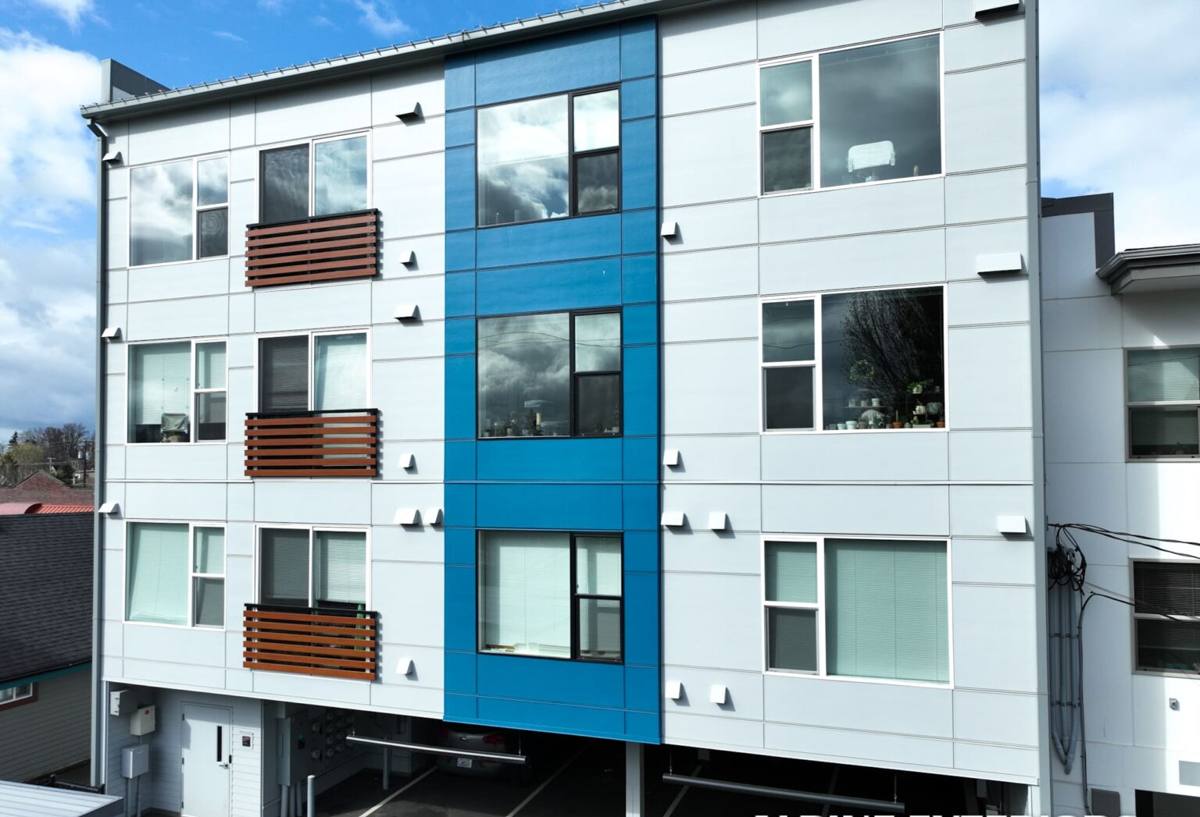
What This Climate Does to Land O' Lakes Windows
Hurricane-Force Wind Loads
Even homes well inland from the coast are built to withstand significant wind pressure during tropical storms and hurricanes, and windows are one of the most vulnerable points in that equation. A window that fails under wind load doesn't just break — it can let wind and water pressurize the interior of the house, which is how storms do some of their worst damage to roofs and ceilings. The window unit itself, the anchoring into the rough opening, and the surrounding wall assembly all have to be rated and installed to handle that load together.
Intense Year-Round UV
Florida sun is a different animal than what most window products elsewhere are designed around. Sustained UV exposure breaks down cheaper vinyl formulations over time, causing warping, discoloration, or brittleness at the seams. It also degrades weatherstripping and seals faster than in milder climates, which is part of why a window that performs fine for a decade in a northern state can start showing seal failure or hardware fatigue much sooner here.
Wind-Driven Rain and Flashing Failures
Rain in this region is frequently pushed sideways by wind rather than falling straight down, which puts real pressure on flashing, head trim, and the sill pan under the frame. That sideways load tests the quality of the installation far more than it tests the window product itself. A well-made window with careless flashing will leak; a modest window installed with a correctly pitched sill pan and properly lapped flashing usually won't. Most of the water intrusion we find around windows traces back to installation shortcuts, not the window itself.
Salt Air and Material Fatigue
Land O' Lakes doesn't sit directly on open water, but this whole region stays within reach of salt-carrying air moving inland off the Gulf. Over years, that accelerates corrosion on window hardware, screen frames, and lower-grade fasteners, especially on window faces that catch prevailing wind and weather. It's a slower process than wind or rain damage, but it adds up, and it's one more reason material choice and hardware quality matter more here than in a drier, inland climate.
Impact Windows and Building Code: What "Hurricane-Rated" Actually Means
Design Pressure and Product Approval
Florida's building code requires windows in wind-exposed areas to carry a documented design pressure rating and, in most cases, product approval showing the unit has been tested to resist wind load and windborne debris impact. That rating isn't a marketing label — it reflects lab testing on the actual assembly, frame and glass together, under simulated storm conditions. When we replace a window, we make sure the unit specified actually matches what the home's location and exposure require, not just whatever carries a "hurricane" name on the box.
Impact Glass vs. Shutters and Panels
Homeowners often ask whether they need impact-rated glass if they already have shutters or storm panels. Impact glass provides continuous protection without anyone having to install panels before a storm, and it also cuts down on outside noise and UV transmission year-round. Shutters and panels can meet code requirements at a lower upfront cost, but they only protect the house when they're actually deployed, which depends on someone being home and having enough lead time before a storm arrives. We'll walk through both approaches honestly rather than assuming one is automatically right for your home.
Frame Materials: What Actually Holds Up Here
There's no single correct answer for every home — budget, sun exposure, and how long you plan to stay in the house all factor into the decision. What matters is understanding the real trade-offs for a climate this demanding before you choose.
| Frame Material | UV & Heat Behavior | Corrosion Resistance | Typical Maintenance |
|---|---|---|---|
| Vinyl (impact-rated) | Good if formulated for high-UV climates; cheaper vinyl can warp or discolor | Won't rust; hardware quality varies by manufacturer | Low |
| Fiberglass | Dimensionally stable under heat and sun | Resists corrosion well | Low |
| Aluminum | Handles heat well but transmits it; can pit over time near salt air | Moderate unless well-finished | Moderate |
| Wood, clad or painted | Vulnerable to UV and moisture at joints without diligent upkeep | Poor without maintenance | Higher; regular finish upkeep |
We'll go over which frame material fits your home's sun exposure, budget, and the look you're after, rather than defaulting to whichever product is easiest to sell. A shaded, north-facing wall and a sun-blasted west wall on the same house don't always call for the same answer.
Full-Frame Replacement vs. Insert Replacement
One of the first decisions on any window project is whether to do a full-frame replacement, which removes the old window down to the rough opening and rebuilds the flashing from scratch, or an insert replacement, which fits a new window into the existing, structurally sound frame. Insert replacement is faster, less invasive to surrounding siding and trim, and generally more affordable — often a matter of a few hundred to around a thousand dollars per opening depending on size and glass performance. Full-frame replacement costs more and takes longer, but it's the honest answer when there's already moisture damage at the sill or jambs, or when the flashing behind the old window was never installed correctly. We'll tell you which situation you're actually in rather than defaulting to the cheaper option and sealing a moisture problem up behind a new window.
Installation Fundamentals We Don't Treat as Optional
Most window failures in this climate aren't failures of the window itself — they're shortcuts in the flashing and sealing details that don't surface until a storm season or two later. On every job, that means:
- A properly pitched sill pan that sheds water outward instead of letting it pool under the frame
- Head flashing integrated with the housewrap or building paper above the window, lapped correctly for water to shed downward and outward
- Jamb flashing tied into the surrounding wall assembly rather than relying on caulk alone
- Anchoring and fastening matched to the window's tested design pressure rating and the home's specific wind exposure
- Weep holes and drainage paths left clear and functional, not sealed shut during installation
- Corrosion-resistant fasteners and hardware appropriate for a consistently humid, salt-influenced climate
None of these add meaningfully to the cost of a job relative to the window itself, but skipping them is exactly what turns a window that should last decades into one that's leaking behind the wall within a few years.
Signs a Land O' Lakes Home Needs Window Attention
- Visible fogging or condensation between panes, which usually means a failed seal on a double-pane unit
- Drafts or a noticeable temperature difference near a closed window
- Soft, discolored, or spongy trim and sill material, especially on sun- or weather-facing walls
- Difficulty opening, closing, or latching a window that used to operate smoothly
- Warped, chalky, or discolored vinyl frames after years of direct Florida sun
- Cracked caulk, visible gaps, or daylight around the frame from inside
- Water staining on interior wall or ceiling surfaces near a window
Any one of these is worth a professional look. Caught early, most point to a repair or resealing job. Left alone through another storm season, several of them point to water damage in the surrounding wall framing.
Repair, Reseal, or Replace? How We Help You Decide
Not every window problem calls for full replacement, and we don't default to recommending one. We look at the age and condition of the existing window, whether the seal failure or draft is isolated or spread across the house, and whether there's already moisture damage in the surrounding frame or wall. A single window with a failed seal on an otherwise sound, well-flashed house is often a straightforward repair or reseal. A house with multiple aging windows, visible sill deterioration, or a history of storm-related leaks is usually more honestly addressed with a broader replacement plan, done in phases if budget requires it, rather than patching individual units one at a time. We'll explain what we find and why, and give you the real trade-offs instead of pushing toward whichever option is more profitable for us.
Why a Crew That Already Works Land O' Lakes Matters
A crew that installs and repairs windows across this part of the Gulf Coast through hurricane seasons and blazing summers sees how wind, UV, and driving rain actually behave on real houses over years, not just how a product performs on a spec sheet. That shows up in practical decisions: how much attention a given wall orientation needs because of prevailing wind or afternoon sun, how a sill pan should be pitched for the amount of water a given elevation actually sees during a heavy storm, and which flashing details are worth the extra time on install day so you're not dealing with a leak after the next tropical system passes through. Oldsmar Siding Company works throughout the wider Tampa Bay area, including homes in Land O' Lakes, and we bring that same regional experience to siding and roofing work as well — a window is rarely the only thing on a house that's felt the effects of this climate. If a window project turns up moisture damage in the surrounding siding or trim, we can address it as part of the same conversation instead of sending you to find a second contractor.
Get a Free, No-Pressure Estimate
If your Land O' Lakes home has windows that are fogging, drafty, hard to operate, or simply past their useful life, we're glad to take a look and give you a straightforward, honest read on what it actually needs. Reach out using the form below to schedule a free estimate — no pressure, no upsell script.