 Oldsmar Siding
 Building Decks for Palm Harbor's Climate, Not Just Its Looks
Palm Harbor sits close enough to Old Tampa Bay and the Gulf that every outdoor structure on a property has to answer to the same set of conditions: long stretches of intense sun, heavy seasonal rain, salt-tinged air moving in off the water, and the real possibility of hurricane-force wind during the season. A deck built without those factors in mind might look fine for the first year or two, then start showing problems — cupped boards, rusted fasteners, a railing that's gone soft at the post base. Our crew works this part of Pinellas County regularly, and Palm Harbor's mix of waterfront and inland lots means we see the full range of what the climate does to lumber, composite, and hardware over time.
A custom deck here is not the same project as a deck built in a dry, inland climate. The design choices, fastener selection, and even the way the frame is ventilated underneath all change when the deck has to survive Gulf Coast humidity and salt air for twenty-plus years without turning into a maintenance headache.
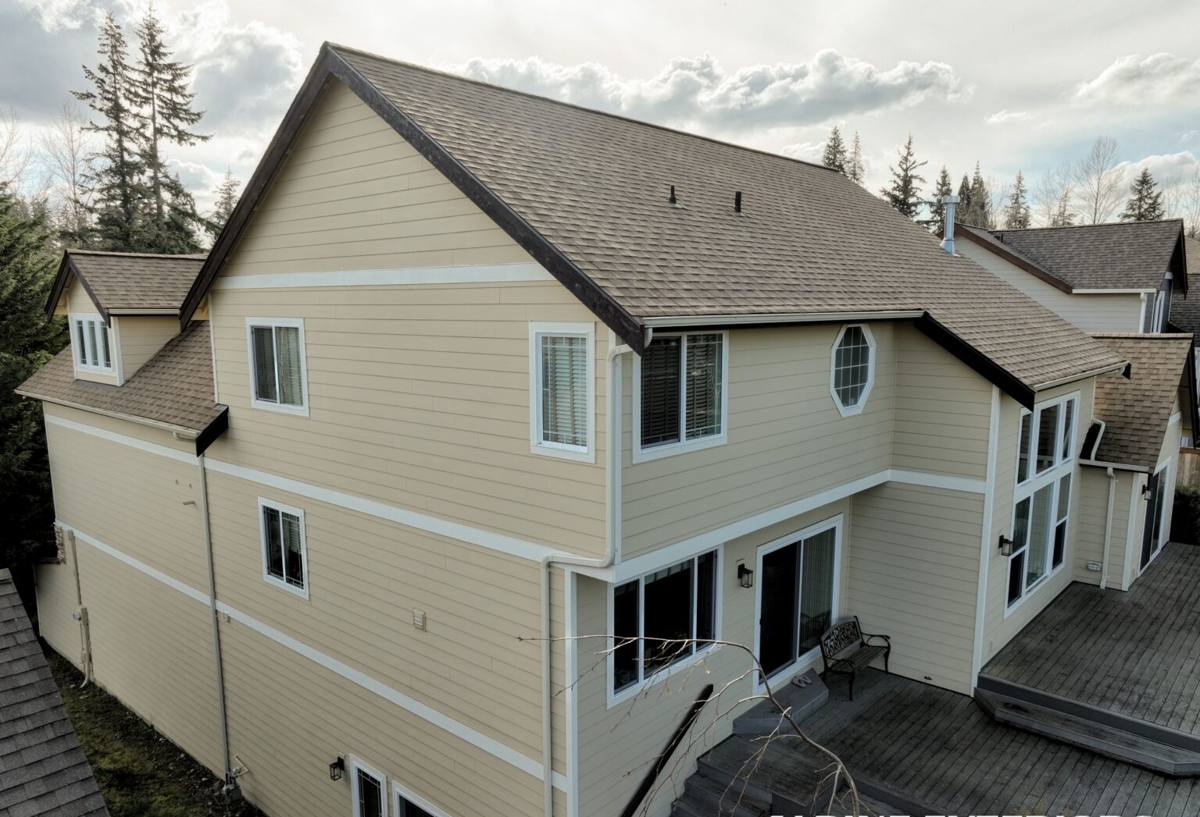
What Palm Harbor's Climate Actually Does to a Deck
Sun and UV
Florida sun is intense and consistent, not seasonal. Uncoated wood grays and checks (small surface cracks) faster here than in most of the country, and dark-colored composite boards can run noticeably hotter underfoot in direct afternoon sun. Fading is uneven, too — areas shaded by furniture, planters, or an adjacent structure will visibly out-color the rest of the deck within a couple of seasons if the material and finish weren't chosen with that in mind.
Humidity and Wind-Driven Rain
Pinellas County gets a lot of rain, often arriving sideways during summer storms. Water finds its way under railings, into end-grain cuts, and around post bases if those areas aren't properly sealed or flashed. Combined with the area's humidity, any spot where water sits or wood can't dry out fully between storms becomes a rot or mold starting point.
Salt Air
Even properties that aren't directly waterfront pick up salt-laden air moving in off the Gulf and the bay. Salt accelerates corrosion in fasteners, brackets, and any exposed metal hardware. It's a slower process than direct rain damage, but it's steady, and it's one of the most common reasons we get called out to older decks with hardware that's failing well before the boards themselves are due for replacement.
Wind and Storm Loads
Anything built outdoors in this area needs to account for hurricane-force wind potential, whether that's a named storm or a strong seasonal squall. That affects how a deck's structure is anchored, how railings are attached, and what fastening pattern is used on the decking itself, since uplift on a fastened board is a real load case here, not a theoretical one.
Decking Material Options for Local Conditions
There's no single "best" decking material for Palm Harbor — the right choice depends on budget, how much upkeep the homeowner wants to do, and how exposed the deck is to sun, rain, and salt air. Here's how the common options actually perform under those conditions.
| Material | How It Handles Local Climate | Maintenance Reality |
|---|---|---|
| Pressure-treated pine | Holds up structurally when properly sealed, but is prone to graying, checking, and warping under constant UV and humidity if maintenance lapses | Needs re-sealing roughly every 1-2 years in this climate to stay protected |
| Composite decking | Resists rot and doesn't absorb moisture, but board temperature and fade rate vary a lot by color and manufacturer quality | Low upkeep — occasional cleaning, no sealing or staining |
| Tropical hardwoods (e.g., ipe) | Naturally dense and rot-resistant, performs very well in humidity, but installation is unforgiving — pre-drilling and fastener choice matter a lot | Periodic oiling if you want to keep the original color; otherwise it weathers to gray naturally with no structural loss |
| PVC decking | Fully moisture-proof, handles humidity and rain exposure well | Very low upkeep, though it can run hot in direct sun like darker composites |
What a Correctly Built Deck Involves Here
Foundation and Framing
Footings need to be sized and set for both the load of the structure and Florida's soil and drainage conditions. We use fasteners and structural connectors rated for exterior, corrosion-prone environments — not standard interior-grade hardware — because the salt air in this area will find any weak point in a metal connection over time.
Ledger Attachment and Flashing
Where a deck attaches to the house, the ledger board connection is one of the most safety-critical parts of the whole structure, and it's also one of the most common failure points on older or poorly built decks. Proper flashing keeps wind-driven rain from working its way behind the ledger and into the house framing, which is a slow, hidden kind of damage that's expensive to fix once it's found.
Fastening for Wind Uplift
Decking boards and railing posts are fastened with wind uplift in mind, not just walking load. That means the right screw pattern, the right post-to-frame connection, and railing systems that are actually rated for the loads they'll see in a coastal wind event.
Airflow Underneath
A deck built low to the ground or over damp soil needs enough airflow underneath to let moisture escape. Without it, humidity gets trapped against the underside of the frame and accelerates rot in wood structures or corrosion in metal hardware, even if the visible top side of the deck looks fine.
Our Process for a Palm Harbor Deck Project
- On-site assessment. We look at the lot's sun exposure, drainage, proximity to water, and how the deck will connect to the house before recommending materials.
- Material and design walkthrough. We go over the honest trade-offs between wood, composite, and PVC for that specific property — not a generic pitch, but what actually fits the budget and maintenance expectations.
- Permitting. Deck construction in Pinellas County typically requires a permit and inspection; we handle that process as part of the build.
- Framing and structural work. Footings, framing, and ledger attachment are done first and inspected before decking goes down.
- Decking, railing, and finish work. Boards, railings, stairs, and any built-in features are installed with fastening and flashing details suited to coastal exposure.
- Final walkthrough. We go over care instructions specific to the material chosen, so the homeowner knows what upkeep — if any — is actually needed.
Why a Crew That Already Works Palm Harbor Matters
A contractor who mainly builds decks in drier, inland parts of the country can still build something that looks good on day one. The difference shows up two or three years later, in the fastener choice that wasn't rated for salt exposure, the flashing detail that wasn't quite right for wind-driven rain, or the composite board that wasn't the right formulation for constant direct sun. Working this area consistently means we've already seen which details matter here and which corners genuinely can't be cut, because we're often the ones called back out to fix the decks where they were.
Local familiarity also means a smoother permitting process, since we know what Pinellas County inspections are looking for, and a more accurate estimate up front, since we're not guessing at how a given material or design will hold up in this specific climate.
Signs an Existing Deck Needs Attention
- Boards that feel soft, spongy, or spring back slowly underfoot
- Visible rust staining around fasteners or metal brackets
- Railing posts that wiggle or flex at the base
- Gaps or separation where the deck meets the house
- Persistent dark staining or mildew in shaded sections
- Cracked, cupped, or significantly grayed boards on a wood deck
If any of these show up on a current deck, it's worth having it looked at before planning a rebuild or major addition — sometimes a repair is enough, and sometimes it's a sign the structure needs to be replaced rather than patched.
Sizing and Layout Considerations for This Area
Palm Harbor lots vary from tight, established neighborhoods to more open properties near the water, and that affects deck layout as much as climate does. Smaller lots often call for multi-level or wraparound designs to make the most of usable outdoor space, while waterfront or larger lots have more room for features like built-in seating, pergola shade structures, or multiple stair access points. In either case, shade and airflow planning matter — a deck oriented to catch afternoon sun without any shade option will see far less actual use than one designed with the property's sun path in mind.
Get a Free, No-Pressure Estimate
If you're planning a new deck or need an honest look at one that's already showing wear, we're glad to come out, walk the property, and give you a straightforward assessment — no pressure, no upsell. Use the form below to request a free estimate for your Palm Harbor project.