 Oldsmar Siding
 Palm Harbor sits close enough to Old Tampa Bay and the Gulf that its homes take on a specific mix of weather stress: salt-tinged air moving inland, sudden wind-driven rain during summer storms, hurricane-force gusts during named storms, and relentless UV exposure nearly every month of the year. Siding here isn't just a cosmetic layer. It's the first line of defense against moisture intrusion, and it's one of the most visible signs of how well a home has been maintained. When we install siding for a Palm Harbor property, we're not applying a generic product to a generic house — we're building an assembly that has to hold up to Pinellas County's specific climate demands for decades, not years.
What Palm Harbor's Climate Actually Does to Siding
It helps to understand the mechanisms at work before talking about products or installation steps. Four forces do most of the damage to exterior cladding in this part of Florida:
- Wind-driven rain: Storms here rarely just fall straight down. Gusts push rain sideways and upward under laps, seams, and trim edges that were never engineered to shed water from that angle.
- Hurricane and tropical-storm wind loads: Even a home that never takes a direct hit will see repeated high-wind events over its life. Fastening pattern and product wind rating matter every time, not just during the "big one."
- Salt air: Proximity to the bay means airborne salt settles on exterior surfaces and accelerates corrosion of fasteners, staples, and unprotected metal trim, and it speeds up the breakdown of lower-grade coatings.
- UV exposure: Florida sun is intense and consistent nearly year-round. Paint films and factory finishes that aren't formulated for this level of exposure chalk, fade, and crack years ahead of schedule.
None of these forces act alone. A siding product that handles UV well but traps moisture behind it will still fail. A product that resists moisture but isn't rated for the local wind zone creates a different risk. The material and the installation both have to answer to all four at once.
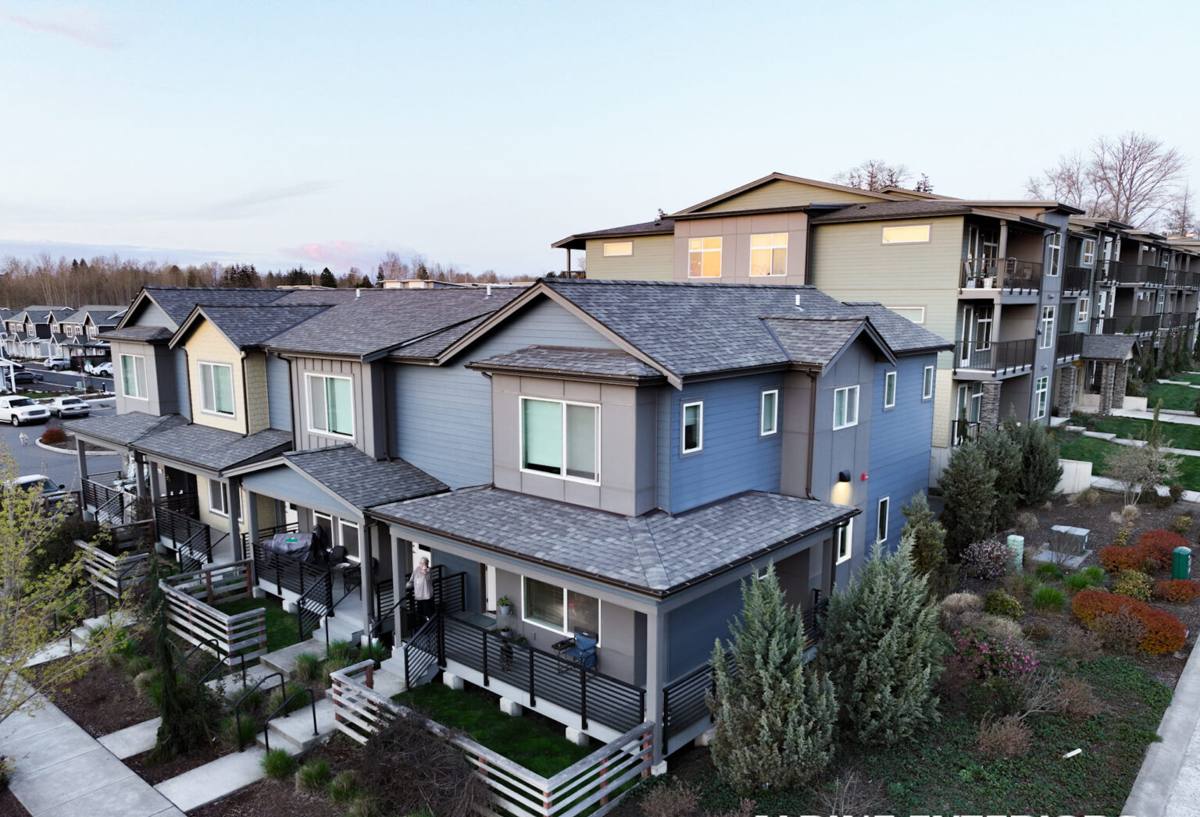
Why We Only Install James Hardie Fiber Cement
We standardized on James Hardie fiber cement siding for every home we side, including in Palm Harbor, and we don't install vinyl, LP SmartSide, Cemplank, Allura, or unfinished wood products like primed spruce or cedar. That's a deliberate professional standard, not a marketing line, and it's worth explaining honestly.
Fiber cement is non-combustible, which matters in a state where wildfire risk exists inland and where insurance underwriters increasingly factor exterior materials into premiums. James Hardie's HZ product lines are engineered specifically for high-humidity, high-moisture climate zones like ours — the formulation and installation guidance account for the same wind-driven rain and humidity cycling that Palm Harbor sees every summer. The ColorPlus factory finish is baked on under controlled conditions and backed by a real finish warranty, which avoids the field-paint variability that shortens the life of site-painted wood or lower-grade products. And because Hardie is composed of cement, sand, and cellulose fiber, it doesn't absorb and swell with moisture the way wood-based composites can, and it doesn't soften or become brittle under UV the way some vinyl formulations do over a long Florida service life.
We're not going to tell you every alternative product is worthless — some have real strengths in the right climate or budget. But for the wind, moisture, and UV combination Palm Harbor homes face, we've concluded fiber cement is the material that holds up with the least long-term maintenance burden, and it's the only thing we put our name behind.
What a Correct Siding Installation Involves
Siding failures in this region are rarely about the panel itself failing outright — they're almost always about what's happening behind it or at the seams. A correct installation addresses each of these layers:
The Water-Resistive Barrier
Before any siding goes up, the wall needs a continuous, properly lapped water-resistive barrier (house wrap or equivalent) integrated with window and door flashing. This is the layer that actually stops bulk water if wind-driven rain gets past the siding — and in a wind-driven-rain climate, it will get past the siding eventually. Gaps, reversed laps, or missing flashing tape at penetrations are the single most common root cause of hidden rot we find when we tear off old siding.
Clearances and Drainage
Siding needs proper clearance from grade, roofing, decks, and hardscaping so water has somewhere to go instead of wicking into the bottom edge of the panels. Caulking gaps shut instead of maintaining clearance just traps moisture against the material.
Fastening Pattern
James Hardie publishes specific fastener type, spacing, and embedment requirements by wind zone and exposure category. Using the wrong nail, spacing panels too far apart at the fastener, or face-nailing when blind-nailing is specified all reduce wind performance and can void the manufacturer warranty — and Pinellas County's wind zone doesn't leave much room for shortcuts.
Joints, Trim, and Caulking
Butt joints, corner trim, and penetrations (hose bibs, vents, light fixtures) are where most water intrusion actually starts. Correct treatment means factory-primed or ColorPlus-matched trim, proper joint flashing behind butt joints, and a quality sealant applied to manufacturer spec — not just a bead of caulk run down every seam as an afterthought.
Our Installation Process
- On-site inspection and measurement — we assess the existing wall assembly, look for signs of prior moisture damage, and note wind exposure category for the specific lot.
- Tear-off and substrate check — old siding comes off and sheathing is inspected before anything new goes up; soft or damaged sheathing gets addressed, not covered over.
- Water-resistive barrier and flashing — a continuous barrier is installed and integrated with window, door, and penetration flashing before siding starts.
- James Hardie panel or lap installation — installed to the fastening schedule specified for the product line and local wind zone.
- Trim, corners, and joint treatment — factory-finished trim and proper joint flashing at every seam and penetration.
- Caulking and touch-up — sealant applied where the manufacturer specifies, ColorPlus touch-up used at any field-cut edges.
- Final walkthrough — we review the finished work with the homeowner before calling the job complete.
Comparing Siding Options for a Palm Harbor Climate
| Factor | James Hardie Fiber Cement | Vinyl | Wood-Based (LP/Primed Spruce/Cedar) |
|---|---|---|---|
| Wind performance | Rated by wind zone, strong when installed to spec | Can deform or blow off in sustained high wind | Depends heavily on fastening and moisture condition |
| Moisture behavior | Does not swell or rot; engineered for humid climates | Doesn't absorb water but can trap it behind panels | Can swell, delaminate, or rot if moisture reaches the substrate |
| UV / fade resistance | ColorPlus factory finish warrantied against fading | Can chalk and fade over long Florida sun exposure | Field paint fades and requires repainting on a shorter cycle |
| Combustibility | Non-combustible | Combustible | Combustible |
| Maintenance | Periodic caulk/paint touch-up, no repainting cycle | Low maintenance but limited repair options | Regular repainting and moisture monitoring needed |
This isn't a claim that every alternative product fails in this climate — it's why, weighing all of these factors together for coastal Pinellas County conditions, we made fiber cement our standard.
What Affects the Cost of a Palm Harbor Siding Job
Every home is different, so we don't quote broad numbers without seeing the property, but the main cost drivers are consistent:
- Total square footage of wall area and the complexity of the roofline (more corners, gables, and dormers mean more cutting and trim work).
- Condition of the existing sheathing — hidden moisture damage discovered during tear-off adds repair scope.
- Siding profile chosen (lap width, panel vs. shingle-style, trim detailing).
- Accessibility of the home (multi-story sections, tight side yards, landscaping that needs protection).
- Whether windows, doors, or trim are being updated at the same time.
We walk every property in person before quoting, because the biggest cost swings come from what's happening behind the old siding, not the siding itself.
Homeowner Checklist Before Hiring a Siding Contractor
- Ask what wind zone rating and fastening schedule they're installing to — not just "hurricane-resistant" as a marketing phrase.
- Confirm they're installing a water-resistive barrier and proper flashing, not just siding over the existing wall.
- Check that they're licensed and insured to work in Pinellas County and pulling the required permits.
- Ask which specific James Hardie product line (or equivalent) they're proposing and why it fits your exposure.
- Get a written scope that covers trim, flashing, and caulking details — not just "install siding."
Why Local Experience in Palm Harbor Matters
A crew that regularly works Palm Harbor and the surrounding Oldsmar area already knows the wind exposure categories that apply here, has a working relationship with the local permitting process, and has seen firsthand how homes in this specific stretch of Pinellas County age under coastal conditions. That local pattern recognition shows up in small decisions — where to add extra flashing attention, which corners of a roofline tend to funnel wind-driven rain, how salt air affects fastener choice near the water — that a crew unfamiliar with the area might miss entirely. It also means faster, more realistic scheduling around Florida's storm season rather than guessing at timelines from out of area.
If you're planning a siding project in Palm Harbor or elsewhere around Oldsmar, we're happy to walk the property, look at what's actually happening behind your current siding, and put together a straightforward, no-pressure estimate using the free form below.