 Oldsmar Siding
 Why Siding Repair Looks Different in the Tampa Bay Area
Homes in and around Oldsmar don't age the way siding does in a mild, dry climate. Between hurricane-force wind events, near-constant UV exposure, wind-driven rain, and the salt air drifting in off Tampa Bay, exterior cladding here is under a kind of sustained stress that inland homes never see. A repair that would hold up fine in a drier region can fail within a season here if it doesn't account for what this climate actually does to a wall system. When we get a call for siding repair in the Tampa area, we're not just patching a visible problem — we're figuring out what the local climate did to cause it, and making sure the fix addresses that root cause instead of just covering it up.
That distinction matters more than most homeowners realize. A lot of siding repair work gets done as a purely cosmetic fix: caulk a crack, nail a loose panel back down, call it done. In a Pinellas County backyard, that kind of surface-level repair usually buys you a year, maybe two, before the underlying issue resurfaces — often worse, because moisture had more time to work behind the panel while it looked fine from the curb.
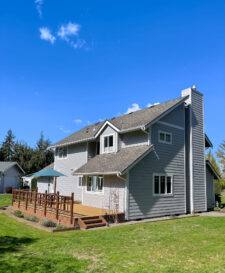
What Actually Damages Siding in This Climate
Wind and Wind-Driven Rain
Tropical systems and seasonal storms don't just push rain sideways — they force it into every gap, seam, and fastener hole in a wall system. Siding that isn't lapped, flashed, and fastened correctly will let water track behind the panel during a hard blow, even if the surface looks untouched afterward. Loose or missing panels are also a real safety issue during high wind — a panel that isn't fastened to spec can become debris in the next storm.
UV and Heat Cycling
Florida sun is intense and constant. Lower-quality siding materials, older paint finishes, and caulk all break down faster here than manufacturers' general warranty language tends to assume. UV breaks down sealants and coatings, while daily heat cycling causes materials to expand and contract — over years, that movement works fasteners loose and opens hairline gaps at joints and trim.
Salt Air and Humidity
Being close to Tampa Bay means dealing with airborne salt, which accelerates corrosion on fasteners, trim screws, and any exposed metal flashing. Combined with Florida's humidity, it also creates ideal conditions for moisture to linger in wood-based products and substrates once it gets behind the cladding, which is how a small leak becomes a rot problem.
Physical Impact
Wind-borne debris during storms, lawn equipment, and even routine yard work can crack or gouge panels. On brittle or aged materials, a small impact can spread into a larger crack over time as the material continues to flex with heat and humidity.
Common Repair Calls We See on Tampa-Area Homes
- Cracked or split panels near corners and window trim, where wind load concentrates
- Soft or spongy siding at the bottom courses, usually a sign of moisture intrusion and possible rot in the substrate
- Buckled or warped panels from improper original fastening combined with heat cycling
- Failed caulk joints letting water track behind trim and around penetrations
- Rust staining or streaking from corroding fasteners
- Loose panels or panels pulling away from the wall after a wind event
- Paint or finish failure — peeling, chalking, or fading well ahead of expected lifespan
Repair vs. Replacement: How We Make the Call
Not every damaged section needs to come off the house, and not every crack is worth patching. The right call depends on how far the damage extends, what's happening behind the panel, and how much useful life the rest of the siding realistically has left. We walk every homeowner through this honestly before recommending either path.
| Factor | Leans Toward Repair | Leans Toward Replacement |
|---|---|---|
| Extent of damage | Isolated to one or two panels/areas | Spread across multiple elevations |
| Moisture readings behind siding | Dry to slightly elevated, localized | Elevated broadly, signs of ongoing intrusion |
| Sheathing/substrate condition | Sound, no rot detected | Soft spots, rot, or delamination present |
| Age of existing siding | Well within expected service life | At or past the age where failures compound |
| Material match availability | Close match achievable | No reasonable match; patchwork would be visible |
When damage is contained and the wall behind it is dry and sound, a targeted repair is the honest, cost-effective answer — and we'll say so. When we find rot in the sheathing, moisture that's clearly been getting in for a while, or damage spread across enough of the house that patching would just be chasing the next failure, we'll tell you that too, along with why.
What a Correct Siding Repair Actually Involves
A repair that's actually going to hold up in this climate is more involved than swapping a cracked board for a new one. Done right, it includes:
Finding the Real Source
Visible damage is often a symptom, not the problem itself. Before any panel comes off, we look at what's feeding the issue — a failed flashing detail, a caulk joint that's been open longer than it looks, a fastening pattern that never should have been used in a wind zone like this one.
Checking What's Behind the Panel
Once damaged siding is removed, we inspect the house wrap or weather-resistive barrier and the sheathing underneath for moisture damage or rot. Repairing over a compromised substrate just resets the clock on the same failure.
Correct Flashing and Lap Details
Water management at seams, corners, and penetrations (vents, hose bibs, light fixtures) is what actually keeps wind-driven rain out — not caulk alone. Any repair we do restores those details to spec, not just to "looks sealed."
Fastening to Wind-Load Standards
Panels get fastened according to manufacturer specs and Florida's wind-load building code requirements, not just "however the old one was hung." This is one of the most common shortcuts we find in prior repair work, and it's usually why a "fixed" area fails again in the next storm.
Finish and Color Match
Where possible, we match paint sheen and color as closely as the existing finish allows, so a repair doesn't stand out as an obvious patch.
Our Repair Process, Start to Finish
- Inspection: We assess visible damage and check for moisture intrusion at suspect areas, including behind the siding where damage suggests it's warranted.
- Diagnosis: We identify the actual cause — wind, moisture, age, prior workmanship — not just the symptom, and explain what we found in plain terms.
- Recommendation: You get an honest read on whether repair or replacement of the affected area is the right call, with the reasoning behind it.
- Material sourcing: We source a matching or closest-available panel and finish.
- Repair execution: Damaged material is removed, the substrate is checked and addressed if needed, and new material is installed to correct flashing and fastening standards.
- Final check: We confirm the repair is watertight, properly fastened, and finished to blend with the surrounding siding.
Matching Materials: The Hidden Challenge in Siding Repair
One of the least talked-about problems in siding repair is simply finding material that matches what's already on the house. Older vinyl fades and discontinues color runs. Discontinued LP SmartSide or cedar profiles can be difficult to source in a way that blends in. Even with James Hardie's ColorPlus finishes, older color lines eventually get retired as the palette evolves, which is worth knowing before you assume a "quick patch" will be invisible.
This is part of why we install exclusively James Hardie fiber cement on the jobs we take on — it's a system with consistent factory-finished color runs, documented specs, and a manufacturer that stands behind installation done to their standards. When we're asked to repair a home sided in a product we don't install ourselves, we'll still give you an honest assessment of what a patch will and won't achieve. But when damage is extensive enough, or the existing material can't be matched credibly, we'll tell you plainly that replacing the affected section — or the elevation — with Hardie is going to serve the home better long-term than a visible patchwork repair in a mismatched material.
Why Hiring a Crew That Already Works This Area Matters
Siding repair isn't a one-size-fits-all trade, and it especially isn't one where general contracting experience from a different climate transfers cleanly. A crew that regularly works Oldsmar, the greater Tampa Bay area, and Pinellas County knows what Florida's wind-load code actually requires for fastening and attachment, understands how local humidity and salt exposure change what "good enough" caulking and flashing look like, and has already seen how storms in this area typically damage siding — so diagnosis is faster and more accurate. That local pattern-recognition is the difference between a repair that gets it right the first time and one that reopens the same problem after the next storm season.
Local presence also matters for follow-through. If a repair doesn't hold up the way it should, you want a company that's still reachable and still working in your neighborhood — not one that did a single job and moved on.
Signs Your Siding Needs a Repair Call Now
- Panels that feel soft, spongy, or give slightly when pressed
- Visible cracks, splits, or gaps at seams and corners
- Bubbling, peeling, or chalking paint well before it should be failing
- Rust streaks running down from fastener locations
- Panels that shifted, loosened, or came partly off during a storm
- Musty smell or discoloration on interior walls near exterior siding
- Visible daylight or gaps around trim, window, or door edges
If any of these sound familiar, it's worth having it looked at before the next wind or rain event finds the weak point for you.
What Affects the Cost of a Siding Repair
| Cost Factor | Why It Matters |
|---|---|
| Extent of visible damage | More panels affected means more material and labor |
| Substrate condition | Rot or moisture damage behind the siding adds remediation work |
| Material match difficulty | Discontinued colors or profiles may require broader replacement to look right |
| Access and elevation | Second-story or hard-to-reach areas take more time and equipment |
| Trim and flashing detail work | Correcting water management details properly takes more than a panel swap |
Every home is different, which is why we'd rather look at the actual damage than quote a number sight unseen. A broad, honest range only means something once we know what's actually happening at the wall.
Get an Honest Look at What Your Siding Needs
If you're dealing with damaged, aging, or storm-affected siding on a home in the Tampa area, we're happy to take a look and give you a straight answer — repair, replacement, or somewhere in between — with our reasoning laid out clearly. Request a free, no-pressure estimate using the form below and we'll get you scheduled.