 Oldsmar Siding
 Westchase Sits in a Tough Climate Zone, Even by Florida Standards
Westchase homes take a beating that a lot of siding products simply weren't built to handle. This part of the greater Tampa Bay area sits close enough to the Gulf that salt-laden air is a constant, close enough to open water that wind-driven rain during summer storms and hurricane season is a real design load, and far enough south that UV exposure runs near the top of the scale for the continental United States almost every month of the year. Add Pinellas and Hillsborough County's humidity — the kind that never really lets a wall assembly dry out completely between rain events — and you have a set of conditions that will find every weak point in a siding system within a handful of years.
That combination is exactly why siding replacement in this neighborhood isn't a cosmetic project. It's a building-envelope project. Get the materials, the water management, and the fastening wrong, and you're not looking at faded paint — you're looking at rot, mold behind the wall, and another full tear-off a decade sooner than it should have been.
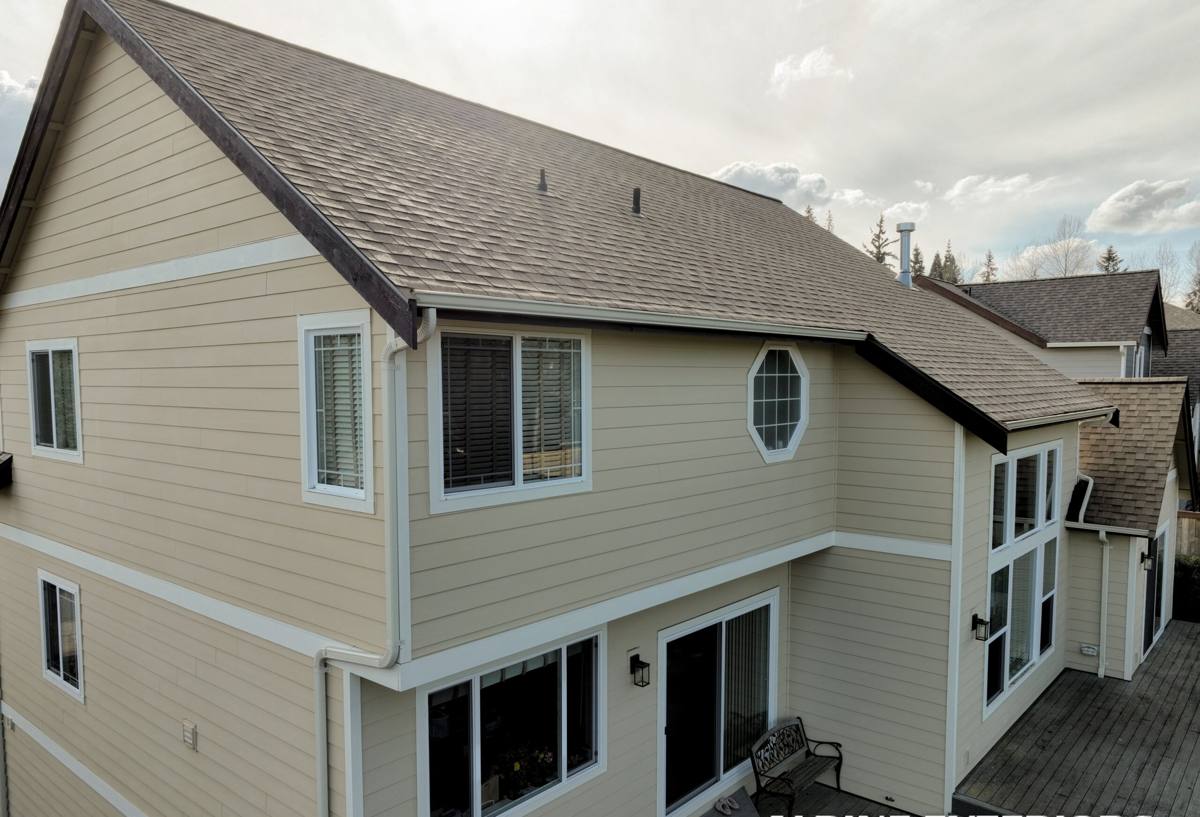
What Actually Fails on Westchase Siding First
Sun and Heat
Florida sun degrades paint film and breaks down cheaper composite substrates faster than almost anywhere else in the country. Siding that isn't engineered for this UV load starts chalking, fading unevenly, and losing its factory finish well before a homeowner expects to be repainting.
Wind-Driven Rain
Rain that comes in sideways during a summer storm or tropical system doesn't behave like rain falling straight down. It gets forced up under laps, into seams, and behind poorly flashed penetrations. A siding system is only as good as the water management behind it — house wrap, flashing, and lap spacing matter as much as the panel itself.
Salt Air and Humidity
Even homes that aren't waterfront pick up salt in the air on Gulf breezes, and it accelerates corrosion on fasteners and trim hardware while pulling moisture into anything that isn't genuinely moisture-stable. Combined with the region's humidity, this is a slow, steady process that shows up as swelling, soft spots, and paint failure at seams first.
Where We Stand: James Hardie Fiber Cement, and Nothing Else
We install James Hardie fiber cement siding exclusively. We don't install vinyl, LP SmartSide, Cemplank, Allura, or primed wood siding, and we're upfront with Westchase homeowners about why. Each of those products has legitimate strengths and a place in the market — this isn't about calling them bad products. It's about the specific trade-offs we're not willing to install and then be responsible for on a Gulf Coast home.
| Consideration | Where the trade-off shows up |
|---|---|
| Moisture behavior | Wood-based composites and engineered wood products rely on factory sealing and careful field cutting; any exposed edge is a moisture entry point in this humidity |
| Wind performance | Panel weight and fastening pattern affect how a product holds up under sustained hurricane-force gusts and wind-driven rain |
| UV and color stability | Field-applied paint systems fade and chalk faster under Florida's UV load than factory-baked finishes |
| Fire behavior | Fiber cement is non-combustible; wood-based and vinyl products are not |
| Long-term maintenance | Products without a factory finish need repainting on a shorter cycle, which adds real cost over a 20-30 year ownership window |
James Hardie's HZ product lines are engineered by climate zone, and Florida falls under the HZ5 formulation, which is built specifically to resist the moisture and humidity swings common to the Gulf Coast. The ColorPlus factory finish process bakes color onto the board under controlled conditions before it ever reaches the jobsite, which gives it better fade and chip resistance than a coat of paint applied in the field. Fiber cement itself is non-combustible, dimensionally stable, and doesn't feed insects the way wood-based products can. It's a heavier, denser product than vinyl or engineered wood, which matters when you're talking about sustained wind loads. That combination — climate-specific engineering, a factory finish built for UV, and a strong transferable warranty — is why it's the only siding we put our name behind.
What a Correct Siding Replacement Actually Involves
Siding replacement is not "remove old panels, hang new panels." The panels are the visible 10% of the job. The other 90% is what's underneath, and it's the part that determines whether the new siding lasts 30 years or fails in five.
The Substrate Nobody Sees
Once the old siding is off, the sheathing gets inspected for water damage, soft spots, and rot — this is often the first time in decades anyone has actually looked at the wall behind the cladding. Damaged sheathing gets repaired or replaced before anything new goes up, because installing new siding over a compromised substrate just hides the problem instead of fixing it. A weather-resistant barrier goes on next, followed by correctly lapped and sealed flashing at every window, door, corner, and penetration — this is the water management layer that does the real work during a wind-driven rain event.
Fastening and Coursing to Manufacturer Spec
James Hardie publishes specific fastener types, spacing, and coursing requirements for high-wind regions, and following them to the letter is what keeps the manufacturer's warranty valid and the siding on the wall during a storm. Corrosion-resistant fasteners, correct penetration depth, and proper lap alignment aren't optional details — they're the difference between a system engineered for coastal wind and one that just looks similar.
Trim, Caulking, and Finish Details
The last stage is trim work, caulking at transitions, and a final inspection of every seam and joint. Small gaps at trim boards or unsealed penetrations are one of the most common ways water gets behind otherwise well-installed siding, so this step gets checked, not rushed.
Our Process for a Westchase Siding Replacement
- On-site assessment of the current siding, trim, and any visible signs of moisture damage or soft sheathing
- A written scope and estimate that spells out material, underlayment, flashing detail, and timeline before any work starts
- Careful tear-off of the existing siding, with the sheathing inspected as soon as it's exposed
- Repair of any damaged sheathing found before moving forward
- Installation of a weather-resistant barrier and correctly detailed flashing at every opening
- James Hardie fiber cement installed to manufacturer fastening and coursing specifications
- Trim, caulking, and final detail work
- Walkthrough and cleanup so the site is left the way we found it, minus the old siding
Cost Factors for Siding Replacement
Every Westchase home is different, and the honest answer to "what will this cost" depends on a handful of factors that are worth understanding before you get quotes.
| Factor | Why it matters |
|---|---|
| Square footage and home shape | More corners, dormers, and wall breaks mean more cutting, flashing, and labor time per square foot |
| Condition of the sheathing | Hidden water damage found during tear-off adds repair scope that can't be priced until the old siding is off |
| Siding profile and accessories | Lap width, trim style, and any specialty details like soffit or fascia work change material and labor cost |
| Height and access | Two-story walls, tight side yards, and landscaping obstacles affect equipment needs and labor time |
| Color and finish | ColorPlus factory finishes carry a different price point than field-primed boards painted after installation |
We'll always give you a broad, honest range up front, and a firm number once we've actually seen the home and, in many cases, once the old siding is off and the sheathing is visible.
Signs a Westchase Home Needs Siding Replacement Now
- Soft, spongy, or bubbling spots when you press on the siding
- Paint that's peeling, chalking heavily, or fading unevenly panel to panel
- Visible cracking, warping, or buckling in the panels themselves
- Gaps or separation at seams, corners, or trim boards
- A musty smell near exterior walls or unexplained interior wall staining
- Siding that's original to a home built more than 20-25 years ago
- Higher-than-expected cooling bills, which can point to a compromised exterior envelope
Why a Crew That Already Works Westchase Matters
Siding replacement in this part of Pinellas and Hillsborough County isn't the same job as siding replacement in a dry, low-wind climate, and a crew that works this area regularly knows it without being told. That means knowing what wind-load fastening and flashing detail actually needs to look like here, being familiar with local permitting requirements for exterior work, and having a realistic sense of what Florida humidity does to an open wall assembly if a project sits exposed too long between tear-off and dry-in. It also means being reachable after the job is done — for warranty questions, for a caulking touch-up years down the road, or just to look at something a homeowner noticed and isn't sure about. A crew that's local and does this work consistently in Westchase and the surrounding Oldsmar area has a track record you can actually check, not a one-time job three states away.
Caring for Your Siding After Installation
James Hardie fiber cement is low-maintenance, not no-maintenance. A yearly rinse with a garden hose keeps salt residue and general grime from building up, and it's worth walking the exterior once a year to check caulking at trim and penetrations, since caulk is the one component that wears out well before the siding does. Keep sprinklers from hitting the siding directly and trim back landscaping that holds moisture against a wall. Beyond that, correctly installed Hardie siding with a ColorPlus finish is built to hold up to this climate with minimal upkeep for decades.
If your Westchase home's siding is showing its age, or you just want a straight answer about what shape it's really in, we're happy to take a look. Reach out for a free, no-pressure estimate — there's a short form below to get started.