 Oldsmar Siding
 Metal Roofing for Homes in Tampa Bay Golf and Country Club
Tampa Bay Golf and Country Club sits inland from Old Tampa Bay in Oldsmar, but "inland" in Pinellas County still means full exposure to everything a Gulf Coast storm season can throw at a roof. Homes here see the same hurricane-force wind gusts, punishing UV load, wind-driven rain, and salt-laden air that hit properties much closer to the water. A roof over a golf course lot has no tree canopy to break up the wind, and the open sightlines that make these homes attractive also mean the roof is doing more work with less natural shelter.
Metal roofing has become a popular upgrade in this neighborhood because it's built for exactly that combination of stresses — but only when it's specified and installed correctly for this climate. This page covers what a metal roof needs to do on a Tampa Bay Golf and Country Club home, what a correct installation actually involves, and how our process works from first estimate to final walkthrough.
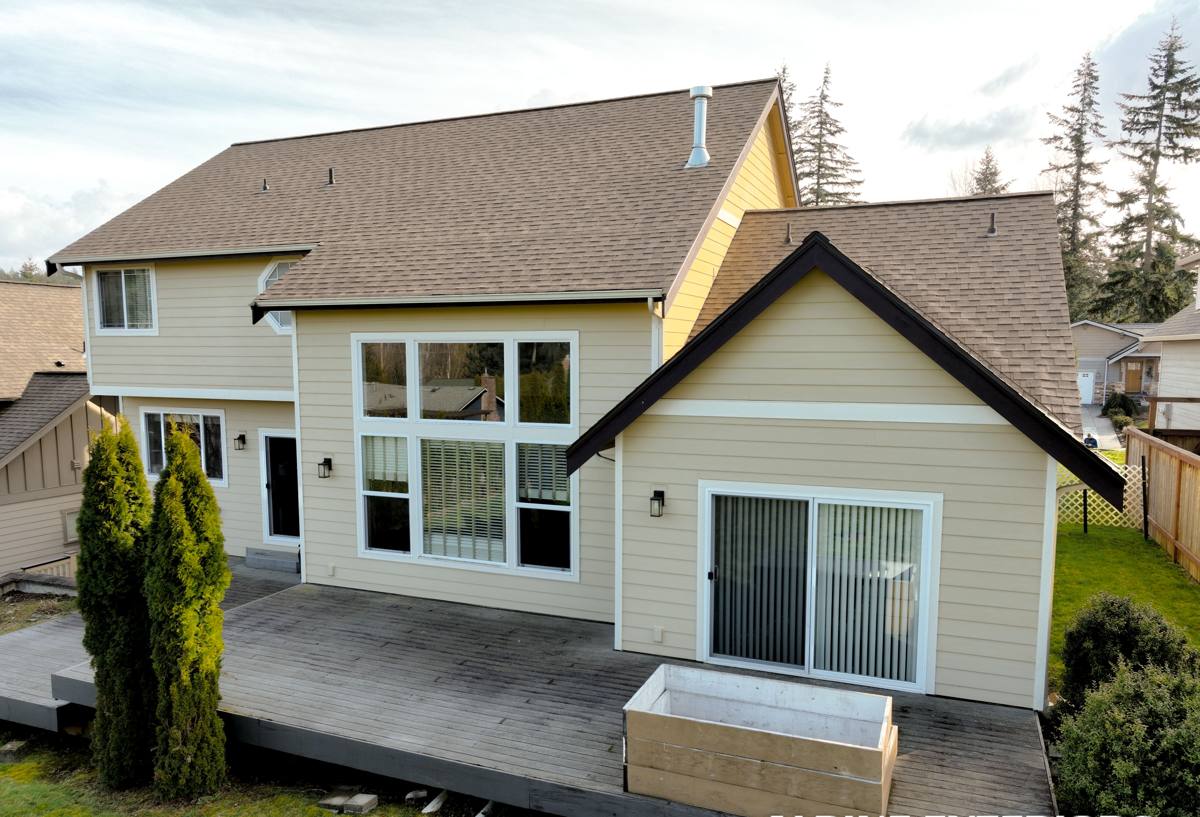
What Oldsmar's Climate Demands From a Metal Roof
Hurricane-Force Wind
Pinellas County roofs are engineered to Florida Building Code wind requirements, and metal roofing — when installed with the correct fastening pattern and clip spacing for the panel type — performs well in high-wind events. The failure point is almost never the metal itself; it's under-spec'd fasteners, wrong clip spacing, or panels run over an underlayment system that wasn't rated for the exposure. On an open golf course lot with few windbreaks, getting this detail right matters more than it does on a heavily wooded street.
Intense, Year-Round UV
Florida's UV load is relentless, and it doesn't take a summer off. UV breaks down cheap paint systems and low-grade underlayments over time, which is why the finish system on a metal roof matters as much as the metal underneath it. A quality baked-on finish holds its color and chalk resistance far longer than a bargain coating, which matters on a golf course lot where the roof is visible from the fairway as well as the street.
Wind-Driven Rain
Straight-down rain is rarely the problem in Tampa Bay — sideways rain, pushed by storm winds, is what finds every gap in flashing, underlayment laps, and penetration seals. Metal roofing's advantage here is a continuous, largely seamless surface, but that advantage disappears fast if valleys, wall flashing, and roof penetrations (vents, chimneys, skylights) aren't detailed to shed water uphill-to-downhill under pressure, not just under gravity.
Salt Air
Oldsmar sits along Old Tampa Bay, and salt-laden air travels well inland on Gulf breezes. Salt exposure accelerates corrosion at fasteners, cut edges, and any point where the protective coating on a metal panel has been compromised. This is a material-selection issue as much as an installation issue — the coating system and fastener metallurgy both need to be matched to a coastal-adjacent environment, not a generic inland spec.
Panel Systems: Choosing the Right Metal Roof for This Neighborhood
Not all metal roofing is the same product wearing different colors. The two systems homeowners in this area typically compare are standing seam and exposed-fastener (screw-down) panels. Each has a real place, and the right choice depends on roof pitch, budget, and how long you want to go before any maintenance is needed.
| Factor | Standing Seam | Exposed-Fastener Panel |
|---|---|---|
| Fastening | Concealed clips, no exposed screws | Screws through the panel face, gasketed washers |
| Maintenance | Minimal — no exposed fasteners to re-seat | Washers and screws should be checked periodically |
| Wind performance | Excellent, with clip spacing engineered per project | Good, when fastener pattern matches wind zone requirements |
| Typical cost | Higher material and labor cost | More budget-friendly upfront |
| Best fit | Long-term ownership, lower-slope sections, coastal-adjacent exposure | Steeper roofs, budget-conscious projects, outbuildings |
On golf course lots where the roof is visible from multiple angles — the street, the neighbor's yard, and the course itself — standing seam's clean, unbroken lines are also a common aesthetic preference, though that's a homeowner call, not a performance requirement.
What a Correct Metal Roof Installation Actually Involves
A metal roof is only as good as what's underneath it and how the details are handled. This is where the real difference between a roof that performs for decades and one that leaks in three years gets decided.
- Deck inspection and repair — any soft, delaminated, or water-damaged decking gets replaced before anything goes down, not covered up
- High-temperature, self-adhered underlayment — Florida roof decks run hot; the underlayment has to hold up to that without breaking down
- Correct fastener type and spacing — matched to the panel profile and the wind zone, not a generic pattern
- Valley and flashing detail work — the majority of roof leaks trace back to flashing and valleys, not the field of the roof
- Penetration sealing — vents, stacks, and any roof-mounted equipment get boots and flashing rated for the panel system, not generic caulk
- Proper ventilation — ridge and soffit ventilation matched to the attic space, so heat and moisture have somewhere to go
- Edge and drip detail — where wind-driven rain most often finds a way in if it's rushed
Every one of those steps is invisible once the roof is finished, which is exactly why it's worth asking a contractor to walk you through their process before work starts, not after.
Longevity, Warranties, and Energy Efficiency
Properly installed metal roofing is one of the longest-lasting roof systems available, and that's a real advantage in a climate that ages roofing materials quickly. Where an asphalt shingle roof in this part of Florida is often looking at a replacement inside two to three decades, a correctly installed metal roof can outlast it by a wide margin. That longevity depends entirely on the installation quality covered above — the panel and finish are only part of the equation.
Warranty Structure, Honestly Explained
Metal roofing warranties typically come in layers, and it's worth understanding the difference before you sign anything: a paint or finish warranty covering fade and chalking, a substrate or material warranty covering the metal itself against rust-through, and a workmanship warranty from the installing contractor covering the labor and detail work. Manufacturer warranties don't cover installation errors, and installer warranties don't cover a manufacturing defect — you want both in writing, and you want to know what each one actually covers before the crew leaves.
Energy Efficiency in Oldsmar's Heat
A reflective metal roof finish bounces back a meaningful amount of solar heat rather than absorbing it into the deck and attic space, which is a real consideration in a climate where the roof spends most of the year under direct, intense sun. Homeowners who pair a reflective metal roof with proper attic ventilation often notice their attic runs cooler, which takes some load off the air conditioning system during the hottest stretches of the year. It's not a replacement for good insulation and ventilation — it works alongside them, not instead of them.
Working Within Tampa Bay Golf and Country Club's Look and Guidelines
Golf course communities in the Tampa Bay area commonly have architectural guidelines or a review process for exterior changes, and roofing is often on that list. We're used to working within an HOA or architectural committee's approval process — pulling the paperwork together, providing manufacturer specs and color samples, and timing the work so it doesn't hold up your project. If your community requires review, we'll tell you what to expect up front rather than let it become a surprise mid-project.
Our Process, Start to Finish
- Free on-site estimate — we walk the roof, check the deck and existing flashing, and talk through panel options for your home
- Written scope and pricing — a clear breakdown of materials, labor, and timeline, no vague allowances
- Permitting — pulled through the appropriate local authority, plus any HOA paperwork your community requires
- Tear-off and deck inspection — old roofing removed, decking inspected and repaired as needed
- Underlayment and panel installation — installed to the manufacturer's spec and Florida Building Code wind requirements
- Flashing, valleys, and penetrations — the detail work that determines whether the roof actually stays watertight
- Final walkthrough — we go over the finished roof with you before we consider the job done
What Affects the Cost of a Metal Roof Here
Every home is different, so a real number only comes from an on-site look. In general terms, the factors that move the price are:
| Cost Factor | Why It Matters |
|---|---|
| Panel system | Standing seam runs higher than exposed-fastener panel due to material and labor |
| Roof size and complexity | Valleys, dormers, and multiple roof planes add labor and flashing |
| Existing deck condition | Rot or delamination found during tear-off adds repair cost |
| Underlayment upgrade | High-temp, self-adhered underlayment costs more than basic felt but performs far better here |
| Ventilation needs | Adding or correcting ridge/soffit ventilation is sometimes needed and adds scope |
We give a written, itemized quote so you can see exactly what you're paying for — not a single lump number with no breakdown.
Why a Crew That Already Works This Neighborhood Matters
Every subdivision and golf course community in the Tampa Bay area has its own quirks — HOA paperwork, typical roof pitches and styles, common deck conditions from the era most homes were built in, and the specific way the local climate has aged the last roofing generation. A crew that's already worked in Tampa Bay Golf and Country Club and the surrounding Oldsmar area isn't guessing at any of that. We know what to look for when we get on the roof, and we know what questions your community's approval process is likely to ask.
That familiarity translates into fewer surprises — during the estimate, during permitting, and during the install itself.
If you're weighing a metal roof for your Tampa Bay Golf and Country Club home, we're happy to come take a look, answer your questions honestly, and give you a clear written quote — no pressure, no hard sell. Use the form below to request a free estimate.