 Oldsmar Siding
 Why Tampa Homes Need Siding Built for This Climate
Homes in the Tampa area take a beating that a lot of siding products simply weren't designed to handle. Between hurricane-force wind events, wind-driven rain that gets forced sideways into wall assemblies, sun exposure that runs close to year-round, and salt-laden air rolling in off Tampa Bay, the exterior of a house here is under near-constant stress. It's a different set of demands than what a siding manufacturer might design around for a home in the Midwest or the Northeast, and it's why the material and installation choices that work fine elsewhere don't always hold up on the Gulf Coast.
We install James Hardie fiber cement siding exclusively for homeowners in and around Oldsmar, including the Tampa-area homes we regularly work on. This page focuses specifically on what a fiber cement siding job looks like in this part of Pinellas County — what the climate demands, what correct installation actually involves, and what to expect if you're planning a project here.
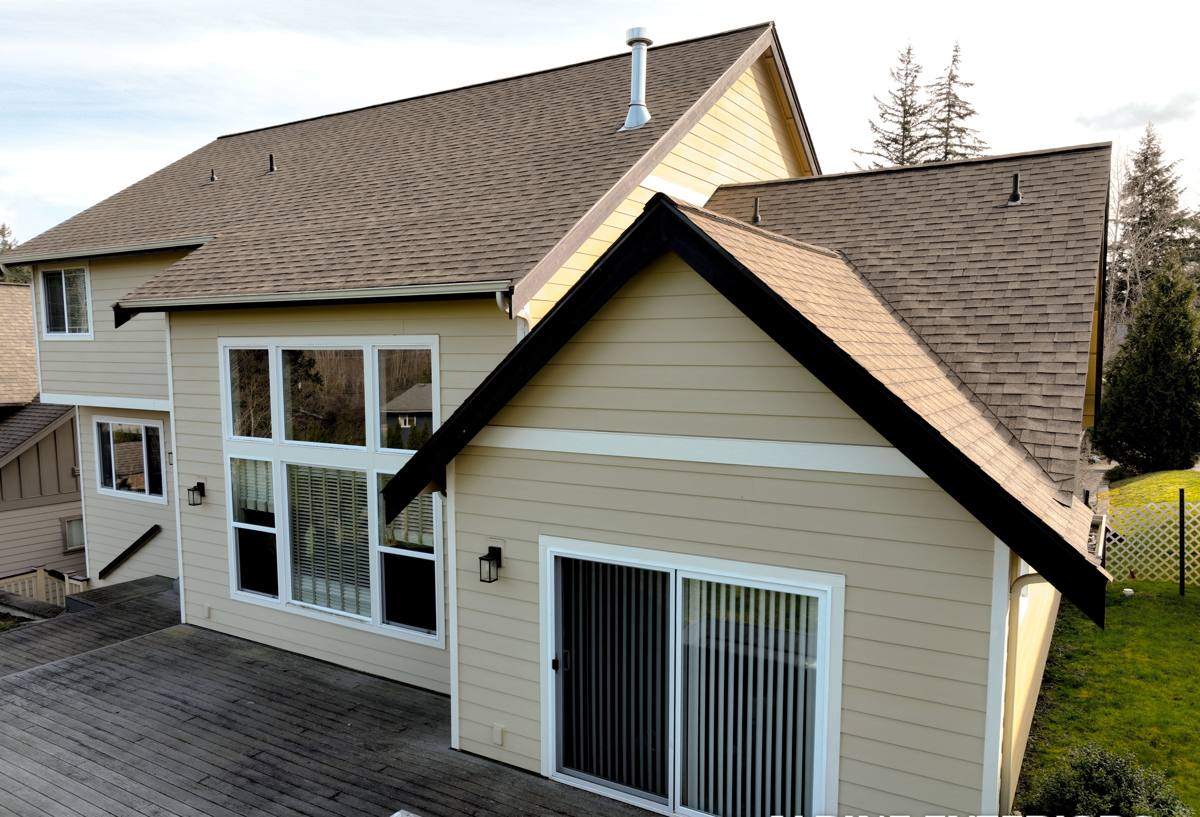
What James Hardie Fiber Cement Brings to a Tampa Home
Fiber cement is a composite of cement, sand, and cellulose fibers, cured into a dense, dimensionally stable board. Unlike wood-based products, it doesn't swell and shrink significantly with humidity swings, and unlike vinyl, it doesn't soften, warp, or become brittle across Florida's wide temperature range. James Hardie engineers different product lines for different climate zones, and the HZ10 line is built specifically for hot, humid, moisture-heavy regions like the Gulf Coast — which is the line we typically specify for homes in this area.
Non-Combustible
Fiber cement doesn't burn or contribute fuel to a fire. That's a meaningful difference from vinyl, which can soften and deform under heat, and it's a detail some insurers factor into coverage and premiums.
ColorPlus Factory Finish
Most of the Hardie siding we install carries the ColorPlus finish — a baked-on coating applied under factory-controlled conditions rather than painted on-site. It holds color and resists chalking and fading better than field-applied paint typically does under Florida's sun, and it carries its own finish warranty separate from the substrate warranty on the board itself.
Moisture Behavior
Fiber cement doesn't wick water the way untreated wood does, and it doesn't trap moisture in a hidden cavity the way a loose vinyl seam can. That said, no siding material is a substitute for correct flashing and a proper water-resistive barrier — the board is only as good as the assembly behind it, which is really the crux of the next section.
What Correct Fiber Cement Installation Actually Involves
Fiber cement siding fails less often because of the material and more often because of how it was installed. In a climate that regularly sees wind-driven rain and periodic hurricane-force gusts, the details behind the boards matter as much as the boards themselves.
Water Management Comes First
Before a single piece of siding goes up, the wall needs a continuous water-resistive barrier, correctly lapped and taped, with flashing integrated at every window, door, and penetration so water is directed out and down rather than trapped behind the cladding. This is the step that's easiest to rush and hardest to inspect once the siding is on, which is exactly why it matters most.
Fastening for Wind Exposure
James Hardie publishes specific fastening schedules tied to wind exposure and design wind speed, and homes in the Tampa Bay area generally fall into wind zones that call for tighter fastener spacing than you'd see inland. Using the wrong nail pattern, the wrong fastener length, or face-nailing where blind-nailing is specified can leave a job that looks fine on day one but underperforms in the next major wind event.
Clearances and Joint Treatment
Fiber cement needs proper clearance from grade, roofing, and decking surfaces to avoid wicking moisture at the bottom edge, and butt joints need to be treated correctly — typically caulked and backed, or fitted with a flashed joint — rather than simply butted together. Skipping this is one of the most common shortcuts that shows up as a maintenance headache a few years down the road.
Caulking and Trim Detail
Every seam, corner, and trim transition is a potential entry point for wind-driven rain. Correct caulking isn't decorative — it's part of the water management system, and it needs to be redone as it ages rather than left to fail silently behind the paint line.
How Tampa's Climate Tests a Siding Job Over Time
A siding installation can look identical to a well-done one for the first year or two, even if it was rushed. It's the climate that eventually exposes the difference.
Wind-Driven Rain
Tropical systems and seasonal storms don't just bring rain — they bring rain forced horizontally under pressure, which finds any gap in flashing or caulking that a calmer climate would never test. This is the failure mode we see most often on homes with siding that was installed without proper attention to water management.
UV and Heat
Tampa's sun angle and day length put more cumulative UV exposure on an exterior than most of the country sees. Caulk, trim paint, and lower-grade finishes degrade faster here, which is part of why a factory-applied finish holds up better than a field-painted one over the long run.
Salt Air
Homes closer to Tampa Bay deal with salt-laden air that accelerates corrosion on fasteners, hardware, and unprotected metal flashing. Using the correct fastener material and grade — not just whatever is cheapest — matters more here than it would further inland.
Wind Load
Beyond named storms, Tampa gets regular strong wind events. Siding that's correctly fastened to the substrate, not just to the sheathing skin, is what keeps panels in place when gusts pick up rather than working loose over successive storms.
Our Process for a Tampa-Area Fiber Cement Project
The steps don't change much from house to house, but the details we pay attention to are shaped by what this climate does to an exterior over time.
- On-site assessment of the existing siding, sheathing condition, and any moisture damage already present behind the wall
- Removal of old siding and inspection of sheathing, with repair or replacement of any compromised wood before anything new goes up
- Installation of a continuous water-resistive barrier and correctly integrated flashing at every window, door, and penetration
- Installation of James Hardie fiber cement panels or lap siding, fastened to the wind-exposure schedule appropriate for this area
- Trim, corner, and joint detailing, including correct clearances and caulking
- Final inspection and cleanup, with a walkthrough so you understand what was done and why
What Affects the Cost of a Fiber Cement Siding Project
Every home is different, and we won't quote a number without seeing the house, but these are the factors that most often move the price up or down on a Tampa-area fiber cement job.
| Factor | Why It Matters |
|---|---|
| Tear-off vs. install over existing | Removing old siding and inspecting sheathing adds labor but is often necessary to catch hidden moisture damage |
| Sheathing or framing repair | Homes with prior water intrusion may need wood repair before new siding can go on correctly |
| Home size and wall complexity | More corners, gables, and penetrations mean more flashing, trim, and cut work |
| Siding profile (lap, panel, shake-style) | Different Hardie profiles have different material and labor costs |
| ColorPlus vs. field-painted finish | Factory-finished boards cost more upfront but reduce future repainting |
| Story height and access | Two-story and hard-to-access walls require more time, staging, and safety equipment |
Why It Matters to Hire a Crew That Already Works This Area
Wind-exposure category, fastening schedules, and permitting requirements aren't identical from one county to the next, and a crew that mostly works inland or up north won't necessarily have those specifics dialed in for Pinellas County. A crew that already does fiber cement siding work around Tampa and Oldsmar has been through the local permitting process, knows what inspectors here are looking for, and has already seen how the details that don't matter in a milder climate — fastener spacing, flashing laps, joint treatment — turn into real problems if they're skipped in this one.
There's also a maintenance and warranty angle. If an installation issue shows up years later, it helps to be working with a company that's still local, still doing this work in your area, and still standing behind the job.
Questions Worth Asking Before You Hire
- Are you James Hardie certified, and can you explain the fastening schedule you'll use for this specific home?
- Will you inspect and repair sheathing before installing new siding, not just cover over it?
- What water-resistive barrier and flashing details do you use around windows and doors?
- Do you pull permits, and are you familiar with Pinellas County's inspection process?
- What does the manufacturer warranty cover, and what does your workmanship warranty cover separately?
What to Expect After Installation
Correctly installed fiber cement siding is genuinely low-maintenance, but "low" doesn't mean "none." Rinsing the siding periodically to remove salt residue and airborne grime, keeping an eye on caulked joints for cracking over the years, and addressing any nail pops or trim gaps promptly will keep the system performing the way it's designed to. None of that compares to the upkeep wood or vinyl siding demands in this climate, but it's worth setting expectations honestly rather than pretending any exterior material is entirely hands-off on the Gulf Coast.
If you're weighing a siding project for a Tampa-area home and want a straight answer about what your house actually needs, we're happy to take a look. Reach out for a free, no-pressure estimate using the form below.