 Oldsmar Siding
 Siding Repair for Countryside Homes Near Oldsmar
Countryside sits inland from Old Tampa Bay but still gets the full weather package that defines this part of Pinellas County: long stretches of intense sun, sudden wind-driven downpours, and the kind of tropical humidity that never really lets a house dry out completely. Add in the occasional tropical storm or hurricane-force wind event, and it's no surprise that siding here takes more punishment over a 10-year span than siding almost anywhere outside the Gulf Coast. Homeowners in this area often call us about a single damaged section, a soft spot near a window, or a seam that's been letting water in for longer than they realized. Most of the time, that's a repair job, not a full re-side. But it has to be done correctly, with the right materials and the right prep, or the same spot fails again in a year or two.
This page is about that specific job — siding repair for homes in and around Countryside — and what separates a patch that actually holds from one that just covers the problem up.
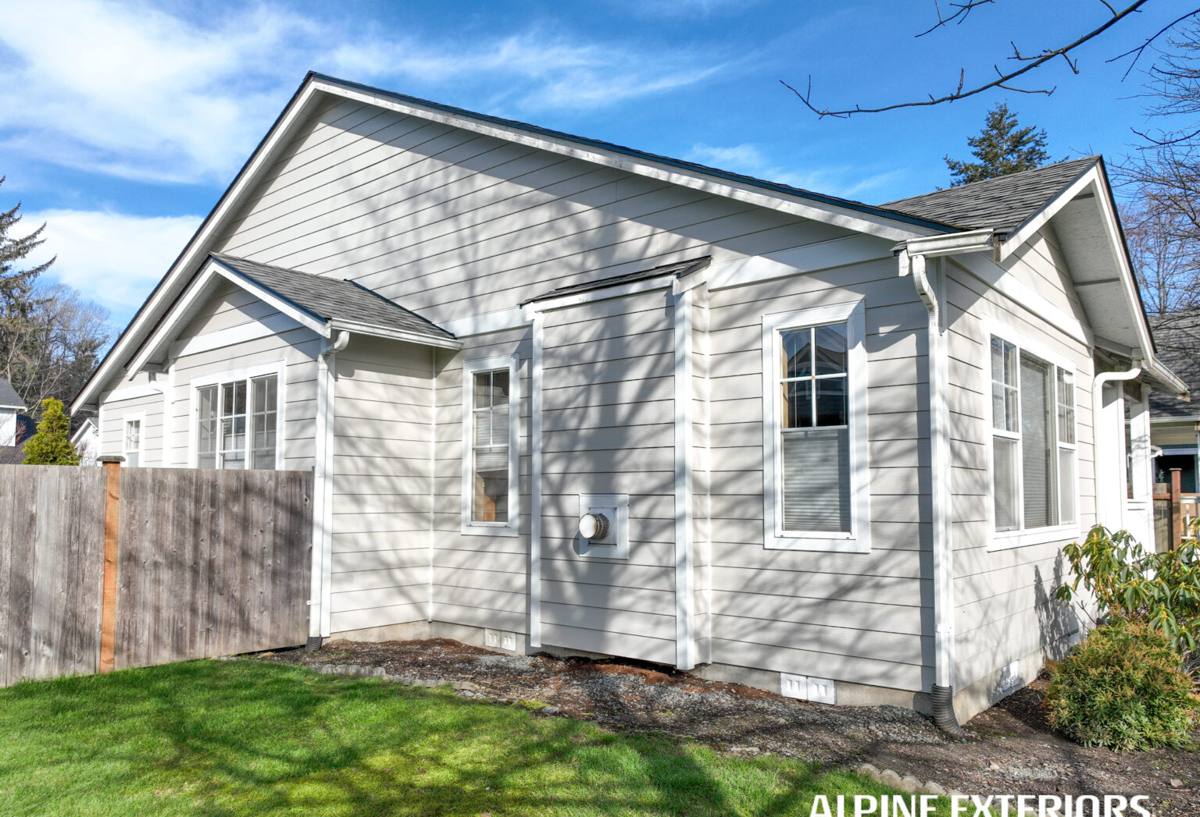
What Local Weather Does to Siding Over Time
Every siding repair call we get in this area traces back to one or more of the same handful of stressors. Understanding them helps explain why a "small" repair sometimes reveals a bigger problem once we open up the wall.
Wind and Wind-Driven Rain
Pinellas County sees tropical storm and hurricane conditions with some regularity, and even routine summer storms here bring wind speeds strong enough to drive rain sideways into siding seams, corner boards, and anywhere flashing has aged or shifted. Wind doesn't just push water — it also flexes siding panels and stresses fasteners over years of repeated gusts, loosening the very connections that are supposed to keep water out.
Year-Round UV Exposure
Florida's sun angle and day length mean siding here gets far more cumulative UV exposure annually than siding in most of the country. UV breaks down paint films, dries out caulk and sealants, and — on lower-grade or improperly finished materials — can cause fading, chalking, or surface degradation that opens the door to moisture problems.
Salt Air
Oldsmar's location on Old Tampa Bay means homes throughout the surrounding area, including Countryside, are exposed to salt-laden air more consistently than communities further inland. Salt accelerates corrosion of exposed fasteners, hinges, and trim hardware, and it can work into hairline cracks in siding or caulk joints faster than plain rainwater would.
Humidity and Moisture Cycling
Between the heat, the humidity, and the rain, siding here rarely gets a long dry stretch. Materials that absorb moisture — or that were installed without proper gaps, flashing, and drainage paths — stay damp longer, which is exactly the condition that leads to rot, swelling, and mold behind the wall.
Signs a Countryside Home Needs Siding Repair
Some siding damage is obvious. A lot of it isn't, especially from the ground or from across the yard. Here's what we tell homeowners in this area to watch for:
- Soft, spongy, or visibly bowed sections when you press on the siding, especially near the bottom courses or under windows
- Cracked, split, or missing panels — often near corners, where wind stress concentrates
- Peeling or bubbling paint in one localized area rather than uniformly across the house, which usually points to trapped moisture underneath
- Dark streaking, staining, or a musty smell near an exterior wall, especially inside on the corresponding interior wall
- Gaps opening up at seams, corner boards, or where siding meets trim, window casings, or the roofline
- Visible fastener corrosion — rust streaks running down from nail or screw heads
- Caulk that has cracked, shrunk, or pulled away from a joint it's supposed to seal
- Higher-than-normal humidity or a musty smell in a room that shares a wall with damaged exterior siding
Any one of these, caught early, is usually a straightforward repair. Left alone through another wet season or two, the same issue can spread into the wall assembly and turn into a much larger job.
Repair or Replace? How We Make the Call
Not every damaged section needs a full re-side, and we don't push for one when it isn't warranted. But there's a point where patch-and-repeat stops making financial sense. Here's how we evaluate it on a Countryside job:
| What We Find | What It Usually Means | Typical Recommendation |
|---|---|---|
| Isolated crack or impact damage, sound material around it | Localized failure, structure underneath is dry | Spot repair or panel replacement |
| Soft or delaminating sections in multiple, unrelated areas | Underlying material or original installation issue, not a one-off event | Broader repair plan; may point toward partial re-side |
| Rot or moisture damage found in the sheathing behind the siding | Water intrusion has been ongoing for a while | Open and repair the wall assembly, not just the siding face |
| Siding is an older, discontinued, or mismatched product | Exact-match replacement panels may not exist | Repair with closest match, or discuss full re-side if mismatch will be visible |
| Damage concentrated on one elevation (commonly the side facing prevailing wind and rain) | Directional wind and rain exposure, not a house-wide problem | Targeted repair on that elevation, inspect others as a precaution |
The honest answer, most of the time, is that a well-executed repair is the right call — full replacement is only the right recommendation when the damage is widespread or the underlying structure has already been compromised.
What a Correct Siding Repair Actually Involves
A repair that just swaps in a new piece of siding over old, unaddressed problems is a repair that fails again. Here's what we consider non-negotiable steps, regardless of how small the visible damage looks:
1. Find the Real Cause, Not Just the Symptom
Before any new material goes up, we figure out why that section failed. Was it a flashing gap, a caulk joint that failed, a fastener that backed out, or wind-driven rain finding a weak seam? Replacing siding without fixing the cause just resets the clock on the same failure.
2. Inspect the Wall Assembly Behind the Damage
Any time we remove damaged siding, we check the water-resistive barrier, sheathing, and framing underneath for moisture damage or rot. In this climate, water that's been getting in for even a season can do more damage than the visible siding failure suggests.
3. Match the Product, Not Just the Color
Siding profiles, reveals, and factory finishes vary by manufacturer and product line. A mismatched repair — even one that's close — tends to stand out, especially once sun exposure starts fading the newer piece at a different rate than the older siding around it. We use James Hardie product lines specifically because their factory-applied ColorPlus finish is formulated for consistent, long-term color match, which makes blending a repair into existing siding far more reliable than trying to match a field-painted product.
4. Rebuild the Water Management, Not Just the Face
Proper flashing, correct fastener placement, and appropriate gaps and sealant joints matter as much as the panel itself. A repair that looks right but skips these details is a repair that will need to be redone.
5. Finish With Sealants and Fasteners Rated for This Climate
Given the salt air and humidity around Oldsmar, we use corrosion-resistant fasteners and exterior-grade sealants suited for coastal-adjacent exposure, not generic hardware that will streak or fail early.
Our Repair Process on a Countryside Job
- On-site inspection. We look at the damaged area and check adjacent sections and elevations for related or early-stage issues, since siding problems in this climate rarely stay isolated for long.
- Diagnosis and scope. We identify the root cause and explain what we found in plain terms — including if we think the issue points toward a repair versus a larger project.
- Written estimate. You get a clear scope and price before anything is removed, with no pressure to upgrade the job beyond what the damage actually requires.
- Careful removal. Damaged siding and any compromised trim or flashing come off without disturbing sound material around it.
- Wall assembly check and repair. Any sheathing, flashing, or water barrier issues found underneath get addressed before new siding goes up — this step is what makes the repair actually last.
- Installation to manufacturer spec. New James Hardie material is installed with correct fastening, clearances, and sealant detailing, matched to the surrounding siding as closely as the product line allows.
- Final walkthrough. We review the completed repair with you before we consider the job done.
Why We Repair With James Hardie, Even for Small Jobs
This company installs and repairs with James Hardie fiber cement siding exclusively — we don't patch a Hardie home with vinyl or a different fiber cement brand just because it's on hand, and we don't recommend other siding materials for repairs on homes that could use Hardie instead. There are practical reasons this matters specifically for repair work in a climate like ours:
- Non-combustible material that holds up to intense UV exposure without the softening or warping some other siding materials can experience over time in constant Florida sun
- ColorPlus factory finish engineered for UV and moisture resistance, which gives a repaired section a much better chance of holding its color and finish alongside older, sun-exposed siding
- HZ5 product engineering, Hardie's line built specifically for high-humidity, moisture-prone climates like coastal Florida — relevant for repairs since we're often replacing sections that failed specifically because of moisture exposure
- A strong, transferable manufacturer warranty on the material itself, which stays meaningful because it's backed by a large, established manufacturer rather than a smaller regional brand
We won't install or repair with LP SmartSide, vinyl, Cemplank, Allura, or primed wood siding — not because every one of those products is inherently bad, but because we've standardized our crews, our fastening details, and our warranty backing around one system we trust to perform in this specific climate, and we'd rather do one thing exceptionally well than several things adequately.
Why Hiring a Crew That Already Works in This Area Matters
Siding repair looks simple from the street, but the details that make it last are specific to the climate a house sits in. A crew that mostly works in drier, milder regions may not think twice about flashing details, fastener corrosion resistance, or sealant selection the way a crew based in Pinellas County does, because those crews aren't dealing with salt air and wind-driven rain as a matter of routine. Working regularly in Oldsmar and the surrounding communities, including Countryside, means we're used to diagnosing damage patterns specific to this exposure — which elevations tend to take the worst of it, how quickly moisture problems develop behind siding in this humidity, and what actually holds up here versus what looks fine on installation day and fails within a few storm seasons.
What Affects the Cost of a Siding Repair
Every repair is different, but a few factors consistently drive the scope and cost of the job:
| Factor | Why It Matters |
|---|---|
| Extent of damage found once siding is removed | Hidden rot or sheathing damage adds scope beyond the visible repair |
| Age and availability of matching product | Older or discontinued profiles may require a closer color-blend approach |
| Accessibility of the damaged area | Second-story sections, tight setbacks, or areas near landscaping affect labor time |
| Number and location of affected elevations | One isolated spot costs less than damage spread across multiple sides of the house |
| Trim, flashing, and water barrier condition | Repairs to these components alongside the siding add material and labor |
We won't quote a firm number without seeing the damage in person, but we're always upfront about what's driving the cost once we've inspected it.
Get a Free, No-Pressure Estimate
If you're seeing damaged, soft, or aging siding on your Countryside home, it's worth having it looked at before the next round of Florida storms finds the weak spot for you. We'll inspect the affected area, tell you honestly whether it's a repair or something bigger, and give you a straightforward written estimate — no pressure, no upsell beyond what the house actually needs. Use the form below to request your free estimate.