 Oldsmar Siding
 New-Construction Windows: What They Are and When Dunedin Homes Need Them
A new-construction window is installed into a rough opening that's been framed down to the studs, with a nailing fin fastened directly to the sheathing before house wrap and siding go back on. That's different from a pocket replacement, which slides a new frame into an existing one without disturbing the wall around it. New-construction installation is the right call for a home that's being built from the ground up, an addition or garage conversion that opens new wall space, or a renovation where old aluminum single-pane frames are being pulled out entirely rather than replaced in place.
For homeowners in Dunedin, that last category comes up more than people expect. Many homes in this part of Pinellas County still have original-build window openings from decades ago, and when those frames have deteriorated to the point of leaking or rotting the surrounding framing, a proper fix means going back to the studs — not masking the problem with another pocket unit dropped into a compromised opening.
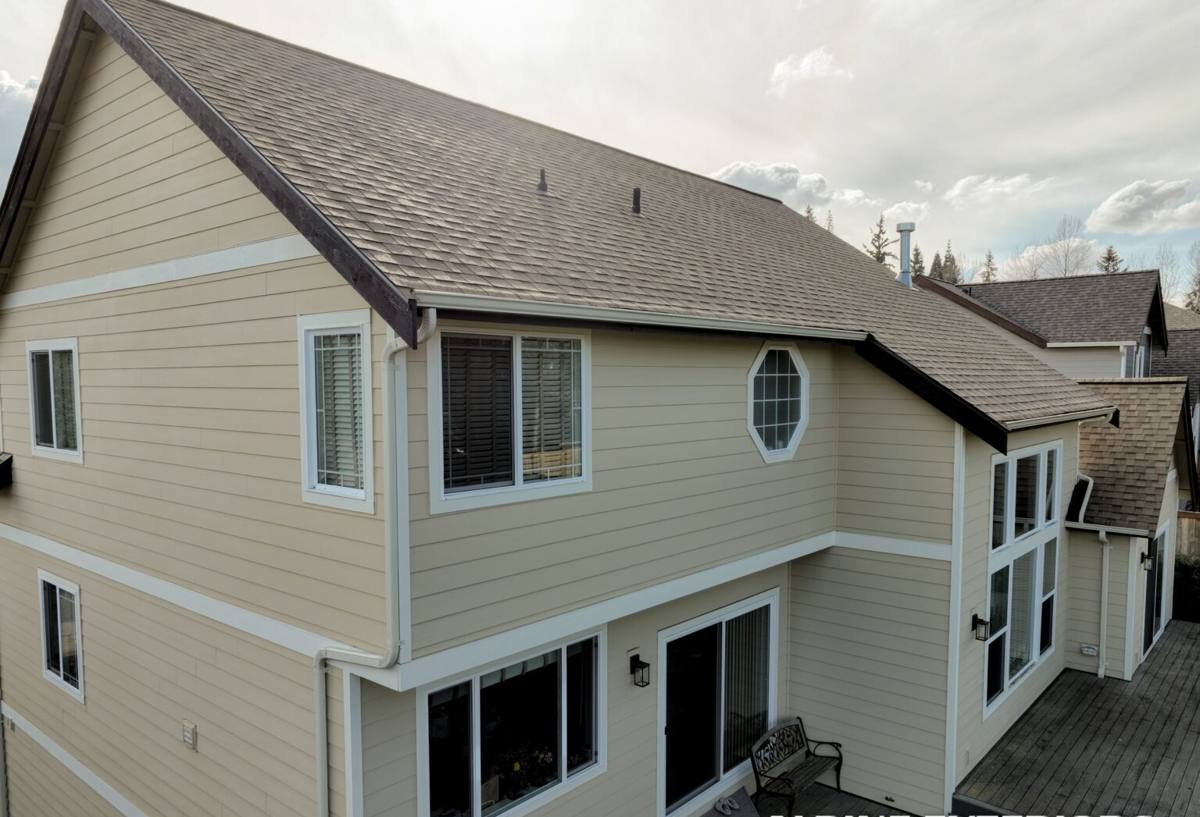
What Dunedin's Coastal Climate Does to a Window Opening
Dunedin sits along the Gulf side of Pinellas County, close to St. Joseph Sound, which means the air carries salt, humidity, and wind year-round. That combination is hard on window components in ways that aren't always visible from the curb. Salt air accelerates corrosion on hardware and fasteners. Constant UV exposure breaks down sealants and vinyl faster than it does further inland, which is why caulk lines that looked fine two years ago start cracking and pulling away.
Wind-driven rain is the bigger issue, though. Most window problems we see in this area aren't glass failures — they're water finding its way in through a gap at the flashing or the rough opening itself, usually because the original install never sealed that transition correctly. A window can carry the right wind rating and still leak if the flashing underneath it wasn't done right. That's the piece that matters most and gets skipped most often.
Wind Load, Impact Glass, and Florida Code in Pinellas County
Florida Building Code requires windows to be engineered for the wind pressures specific to the site — a factor of the local wind zone, the home's exposure category, its height, and where on the building the opening sits. A window rated for one house isn't automatically rated for the one next door if the exposure or wall height is different.
Because Dunedin is close to the water, a meaningful part of the area falls inside Florida's windborne-debris region, where code typically requires either impact-rated laminated glass or approved hurricane shutters on new openings — it's not an optional upgrade in those zones, it's a permitting requirement. The exact line depends on your specific address and wind exposure, which is something we confirm during the permitting step rather than assume. Every window that meets these requirements carries paperwork — a Florida Product Approval number or, less commonly here, a Miami-Dade Notice of Acceptance — that ties the specific product to the wind pressures it's rated for. That documentation gets submitted with your permit and checked at inspection, so it needs to match the actual product installed, not just what was quoted.
New-construction window openings in Dunedin go through the Pinellas County or Dunedin building department depending on jurisdiction, with inspections typically at rough-in (before the wall is closed up) and again at final. Skipping or rushing either of those isn't a shortcut — it's a problem that surfaces later, usually at resale or during an insurance inspection.
Why This Matters More Here Than Inland
Homes further from the coast can sometimes get by with lighter-duty products and less rigorous flashing details. On a Dunedin lot exposed to open water or unobstructed wind fetch, that margin doesn't exist. The same install standard that would be "good enough" fifteen miles inland can leak or fail here within a couple of storm seasons.
What a Correct New-Construction Installation Actually Involves
The window unit itself gets most of the attention, but the install sequence around it is what determines whether the opening stays dry for the next twenty years. Done right, it looks like this:
- Rough opening checked for square, level, and correct dimensions before anything is installed
- Sill pan flashing installed and sloped so any water that gets past the window drains back outward, not into the wall
- House wrap integrated with the window flange using proper shingle-lap sequencing — top layer over bottom, never reversed
- Nailing fin fastened at the spacing and fastener type the manufacturer's installation instructions call for, not just "enough to hold it"
- Shimming at load points so the frame doesn't bow or rack, which affects both operation and seal
- Sealant applied at the correct layers of the assembly — sealant is a backup to good flashing, not a substitute for it
- Exterior trim and siding tied back in so water sheds away from the opening, not toward it
Every one of those steps is hidden once the wall is closed up. That's exactly why they matter — nobody inspects a house five years later and checks the sill pan flashing before deciding whether to buy it, but water intrusion from a bad one will eventually show up as a stain, soft drywall, or a mold issue.
New-Construction vs. Replacement Windows
Homeowners sometimes assume "replacement window" and "new-construction window" are interchangeable terms for the same product. They're not, and using the wrong approach for the situation causes problems.
| Factor | New-Construction Window | Replacement (Pocket) Window |
|---|---|---|
| Installation method | Fastened via nailing fin to sheathing; wall opened to studs | Inserted into the existing frame; wall stays closed |
| Best used when | New builds, additions, or when the old frame/opening is damaged or rotted | Existing frame is sound and just the window unit needs updating |
| Siding/wall disruption | Siding or stucco around the opening is removed and reinstalled | Minimal — exterior trim usually stays intact |
| Access to flashing/framing | Full access to fix rot, re-flash, and correct old mistakes | Little to no access; problems behind the old frame stay hidden |
| Typical cost impact | Higher labor due to wall work, but fixes root causes | Lower labor cost, faster install, but doesn't address framing issues |
If an inspection during a replacement job turns up soft or water-damaged framing, that opening needs to become a new-construction install regardless of what was originally planned — there's no responsible way to drop a new pocket window into a rotted opening and call it fixed.
Frame Material and Glass Package Options
Once the installation method is settled, the next decisions are frame material and glass package. Each has real trade-offs worth understanding before you pick based on price alone.
| Option | What It Offers | Trade-Offs to Know |
|---|---|---|
| Vinyl frame | Lower cost, good insulation, low maintenance, won't corrode from salt air | Can expand/contract with heat; quality varies widely between manufacturers |
| Aluminum frame | Strong, slim sightlines, historically common in Florida construction | Conducts heat/cold more than other frames; needs corrosion-resistant hardware near the coast |
| Fiberglass frame | Very stable in heat and humidity, holds paint well, long service life | Higher upfront cost than vinyl |
| Impact laminated glass | Meets windborne-debris code without shutters; stays in place if cracked | Heavier, higher cost per opening than standard glass |
| Standard glass + code shutters | Lower window cost; shutters can be added at time of storm | Requires action before every storm; may not meet code in all zones here |
There's no single "best" answer across all three categories — the right combination depends on your budget, how the home is oriented to wind and sun, and what the specific opening's wind rating requires. We walk through these trade-offs against your actual house rather than pushing one package for every job.
Our Process, Start to Final Inspection
New-construction window work touches your permit, your framing, and your home's weather barrier, so we treat it as a sequence, not a single visit:
- Site visit to measure openings, assess framing condition, and check wind exposure factors specific to your lot
- Product selection matched to the wind rating your address actually requires, with Florida Product Approval documentation confirmed before ordering
- Permit submitted through the correct local building department
- Rough opening prep and flashing installation, with photos taken before the wall is closed up
- Window installation following manufacturer fastening and sealant specifications
- Rough-in inspection scheduled and passed before siding/trim goes back on
- Exterior trim, siding tie-in, and final sealant work
- Final inspection and a walkthrough so you know exactly what was done and why
Nothing in that sequence gets skipped to save a day, because the steps you can't see later are the ones that determine whether the opening holds up through hurricane season.
Why a Crew That Already Works Dunedin Matters
New-construction window installation isn't a product you buy off a shelf — it's a sequence of judgment calls about flashing, framing condition, and code compliance that plays out differently on every house. A crew that regularly works Dunedin and the surrounding Oldsmar area has already dealt with the local permitting process, knows what inspectors here are checking for, and has seen firsthand how different flashing and sealant choices actually hold up after a few storm seasons on homes exposed to the Sound.
Being based in Oldsmar also means we're close enough to respond quickly if a warranty question or a post-storm concern comes up — not managing a callback from across the county or out of state. For a job where the workmanship is buried behind the siding the moment the wall closes up, that local track record and proximity are worth more than a lower bid from a crew that's never worked in the area before.
If you're planning new-construction windows for a build, addition, or full-frame replacement in Dunedin, we're glad to take a look and walk you through what your specific openings need. Reach out through the form below for a free, no-pressure estimate — there's no obligation, just a straight assessment of what the job actually requires.