 Oldsmar Siding
 Why Eastlake Woodlands Siding Has to Work Harder
Eastlake Woodlands is one of Oldsmar's established residential communities, and like the rest of Pinellas County, it sits squarely in a climate that does not go easy on exterior building materials. Hurricane-force winds move through several times a decade at minimum. The sun is intense and constant almost year-round, not just in summer. Rain here often arrives sideways, driven by wind, rather than falling straight down. And because Oldsmar borders Old Tampa Bay, salt-laden air is a real factor even for homes that aren't waterfront.
Any one of those conditions alone will wear down a mediocre siding product. Together, they compound. Siding on an Eastlake Woodlands home isn't just a cosmetic layer — it's the first line of defense between the wood framing behind it and a climate that combines high wind loads, relentless UV, moisture intrusion risk, and corrosive salt exposure. That's the lens we use when we talk to homeowners in this neighborhood about siding, and it's why we install one product system: James Hardie fiber cement.
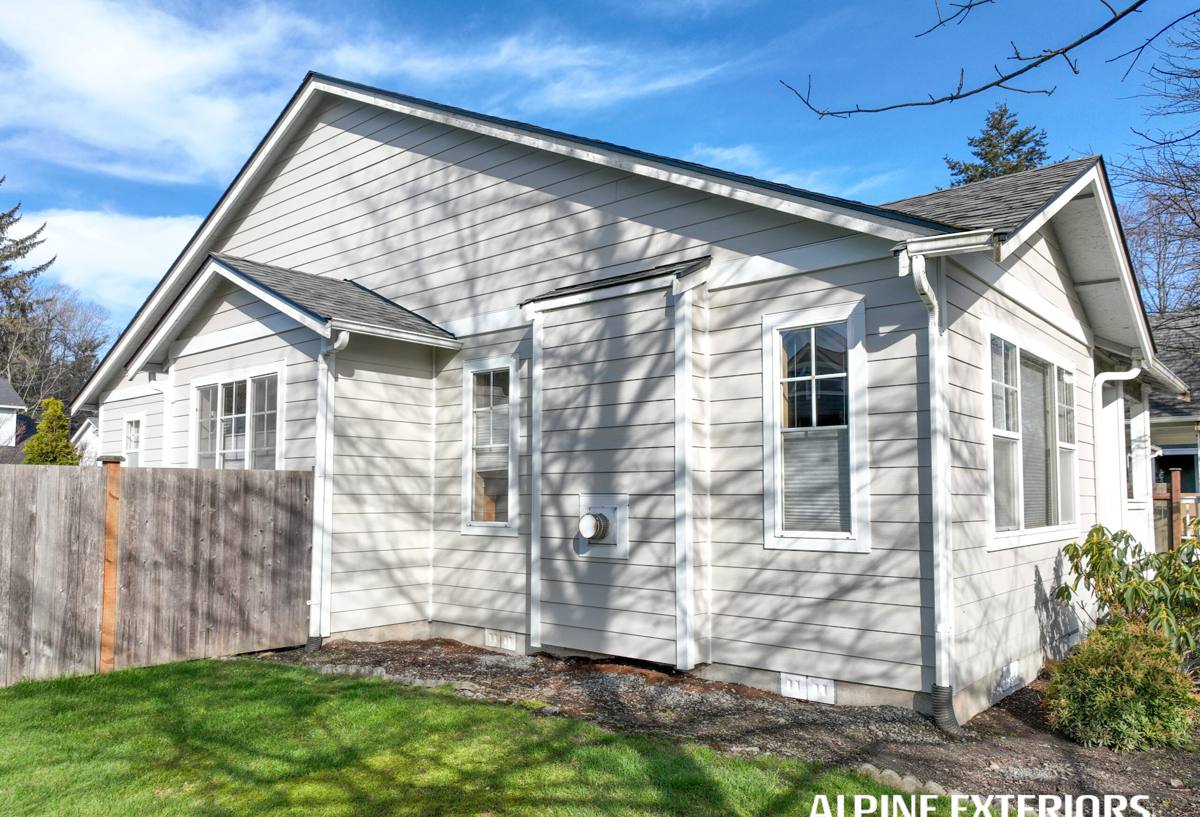
What James Hardie Siding Brings to the Table
James Hardie siding is fiber cement — a blend of cellulose fiber, sand, and portland cement pressed and cured into planks, panels, and shingles. It is not vinyl, not wood, and not a wood-composite product. That composition matters directly for a climate like ours.
HZ5 Climate Engineering
James Hardie manufactures its siding in different formulations tuned to different climate zones across the country. Florida falls into the HZ5 zone, engineered specifically for high-humidity, high-moisture-exposure regions. The HZ5 formulation is built to resist moisture-related deterioration in exactly the conditions Pinellas County deals with — sustained humidity, heavy seasonal rain, and coastal air. When we spec a job in Eastlake Woodlands, we're using the product line that was designed for this exact climate, not a generic national product.
ColorPlus Factory Finish
Most James Hardie siding we install carries the ColorPlus finish — a color baked onto the board in a controlled factory environment, cured through multiple coats, rather than a color applied with a paint sprayer on site after installation. Factory-applied finish holds color and adhesion far more consistently under intense UV exposure than field-applied paint, which is a meaningful advantage in a market where the sun is a year-round stressor, not a seasonal one.
How Hardie Siding Holds Up Against Oldsmar's Specific Conditions
Wind and Storm Exposure
Fiber cement is dense and rigid compared to vinyl. It doesn't flex, rattle, or pull loose from its fasteners under wind pressure the way lighter cladding can, and it doesn't become a projectile hazard in high wind the way cracked or torn vinyl panels sometimes do. Wind performance is also heavily dependent on installation — fastener spacing, fastener type, and how the boards are secured to the structure all affect how the assembly performs when gusts hit.
UV and Heat
Central Florida sun is intense for most of the year, and materials that aren't built for it will fade, chalk, or warp faster than their rated lifespan suggests. Fiber cement doesn't soften or distort in heat the way some polymer-based sidings can, and the ColorPlus finish is formulated to resist UV fading significantly better than field-applied paint.
Wind-Driven Rain and Moisture
Sideways rain during storms pushes water into places straight-down rain never reaches — behind trim, into laps, around penetrations. Fiber cement itself resists moisture damage well when properly finished and sealed, but the real defense against wind-driven rain is the assembly behind the siding: house wrap, flashing, and correct lap and clearance details. Get those wrong, and even the best siding material in the world will let water in.
Salt Air Near Old Tampa Bay
Homes don't need to be waterfront to feel the effects of salt air — it travels inland on wind and settles on every exterior surface it touches, gradually degrading materials and hardware that aren't built to resist it. Fiber cement doesn't corrode the way some metal siding components can, and we pair it with fasteners and trim hardware rated for coastal exposure so the whole assembly ages at the same rate.
What a Correct Installation Actually Involves
James Hardie siding performs to its engineered standard only when it's installed to spec. The material gets a lot of the credit for durability, but a poorly installed job in a wind- and moisture-heavy climate like ours will fail well before its expected lifespan regardless of what's on the boards. Correct installation is a list of small details, all of which matter.
| Detail | Correct Practice | Common Shortcut That Causes Problems |
|---|---|---|
| Fastening | Correct fastener type, length, and spacing per James Hardie's published specs and local wind requirements | Generic fasteners or wide spacing to save time and material |
| Clearance | Proper gap between siding and roofline, decking, and grade to prevent wicking | Siding installed tight to roofs or decks, trapping moisture |
| Flashing | Flashing installed at every horizontal joint, window, door, and penetration | Caulk used in place of flashing, which fails long before flashing does |
| Joints and laps | Butt joints and laps sized and sealed per manufacturer spec | Tight or unsealed joints that trap water instead of shedding it |
| House wrap | Continuous, properly lapped weather-resistive barrier underneath | Torn, gapped, or reused wrap from the old siding |
None of these details are visible once the job is finished, which is exactly why they matter so much — a rushed install and a correct install can look identical on move-out day and perform completely differently five years later.
Our Process for Eastlake Woodlands Projects
We run the same disciplined process on every home we side, and it doesn't change based on neighborhood — but knowing the area does change how quickly and accurately we can plan a job.
- On-site assessment. We walk the exterior, check the current siding and substrate condition, and look at wind exposure, drainage, and any moisture issues already present.
- Written estimate. A clear scope and price based on your home's actual square footage, trim complexity, and site conditions — not a rough guess.
- Substrate check and prep. Old siding comes off, and we inspect the sheathing underneath for rot or damage before anything new goes up.
- House wrap and flashing. The weather-resistive barrier and flashing details go in first, since this layer does most of the real work keeping water out.
- Hardie installation. Boards, panels, or shingles installed to manufacturer fastening and clearance specs, built for the HZ5 climate zone.
- Trim, caulking, and finish detailing. Final sealing at joints, windows, and transitions.
- Walkthrough. We go over the finished job with you before we consider it done.
Choosing the Right Hardie System for Your Home
Lap Siding, Shingle Siding, and Trim
James Hardie's product line covers more than one style, which matters in a neighborhood with a mix of home ages and architectural styles like Eastlake Woodlands. HardiePlank lap siding is the most common choice and works well on traditional and transitional home exteriors. HardieShingle siding gives a shake-style texture for homes going for a more coastal or cottage look. HardieTrim boards finish out corners, window and door surrounds, and fascia so the whole exterior reads as one coordinated system rather than mismatched materials.
Colors and Textures
ColorPlus finishes come in a range of factory colors, and boards are available in smooth or woodgrain-textured faces depending on the look you want. Because the finish is baked on at the factory, the color you choose is the color that holds up — there's no reliance on a field-applied topcoat weathering evenly across the whole house.
What Influences Cost
We don't publish blanket per-square-foot pricing because it genuinely varies by house, but these are the factors that move the number up or down on most Eastlake Woodlands projects.
| Factor | Why It Matters |
|---|---|
| Home size and wall area | More square footage of siding and trim means more material and labor |
| Number of stories | Second-story work requires more staging, safety equipment, and time |
| Trim and architectural detail | Gables, dormers, and detailed trim work take more time than flat wall runs |
| Substrate condition | Rotted or damaged sheathing found during tear-off adds repair scope |
| Tear-off vs. new construction | Removing and disposing of old siding adds labor compared to new-build installs |
| Product selection | Lap siding, shingle siding, and trim packages carry different material costs |
The only way to get an accurate number is a walkthrough of your specific home, which is what our estimate visit is for.
Maintenance and What the Warranty Covers
Part of what makes James Hardie worth the investment is how little upkeep it demands compared to alternatives. There's no repainting cycle driven by peeling or blistering, no risk of insects, and no warping from humidity swings. Realistic upkeep on a Hardie exterior is periodic rinsing to keep salt residue and pollen from building up, and keeping an eye on caulking at joints and penetrations over the years, since sealant is the one component that ages faster than the siding itself.
James Hardie backs its products with a manufacturer's warranty on the siding material and the ColorPlus finish, and that warranty is transferable to a new owner if you sell the home — something worth mentioning to buyers if you're ever listing an Eastlake Woodlands property with Hardie siding on it. Warranty terms and what's covered vary by product line, and we go over the specifics that apply to your job before any contract is signed.
Why Hiring a Crew That Already Works This Neighborhood Matters
Siding installation quality comes down to details that don't show up in a sales pitch — fastener spacing, flashing sequence, clearance at the roofline. A crew that already works in Oldsmar and Pinellas County has run into the area's specific conditions repeatedly: the wind exposure, the humidity, the salt air, and the permitting expectations that come with local jurisdictions. That familiarity shows up in fewer surprises mid-project and a finished job that's built for how this specific area actually behaves, not a generic national install.
Before you hire anyone to touch your home's exterior, a few questions will tell you a lot about who you're dealing with:
- Are they licensed and insured to do exterior work in Florida?
- Do they install James Hardie specifically, or are they generalists who'll sell whatever's in stock?
- Will they show you the fastening and flashing plan before work starts, not just the finished look?
- Do they pull the required permits, or ask you to skip that step?
- Can they explain, in plain terms, how their installation handles wind-driven rain and clearance at rooflines and decks?
If you're weighing a siding replacement or repair on an Eastlake Woodlands home, we're happy to walk the property, take a real look at what's there now, and give you a straightforward, no-pressure estimate — just fill out the form below.