 Oldsmar Siding
 Feather Sound's Climate Reality: Wind, UV, Rain, and Salt Air
Feather Sound sits close to Old Tampa Bay, in a stretch of Pinellas County that takes weather seriously. Homes here deal with a combination most siding products were never engineered for: sustained coastal humidity, intense year-round UV exposure, wind-driven rain during summer storms, and a steady dose of salt-laden air moving off the bay. None of these factors is dramatic on its own. Together, over years, they're what separates siding that looks good at installation from siding that still looks good a decade later.
UV breaks down pigments and resins in lower-grade siding, which is why cheap paint jobs chalk and fade within a few Florida summers. Wind-driven rain finds every gap in a poorly flashed installation and pushes moisture behind the cladding, where it has nowhere to go. Salt air accelerates corrosion on fasteners and trim, and it's harsher on organic or wood-based materials than most homeowners expect. Add in hurricane-force wind loads during tropical systems, and you have a climate that exposes weak materials and weak installation work fast.
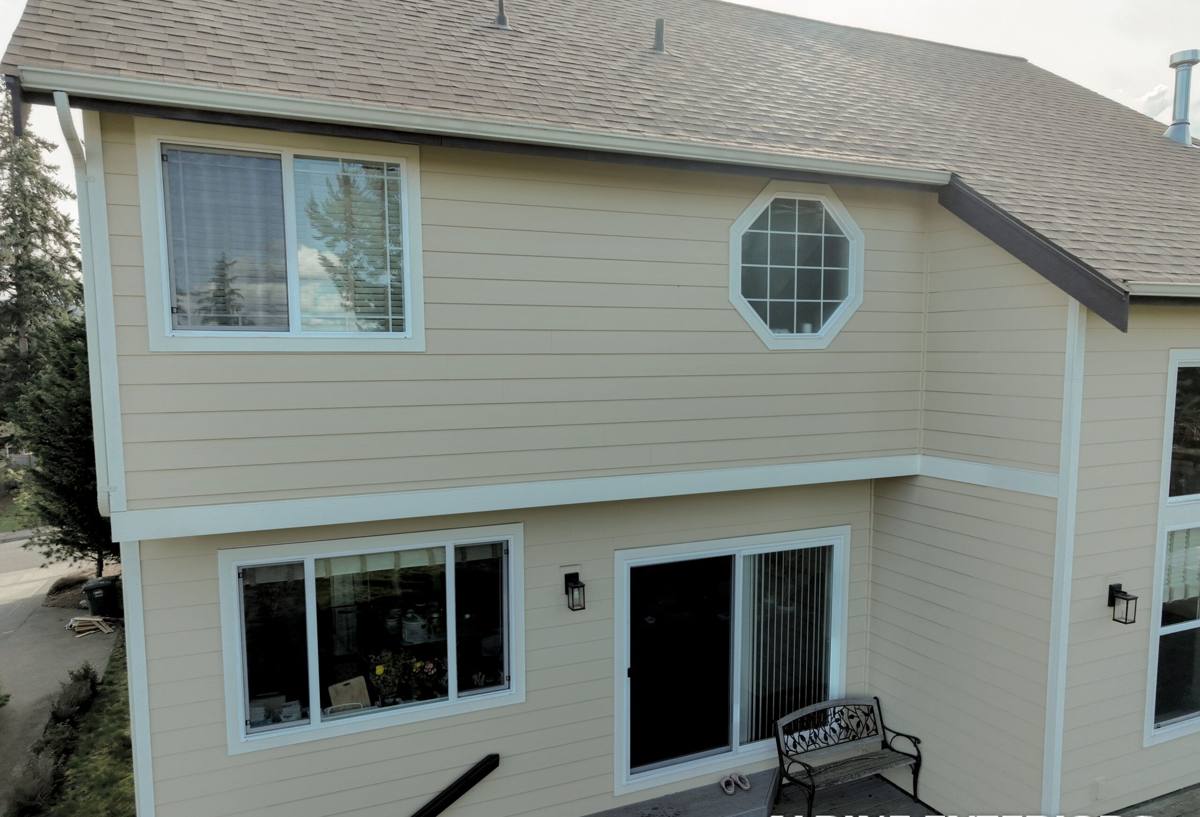
What Feather Sound Homes Actually Need From Their Siding
Given that combination of stressors, siding in this neighborhood needs to do four things well, not just one:
- Resist moisture intrusion without swelling, rotting, or delaminating
- Hold color and finish under constant sun without chalking or fading unevenly
- Stay fastened and intact through high wind events without lifting, cracking, or blowing off
- Shrug off salt air exposure without accelerated corrosion at fasteners, seams, and trim
Vinyl siding handles moisture reasonably well but softens and warps under prolonged heat and can become brittle and crack in wind. Wood and wood-composite products look great on day one but require an ongoing maintenance commitment — repainting, caulking, and moisture monitoring — that most homeowners underestimate until the first sign of rot shows up at a butt joint or corner. Given what Feather Sound's climate does to siding over time, we've made a deliberate call about what we'll put on a home here.
Why We Install Only James Hardie Fiber Cement
We don't install vinyl, LP SmartSide, Cemplank, Allura, or primed wood siding. That's not a marketing position — it's a standard we hold because we've seen how each of those products performs, or doesn't, in this exact climate over the long run. James Hardie fiber cement is the only product we've found that consistently meets the four requirements above without asking the homeowner to babysit it.
Fiber cement is non-combustible, which matters in a state where wildfire and lightning-strike house fires are a real (if lower-profile) risk alongside hurricanes. It doesn't swell or rot when it gets wet the way wood-based products can. Hardie's ColorPlus factory-applied finish is baked on under controlled conditions, so it resists the fading and chalking that field-applied paint struggles with under constant Gulf Coast sun. And Hardie engineers specific product lines — HZ5 among them — for higher-moisture, higher-humidity climate zones like ours, with a formulation built to handle exactly the combination of heat, rain, and humidity that Pinellas County sees for most of the year.
None of this means other products are junk. Vinyl is inexpensive and easy to install. LP SmartSide is lighter and cheaper to ship. Cedar looks beautiful. Each of those has a legitimate use case somewhere. But when we weigh moisture behavior, UV stability, wind performance, and long-term maintenance burden against what a Feather Sound home actually experiences, fiber cement is the product we're willing to stand behind with our own installation.
How the Common Siding Options Compare in This Climate
| Factor | Vinyl Siding | Wood / LP SmartSide | James Hardie Fiber Cement |
|---|---|---|---|
| Moisture / rot resistance | Good, but seams can trap water | Requires diligent sealing and paint upkeep | Won't rot; engineered for moisture exposure |
| UV / color stability | Fades and can become brittle over time | Paint fades and needs recoating | ColorPlus finish resists fading, baked-on |
| Wind performance | Can crack or blow off in high gusts | Panels can warp or separate at joints | Engineered and rated for high wind zones |
| Salt air / coastal exposure | Moderate; hardware can corrode | More vulnerable without strict maintenance | Performs well with proper fastener selection |
| Combustibility | Combustible | Combustible | Non-combustible |
| Typical maintenance | Occasional washing | Repainting, caulking, inspection every few years | Periodic washing; repaint only if desired, decades later |
What a Correct Fiber Cement Installation Actually Involves
The material is only half the equation. Fiber cement siding fails prematurely almost exclusively because of installation mistakes, not product defects — and in a climate like Feather Sound's, those mistakes show up faster than they would somewhere drier and calmer. A correct installation follows Hardie's published fastening, clearance, and flashing specifications to the letter, because those specs exist specifically to handle wind-driven rain and thermal movement.
Here's what we check on every fiber cement job, whether it's a full re-side or a repair section:
- Proper weather-resistive barrier installed and lapped correctly behind the siding
- Flashing at every window, door, and roofline penetration, directing water outward and down
- Correct fastener type, spacing, and depth per Hardie's specifications — not generic nails driven too deep or too shallow
- Minimum clearance maintained between siding and grade, roofing, and decking to prevent wicking
- Butt joints and seams sealed or flashed, not just caulked and left to hope
- Proper gapping at joints to allow for expansion and contraction without buckling
- Factory-cut edges kept factory-finished where possible; field cuts primed and sealed per spec
Skip any one of these steps and you get the failure modes people associate with siding in general — moisture intrusion, buckling, premature fading at seams, fastener corrosion streaks — even though the underlying product was rated to prevent exactly that.
Our Process for Feather Sound Homes
We start with an on-site walkthrough of the home, not a phone estimate. That's when we look at existing siding condition, check for moisture damage or soft spots at trim and corners, evaluate the home's exposure to prevailing wind and rain direction, and measure for material. From there we put together a written scope that spells out the Hardie product line, profile, and color, along with the trim and flashing details specific to that house.
During installation, we remove old siding down to the sheathing where needed, inspect and repair any water damage found underneath before it gets covered up again, install or verify the weather-resistive barrier, and then install the Hardie panels or planks to spec — fastening pattern, clearances, and flashing all included, not treated as optional extras. We finish with a walkthrough so you can see the completed work and ask questions before we consider the job done.
What We Won't Do
We won't nail siding directly over existing damaged sheathing, skip flashing to save time, or substitute a cheaper product mid-job to hit a lower price. If we find rot or moisture damage during tear-off, we'll show it to you and address it as part of the scope — not bury it under new siding and let it become next decade's problem.
Maintenance and What to Expect Over Time
One of the practical advantages of fiber cement in a climate like this is how little it asks of you afterward. An occasional rinse to clear off pollen, salt residue, and general grime is usually all that's needed. Because the ColorPlus finish is factory-applied and warrantied against fading and chipping, you're not on a recurring repaint schedule the way you would be with wood siding. That matters in Feather Sound specifically, where UV exposure is constant and salt air is a year-round factor rather than an occasional coastal storm event.
James Hardie backs its siding with a strong transferable limited warranty, which also matters if you ever sell — it's one less unknown for a buyer's inspection, and one less maintenance item weighing on the home's value.
Why Local Experience in Feather Sound Matters
A crew that has worked houses in this specific area understands things a general contractor pulling from a different climate zone won't — how the housing stock here tends to be laid out, how wind and rain typically hit homes near the bay versus further inland, and which flashing and clearance details actually matter for a house sitting this close to open water. That's the difference between a siding job that's technically installed and one that's installed correctly for where it sits.
If you're weighing a siding replacement or repair in Feather Sound, we're happy to come take a look, walk you through what we see, and put together a free, no-pressure estimate — no obligation, and no pressure to sign anything on the spot.