 Oldsmar Siding
 Building Decks for Palm Harbor's Climate, Not Against It
Palm Harbor sits close enough to the Gulf that salt air, humidity, and intense sun are part of daily life for any outdoor structure. A deck here isn't just furniture for the backyard — it's a piece of exterior construction that has to survive hurricane-force wind gusts, wind-driven rain that finds its way into every gap, and UV exposure strong enough to fade and degrade lesser materials within a few seasons. Composite decking, installed correctly, handles that combination better than most alternatives. Installed poorly, it fails in the same ways any deck fails: rot at the framing, fasteners that back out, boards that cup or buckle, and a structure that looks tired long before it should.
We work throughout the Oldsmar and Pinellas County area, and Palm Harbor's mix of waterfront and inland lots means every deck we build has to account for moisture, salt exposure, and wind loading — not just aesthetics.
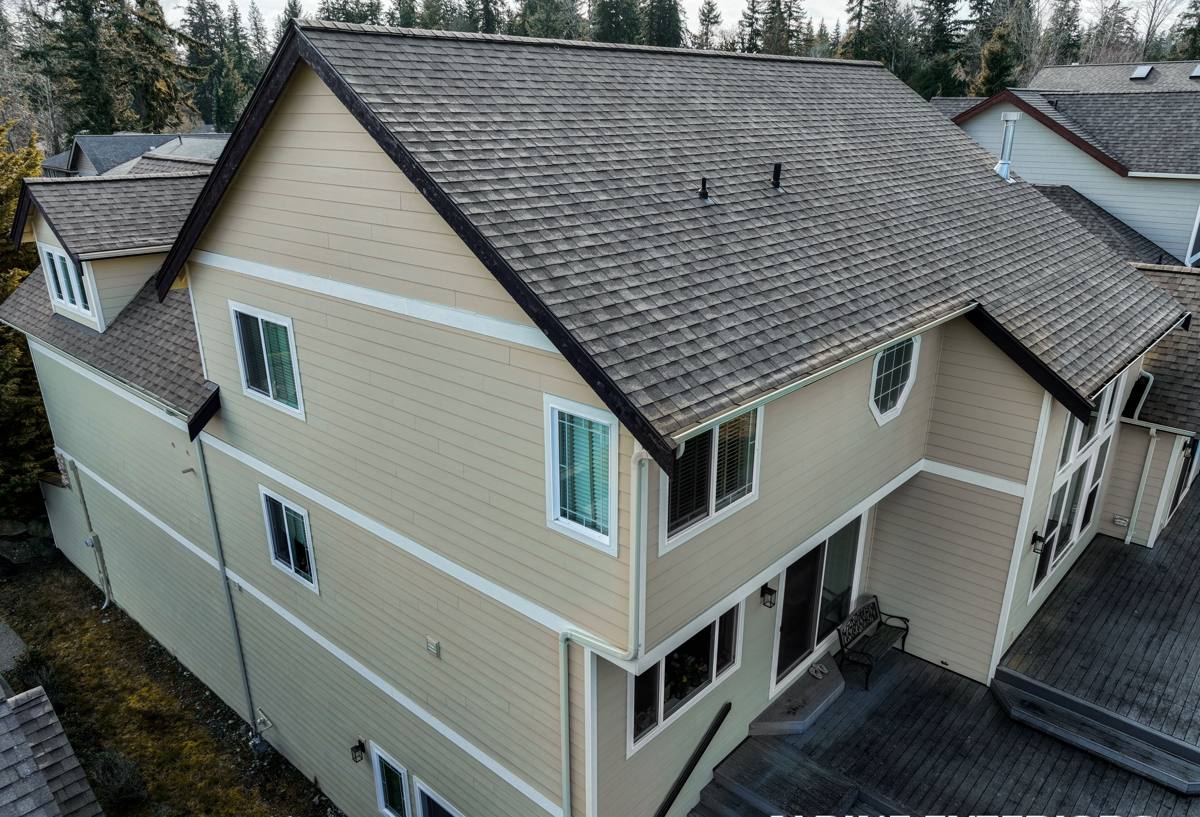
What "Composite Decking" Actually Means
Composite decking is a broad category, and the differences between products matter more than most homeowners realize going in.
Capped Composite
Most quality composite boards today are "capped" — a core of wood fiber and recycled plastic wrapped in a protective polymer shell on all four sides. That cap is what resists moisture absorption, staining, and UV fading. It's the standard we recommend for this climate because the cap is doing the real work against salt air and sun.
Uncapped or Partially Capped Composite
Older-generation or budget composite products leave the wood-fiber core exposed on the bottom or sides. In a dry, low-humidity climate that's a minor issue. In Pinellas County, with year-round humidity and frequent wind-driven rain getting up under the boards, exposed core material absorbs moisture, and that shortens the board's life considerably. We're upfront with clients about this trade-off rather than letting a lower sticker price hide a maintenance problem down the road.
PVC (Not True Composite, But Often Compared)
Cellular PVC decking contains no wood fiber at all, so it's effectively immune to rot. It costs more, can flex more in high heat, and has a different look and feel underfoot than composite. Some Palm Harbor homeowners choose it specifically for maximum moisture resistance near pools or low-lying yards; we'll walk you through whether that trade-off makes sense for your site.
What a Correct Composite Deck Installation Involves
The decking boards get all the attention, but the structure underneath them determines whether the deck lasts 10 years or 25. Most composite deck failures we get called to inspect trace back to shortcuts in the substructure, not the boards themselves.
Framing and Substructure
Composite boards are heavier than wood and behave differently under load and thermal expansion. That means joist spacing, blocking, and beam sizing need to follow the manufacturer's engineering specs for composite specifically — not whatever spacing was standard for a wood deck. We also use coated or corrosion-resistant fasteners and structural hardware throughout, because salt air accelerates corrosion on anything less.
Moisture Management
Every deck needs a way for water to get out from underneath it. Wind-driven rain off Gulf storms doesn't just fall straight down — it drives sideways and up under overhangs and low decks. We grade and flash ledger connections properly, keep joists protected with joist tape, and build in airflow so trapped moisture doesn't sit against the framing.
Fastening and Expansion Gaps
Composite boards expand and contract with Florida's temperature swings more than people expect. Gaps between boards, at end joints, and around fixed objects (posts, house walls) have to be sized correctly per manufacturer spec. Get this wrong and you'll see buckling or squeezed-together boards within a year or two — a common, avoidable problem.
Wind and Attachment
Given the hurricane exposure in this region, ledger board attachment to the house, railing post anchoring, and overall structural connections are built to handle real wind loading, not just visual load. This is also where local code requirements come in, which we cover below.
Our Process, Start to Finish
We keep the process straightforward and communicate clearly at each stage.
1. Site Assessment
We look at drainage, sun exposure, existing structure (if replacing an old deck), and how close the site is to the water or open exposure, since that affects hardware and board selection.
2. Material Selection
We walk through board options, color, and cost honestly — including where a lower-tier product will cost you more in the long run through fading or moisture issues.
3. Permitting
Most new decks and many deck replacements in Pinellas County require a building permit, and waterfront or elevated decks often have additional requirements. We handle this so it isn't left on you to figure out mid-project.
4. Demolition (If Replacing an Existing Deck)
Old framing gets fully inspected, not just the surface boards — this is where we frequently find rot or corrosion that wasn't visible from the top.
5. Installation
Framing first, inspected before boards go down, then decking, railing, and fastening per spec.
6. Final Walkthrough
We go over the finished deck with you, including basic care guidance specific to your board choice and site conditions.
Composite vs. Wood vs. PVC for This Region
| Factor | Wood | Capped Composite | PVC |
|---|---|---|---|
| Upfront cost | Lowest | Mid-range | Highest |
| Salt air / humidity resistance | Poor without ongoing sealing | Strong | Excellent |
| UV fading resistance | Fades and grays | Good to strong (varies by product) | Good |
| Annual maintenance | Sealing/staining required | Occasional cleaning | Minimal |
| Typical lifespan (this climate) | 10-15 yrs with upkeep | 20-25+ yrs | 25-30+ yrs |
| Feel underfoot in heat | Cooler | Warmer, varies by color | Can flex/soften in extreme heat |
There's no universally "correct" answer here — it depends on your budget, how close you are to open water or salt exposure, and how much upkeep you want to take on. We'll give you a straight recommendation for your specific property rather than pushing whatever has the best margin.
What Actually Drives the Cost
Composite decking costs vary widely, and the board price is only part of it. The bigger swing factors are:
- Deck size and shape — square footage plus how many angles, curves, or level changes are involved
- Substructure condition — new framing versus reusing an existing structure (which we'll only do if it actually passes inspection)
- Height and access — elevated decks, stairs, and difficult site access add labor
- Railing system — composite, aluminum, cable, or glass railing all price differently
- Board tier — entry-level capped composite versus premium or specialty finishes
- Permitting and engineering — required on most projects, and more involved for elevated or waterfront decks
We give a written estimate that breaks these out so you can see where the money is going, rather than one lump number.
Maintenance in a Salt Air, High-UV Environment
One of the real advantages of quality capped composite is how little it asks of you compared to wood, but "low maintenance" isn't "no maintenance" — especially this close to the Gulf.
- Rinse salt residue and pollen buildup off the surface periodically, especially after storms
- Clean debris out from between boards and around railing posts so moisture and organic matter don't sit trapped
- Check railing hardware and fasteners annually for corrosion, particularly on waterfront or open-exposure lots
- Address any pooling water or drainage issues under the deck promptly — standing water is what shortens framing life, not the composite boards themselves
None of this requires sealing or staining the way a wood deck does, which is a large part of why composite has become the standard choice for homeowners in this area who want to actually enjoy their deck instead of maintaining it.
Signs an Existing Deck Needs Replacing, Not Repairing
If you're deciding between repairing a current deck or replacing it, these are the signs that point toward replacement:
- Soft, spongy, or visibly rotted framing when probed with a screwdriver
- Boards that are cupping, splitting, or delaminating across large sections rather than isolated spots
- Railing posts that wobble or have visible corrosion at the base connections
- Ledger board separation or gaps where the deck meets the house — a structural red flag, not cosmetic
- A deck built before current wind-load and fastening standards, especially if it's never been inspected
A localized repair can make sense for isolated board damage on an otherwise sound structure. Widespread framing issues almost always mean replacement is the more honest recommendation, and we'll tell you which situation you're in rather than sell a repair that won't hold.
Why a Crew That Already Works Palm Harbor Matters
Decking looks straightforward from a product page, but building one that holds up here means understanding how Pinellas County wind and moisture requirements apply, how salt exposure varies between a few blocks of the same neighborhood, and what actually fails first on decks in this specific climate versus decks built inland or up north. A crew that works this area regularly has already seen what happens to the wrong fastener choice or the wrong board tier after a few Gulf storm seasons — and builds accordingly from the start instead of learning it from a callback.
If you're planning a new composite deck or replacing one that's past its prime, we're happy to take a look and give you a straightforward, no-pressure estimate — just fill out the form below to get started.